WASHINGTON: On the campaign trail last year, President Donald Trump talked tough about imposing tariffs as high as 60 percent on Chinese goods and threatened to renew the trade war with China that he launched during his first term.
But now that he’s back in the White House, Trump appears to be seeking a more nuanced relationship with the country that both Republicans and Democrats have come to see as the gravest foreign policy challenge to the US China is also a major trading partner and an economic powerhouse, and it has one of the world’s largest military forces.
“We look forward to doing very well with China and getting along with China,” Trump said Thursday at the World Economic Forum in Davos, Switzerland, in comments that suggested Beijing could help end the war in Ukraine and reduce nuclear arms.
As he moves forward with plans to impose 25 percent tariffs on Canada and Mexico on Feb. 1, Trump has not set a firm date for China. He’s only repeated his plan for a much lower 10 percent tax on Chinese imports in retaliation for China’s production of chemicals used in fentanyl. On Tuesday, White House press secretary Karoline Leavitt said Trump was “very much still considering” raising tariffs on China on Feb. 1.
Trump, who spoke with Chinese President Xi Jinping days before taking office, seems to be showing restraint and bowing to a more complicated reality than he described while running for office. Speaking of potential tariffs on China in a recent Fox News interview, he said: “They don’t want them, and I’d rather not have to use it.”
Liu Yawei, senior adviser on China at the Carter Center in Atlanta, said Trump has become “more pragmatic.”
“The signaling, at least from the election to the inauguration, seems to be more positive than has been expected before,” Liu said. “Hopefully, this positive dynamic can be preserved and continued. Being more pragmatic, less ideological will be good for everyone.”
A Chinese expert on American foreign policy acknowledged that there are many “uncertainties and unknowns about the future” of US-China relations. But Da Wei, director of the Center for International Security and Strategy at Tsinghua University in Beijing, also said Trump’s recent change in tone offers “encouraging signals.”
In his first term, warm relations were followed by a trade war
When Trump first became president in 2017, Xi and Trump got off to a good start. Xi was invited to Trump’s Mar-a-Lago resort in Florida. A few months later, he treated Trump to a personal tour of the Palace Museum in the heart of Beijing, only to see Trump launch the trade war the following year.
The US-China relationship soured further over the COVID-19 pandemic, and it hardly improved during President Joe Biden’s administration, which saw a controversial visit to the self-governing island of Taiwan by then-House Speaker Nancy Pelosi and a Chinese spy balloon aloft over US territory.
Biden kept Trump’s tariffs on Chinese goods and intensified the economic and technological rivalry with export controls, investment curbs and alliance building.
Now it will be up to Trump’s top diplomat, Secretary of State Marco Rubio, to help chart a new path for the second term.
During his confirmation hearing, Rubio said China has “lied, cheated, hacked and stolen” its way to global superpower status “at our expense.” He called China “the most potent and dangerous near-peer adversary this nation has ever confronted.”
Hours after he was sworn in, Rubio met foreign ministers from Australia, Japan and India, sending signals that he would continue to work with the same group of countries that Biden elevated to blunt China’s expanding influence and aggression in the Indo-Pacific region.
Yet Rubio, who was twice sanctioned by Beijing and is known for his hawkish views on the Chinese Communist Party, told the Senate Foreign Relations Committee that the US should engage with China because “it’s in the interest of global peace and stability.”
In a Friday phone call, China’s veteran foreign minister issued a veiled warning to Rubio, telling him to behave. Wang Yi conveyed the message in their first conversation since Rubio’s confirmation.
“I hope you will act accordingly,” Wang told Rubio, according to a Chinese Foreign Ministry statement that included a Chinese phrase typically used by a teacher or a boss warning a student or employee to be responsible for their actions. Rubio agreed to manage bilateral relations in a “mature and prudent” way, the ministry said.
Members of Congress have noted Trump’s seemingly softer attitude toward Beijing.
Rep. Rosa DeLauro, a Democrat from Connecticut, wants to ensure “that Trump does not let China off too easy.” She urged the president to act now on measures that have won broad bipartisan support, including closing a tariff loophole on low-value packages, reviewing outbound investments and setting up a domestic industrial policy agenda.
Beijing seeks opportunities and stays ready to play tough
Beijing is seeking opportunities to create more breathing room in its relations with a US president known for his transactional style. Chinese leaders are betting on engaging with Trump directly when his Cabinet members and advisers appear to hold clashing views.
Trump “is the most important person above all those different voices, and he can at least set the tone of future policy,” Da said.
The Tsinghua professor expects Trump and Xi to meet at some point. Effective communication channels will be crucial, Da said, to keep differences from spiraling out of control, as they did in Trump’s first term.
“The two presidents can have a good starting point. That’s very important,” he said. “But then we need to set up some mechanisms to let the cabinet-level members talk to each other.”
That may explain Beijing’s friendly overture at the start of the second Trump administration. In response to Trump’s inauguration invitation, Xi sent a special representative.
Beijing has also signaled a willingness to be flexible on the future of TikTok, which Trump sought to ban during his first administration. But he has now come to the social media app’s rescue, offering more time for its Chinese-based parent company to sell and downplaying TikTok’s national security risks.
After Trump said he preferred not to use tariffs on China, the Chinese Foreign Ministry echoed that trade and economic cooperation between the two countries are mutually beneficial.
But Beijing is also ready to play tough, if necessary, after learning a lesson from Trump’s first term.
Over the past several years, Beijing has adopted laws and rules that allow it to retaliate quickly and forcefully to any hostile act from the US In its toolbox are tariffs, import curbs, export controls, sanctions, measures to limit companies from doing business in China and regulatory reviews aimed at inflicting pain on American businesses and the US economy.
Miles Yu, director of the China Center at the Hudson Institute, said Trump is now “more nuanced, and more focused, toward China.”
“He’s keeping his eyes on the prize, which is to maintain US supremacy without risking open and avoidable confrontation with China, while perfectly willing to walk away from the negotiation table and play the hardball,” Yu said.


![]()


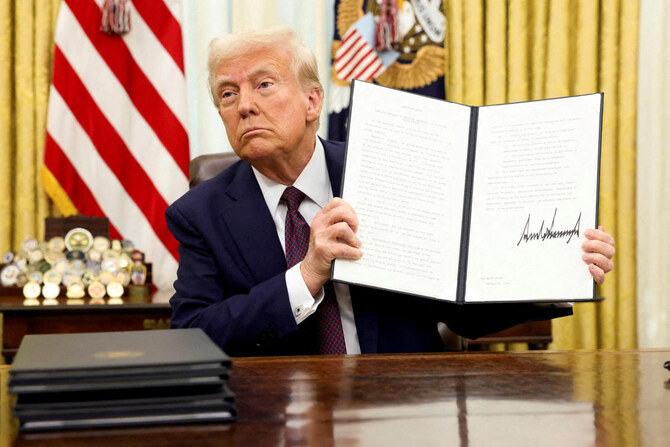
After talking tough during campaign, Trump appears to ease up on China at start of presidency
Short Url
https://arab.news/vaqww
After talking tough during campaign, Trump appears to ease up on China at start of presidency
- Trump appears to be seeking a more nuanced relationship with the country that both Republicans and Democrats have come to see as the gravest foreign policy challenge to the US


Mexico fears more violence after army kills leader of powerful Jalisco cartel
GUADALAJARA: School was canceled in several Mexican states and local and foreign governments alike warned their citizens to stay inside, as widespread violence erupted following the army’s killing of the powerful leader of the Jalisco New Generation Cartel.
Nemesio Rubén Oseguera Cervantes, known as “El Mencho” was the boss of one of the fastest-growing criminal networks in Mexico, notorious for trafficking fentanyl, methamphetamine and cocaine to the United States and staging brazen attacks against government officials who challenged it.
He was killed during a shoot-out in his home state of Jalisco as the Mexican military attempted to capture him. Cartel members responded with violence across the country, blocking roads and setting fire to vehicles.
President Claudia Sheinbaum urged calm and authorities announced late Sunday they had cleared most of the more than 250 cartel roadblocks across 20 states. The White House confirmed that the US provided intelligence support to the operation to capture the cartel leader and applauded Mexico’s army for taking down a man who was one of the most wanted criminals in both countries.
Mexico hoped the death of the world’s biggest fentanyl traffickers would ease Trump administration pressure to do more against the cartels, but many remained hunkered down and on edge as they waited to see the powerful cartel’s reaction.
Many fear more violence
Guadalajara, the capital of Jalisco state and Mexico’s second-largest city, was almost completely shut down on Sunday as fearful residents stayed home.
Passengers arriving to the city’s international airport Sunday night were told it was operating with limited personnel because of the burst of violence.
Jacinta Murcia, a 64-year-old nutrition products vendor, was among those nervously walking late Sunday night through the airport, where earlier in the day travelers sprinted and ducked behind chairs fearing violence. Most flights into the city were suspended on Sunday.
Murcia anxiously scrolled through news stories on social media showing the face of “El Mencho” and sent messages to her children, who were tracking her location as she tried to travel across the city to her house after dark.
“My plan today leaving the airport is to see if there are any taxis, but I’m scared of everything. That there are blockades, that there’s a curfew, that something could happen,” she said. “I’m all alone.”
Authorities in Jalisco, Michoacan and Guanajuato reported at least 14 other people killed Sunday, including seven National Guard troops.
Videos circulating on social media showed tourists in Puerto Vallarta walking on the beach with smoke rising in the distance.
In another part of the airport a group of elderly Mexicans gathered, discussing how to get home.
“We better all go together,” one said. “Go with God.”
A blow against a cartel could be a diplomatic coup
David Mora, Mexico analyst for International Crisis Group, said the capture and outburst of violence marks a point of inflection in Sheinbaum’s push to crack down on cartels and relieve US pressures.
US President Donald Trump has demanded Mexico do more to fight the smuggling of the often-deadly drug fentanyl, threatening to impose more tariffs or take unilateral military action if the country does not show results.
There were early signs that Mexico’s efforts were well received by the United States.
US Amb. Ron Johnson recognized the success of the Mexican armed forces and their sacrifice in a statement late Sunday. He added that “under the leadership of President Trump and President Sheinbaum, bilateral cooperation has reached unprecedented levels.”
But it may also pave the way for more violence as rival criminal groups take advantage of the blow dealt to the CJNG, Mora said.
“This might be a moment in which those other groups see that the cartel is weakened and want to seize the opportunity for them to expand control and to gain control over Cartel Jalisco in those states,” he said.
“Ever since President Sheinbaum has been in power, the army has been way more confrontational, combative against criminal groups in Mexico,” Mora said. “This is signaling to the US that if we keep cooperating, sharing intelligence, Mexico can do it, we don’t need US troops on Mexican soil.”
‘El Mencho’ was a major target
Oseguera Cervantes, who was wounded in the operation to capture him Sunday in Tapalpa, Jalisco, about a two-hour drive southwest of Guadalajara, died while being flown to Mexico City, the Defense Department said in a statement.
During the operation, troops came under fire and killed four people at the location. Three more people, including Oseguera Cervantes, were wounded and later died, the statement said.
White House Press Secretary Karoline Leavitt said via X that the US government provided intelligence support for the operation. “‘El Mencho’ was a top target for the Mexican and United States government as one of the top traffickers of fentanyl into our homeland,” she wrote. She commended Mexico’s military for its work.
The US State Department had offered a reward of up to $15 million for information leading to the arrest of El Mencho. The Jalisco New Generation Cartel is one of the most powerful and fastest growing criminal organizations in Mexico and began operating around 2009.
In February 2025, the Trump administration designated the cartel as a foreign terrorist organization.
Sheinbaum has criticized the “kingpin” strategy of previous administrations that took out cartel leaders, only to trigger explosions of violence as cartels fractured. While she has remained popular in Mexico, security is a persistent concern and since US President Donald Trump took office a year ago, she has been under tremendous pressure to show results against drug trafficking.
The Jalisco cartel has been one of the most aggressive cartels in its attacks on the military — including on helicopters — and is a pioneer in launching explosives from drones and installing mines. In 2020, it carried out a spectacular assassination attempt with grenades and high-powered rifles in the heart of Mexico City against the then head of the capital’s police force and now federal security secretary.
Nemesio Rubén Oseguera Cervantes, known as “El Mencho” was the boss of one of the fastest-growing criminal networks in Mexico, notorious for trafficking fentanyl, methamphetamine and cocaine to the United States and staging brazen attacks against government officials who challenged it.
He was killed during a shoot-out in his home state of Jalisco as the Mexican military attempted to capture him. Cartel members responded with violence across the country, blocking roads and setting fire to vehicles.
President Claudia Sheinbaum urged calm and authorities announced late Sunday they had cleared most of the more than 250 cartel roadblocks across 20 states. The White House confirmed that the US provided intelligence support to the operation to capture the cartel leader and applauded Mexico’s army for taking down a man who was one of the most wanted criminals in both countries.
Mexico hoped the death of the world’s biggest fentanyl traffickers would ease Trump administration pressure to do more against the cartels, but many remained hunkered down and on edge as they waited to see the powerful cartel’s reaction.
Many fear more violence
Guadalajara, the capital of Jalisco state and Mexico’s second-largest city, was almost completely shut down on Sunday as fearful residents stayed home.
Passengers arriving to the city’s international airport Sunday night were told it was operating with limited personnel because of the burst of violence.
Jacinta Murcia, a 64-year-old nutrition products vendor, was among those nervously walking late Sunday night through the airport, where earlier in the day travelers sprinted and ducked behind chairs fearing violence. Most flights into the city were suspended on Sunday.
Murcia anxiously scrolled through news stories on social media showing the face of “El Mencho” and sent messages to her children, who were tracking her location as she tried to travel across the city to her house after dark.
“My plan today leaving the airport is to see if there are any taxis, but I’m scared of everything. That there are blockades, that there’s a curfew, that something could happen,” she said. “I’m all alone.”
Authorities in Jalisco, Michoacan and Guanajuato reported at least 14 other people killed Sunday, including seven National Guard troops.
Videos circulating on social media showed tourists in Puerto Vallarta walking on the beach with smoke rising in the distance.
In another part of the airport a group of elderly Mexicans gathered, discussing how to get home.
“We better all go together,” one said. “Go with God.”
A blow against a cartel could be a diplomatic coup
David Mora, Mexico analyst for International Crisis Group, said the capture and outburst of violence marks a point of inflection in Sheinbaum’s push to crack down on cartels and relieve US pressures.
US President Donald Trump has demanded Mexico do more to fight the smuggling of the often-deadly drug fentanyl, threatening to impose more tariffs or take unilateral military action if the country does not show results.
There were early signs that Mexico’s efforts were well received by the United States.
US Amb. Ron Johnson recognized the success of the Mexican armed forces and their sacrifice in a statement late Sunday. He added that “under the leadership of President Trump and President Sheinbaum, bilateral cooperation has reached unprecedented levels.”
But it may also pave the way for more violence as rival criminal groups take advantage of the blow dealt to the CJNG, Mora said.
“This might be a moment in which those other groups see that the cartel is weakened and want to seize the opportunity for them to expand control and to gain control over Cartel Jalisco in those states,” he said.
“Ever since President Sheinbaum has been in power, the army has been way more confrontational, combative against criminal groups in Mexico,” Mora said. “This is signaling to the US that if we keep cooperating, sharing intelligence, Mexico can do it, we don’t need US troops on Mexican soil.”
‘El Mencho’ was a major target
Oseguera Cervantes, who was wounded in the operation to capture him Sunday in Tapalpa, Jalisco, about a two-hour drive southwest of Guadalajara, died while being flown to Mexico City, the Defense Department said in a statement.
During the operation, troops came under fire and killed four people at the location. Three more people, including Oseguera Cervantes, were wounded and later died, the statement said.
White House Press Secretary Karoline Leavitt said via X that the US government provided intelligence support for the operation. “‘El Mencho’ was a top target for the Mexican and United States government as one of the top traffickers of fentanyl into our homeland,” she wrote. She commended Mexico’s military for its work.
The US State Department had offered a reward of up to $15 million for information leading to the arrest of El Mencho. The Jalisco New Generation Cartel is one of the most powerful and fastest growing criminal organizations in Mexico and began operating around 2009.
In February 2025, the Trump administration designated the cartel as a foreign terrorist organization.
Sheinbaum has criticized the “kingpin” strategy of previous administrations that took out cartel leaders, only to trigger explosions of violence as cartels fractured. While she has remained popular in Mexico, security is a persistent concern and since US President Donald Trump took office a year ago, she has been under tremendous pressure to show results against drug trafficking.
The Jalisco cartel has been one of the most aggressive cartels in its attacks on the military — including on helicopters — and is a pioneer in launching explosives from drones and installing mines. In 2020, it carried out a spectacular assassination attempt with grenades and high-powered rifles in the heart of Mexico City against the then head of the capital’s police force and now federal security secretary.
Latest updates


Recommended


© 2026 SAUDI RESEARCH & PUBLISHING COMPANY, All Rights Reserved And subject to Terms of Use Agreement.