



WADI GAZA, Gaza Strip: They walked for hours loaded with whatever clothes, food and blankets they could carry. Many smiled, some hugged loved ones they hadn’t seen for months. Hundreds of thousands of Palestinians filled Gaza’s main coastal road as they streamed back to homes in the north.
The mood was joyous, even though many knew their homes had been destroyed in Israeli offensives against Hamas that leveled large parts of Gaza City and the surrounding north.
The important thing was to go back, they said, to prevent what many had feared would be a permanent expulsion from their homes.
“By returning, we are victorious,” said Rania Miqdad, who was heading back to Gaza City with her family.
Ismail Abu Mattar returned with his wife and four children to the ruins of their Gaza City home, which was partially destroyed by Israeli bombardment early in the war. Like many others whose houses are damaged, he planned to set up a tent nearby and start clearing the rubble.

Displaced Palestinians return to their homes in the northern Gaza Strip, following Israel's decision to allow thousands of them to go back for the first time since the early weeks of the 15-month war with Hamas, Monday, Jan. 27, 2025. (AP)
“A tent here is better than a tent there,” he said, referring to the vast, squalid tent camps that arose in central and southern Gaza where he and much of the territory’s population have lived for months.
“We had thought we wouldn’t return, like our ancestors,” said Abu Mattar. His grandparents were among the hundreds of thousands of Palestinians driven from what is now Israel during the 1948 war surrounding its creation.
A mass return on foot and by car
Under the ceasefire deal between Israel and Hamas, Palestinians were allowed starting Monday to return north. UN officials estimated that some 200,000 people made their way back over the course of the day. The scenes of celebration were a sharp contrast to the misery and fear during the war as more than 1 million people fled south on the same routes to escape Israel’s assaults.
Associated Press photos, videos and drone footage showed huge crowds heading north on foot along Gaza’s main coastal road. On one side was the Mediterranean Sea; on the other stretched a landscape of destroyed buildings and bulldozed land left behind by withdrawing Israeli forces. Armed Hamas fighters were visible in some spots, a sign of the militant group’s continued power in Gaza despite Israel’s vows to eliminate it.
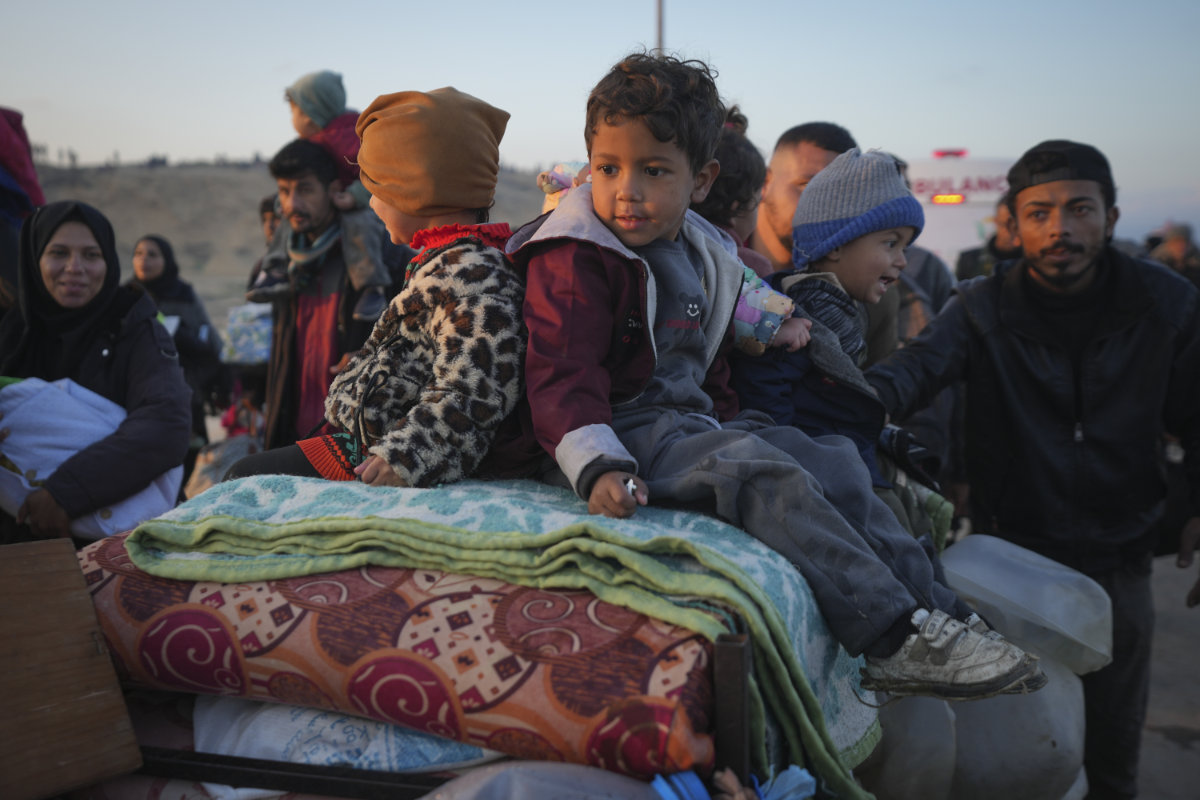
Displaced Palestinians return to their homes in the northern Gaza Strip, following Israel's decision to allow thousands of them to go back for the first time since the early weeks of the 15-month war with Hamas, Monday, Jan. 27, 2025. (AP)
Families carried bags of belongings and rolled up blankets. On their shoulders, men carried young children — or sacks of food and metal cannisters of cooking gas. Women balanced infants in their arms with satchels of clothes and jugs of water.
A little girl dressed in teddy-bear pajamas held her younger sister’s hand as they trailed their mother. A teenager strapped a pet carrier to his chest with his cat inside.
Others returned in cars and trucks piled high with mattresses and other belongings via a second route, Salah Al-Din Road.
Many were smiling. A child waved a “V-for-victory” sign. People tearfully hugged relatives and friends they’d been separated from for months.
One old woman being pushed in a wheelchair sang a traditional Palestinian song of perseverance dating back to 1948.
“Stand by each other, people of Palestine, stand by each other. Palestine is gone, but it has not bid you a final farewell,” she sang with a smile on her face. Then she added, “Thank God, we’re returning to our homes, after suffering so much ruin and hunger and disease.”
The joy was tempered by war’s cost and future’s uncertainty
Those returning crossed through the Netzarim corridor, a swath of land bisecting the Gaza Strip that Israeli forces turned into a military zone to seal off the north. The north saw some of the most intense Israeli offensives, aimed at eliminating Hamas fighters operating in densely populated areas.
Throughout the war, Israel repeatedly ordered civilians to evacuate the north – for their safety, it said – but barred their return. Under the ceasefire’s terms, Israeli troops pulled back from the main routes to allow returns and are eventually to pull out completely from the corridor.
For some, the joy of return was blemished by the deaths of loved ones.
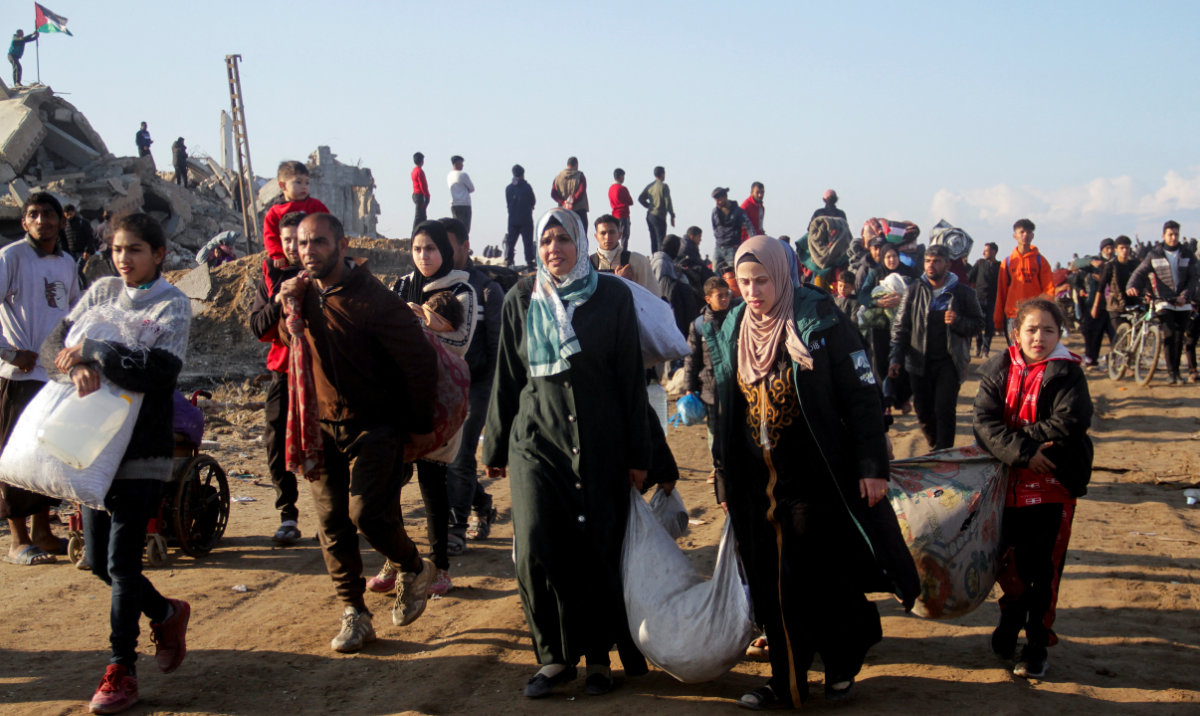
Palestinians, who were displaced to the south at Israel's order during the war, make their way back to their homes in northern Gaza, amid a ceasefire between Israel and Hamas, in Gaza City, January 27, 2025. (Reuters)
Kamal Hamadah was returning to Gaza City, where his eldest son, his daughter and her children were killed by bombardment early in the war. Their bodies were left buried under rubble in the streets, even as the rest of the family fled south, he said.
Then just over a month ago, another of his sons who fled with him was killed.
“When his mother learned we were going back home, she was struck by a great sadness that she was returning without the boy,” he said.
Returning home, Yasmin Abu Amshah had a happy reunion with her younger sister, Amany, who had stayed in Gaza City throughout the war. “I thought it wouldn’t happen, and we wouldn’t see each other again,” the 34-year-old mother of three said.
Her four-story building was damaged but not destroyed, so she and other members of her extended family will stay there.
Those returning face an uncertain future. If the ceasefire collapses, they could face new Israeli offensives. If peace lasts, it’s not clear when Palestinians will be able to rebuild homes, leaving much of the population in temporary housing.
Ibrahim Hammad, his wife and five children walked five hours back to their neighborhood in Gaza City – knowing their house there had been destroyed by an airstrike in December 2023. His family will stay at his brother’s house until he can clear a space in the ruins of his house to set up a tent.
“We had to return, even to the rubble,” the 48-year-old told the AP. “Here we don’t have a house, but our family is here, and we will help each other.”


