
RIYADH: Saudi Arabia’s Asir region is working on securing a further SR20 billion ($5.3 billion) in private investments as part of its transformation into a year-round tourism destination, with significant projects already underway.
With 7.8 million visitors recorded in 2024, the region is rapidly approaching its formal target of 9.1 million annual tourists by the end of the decade, revealed a senior official.
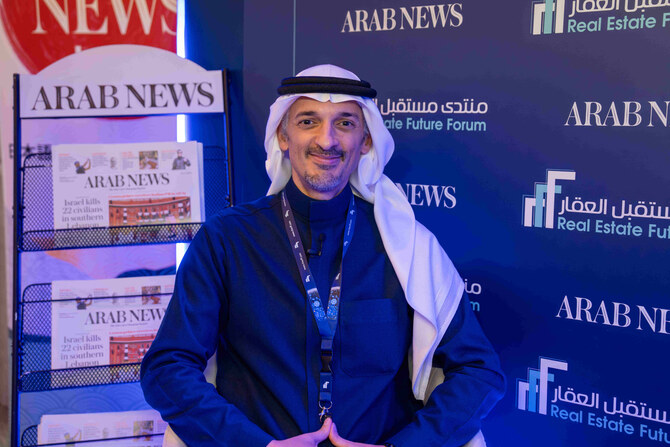
In an interview with Arab News at the Real Estate Future Forum in Riyadh, Hashem Al-Dabbagh, CEO of the Asir Region Development Authority, said that private sector investments in the region have already exceeded SR7 billion ($1.87 billion).
“Aside from that SR7 billion of investments from the private sector, we also have another SR20 billion or so that we are working on, and it’s in the pipeline, but it’s not yet realized,” said Al-Dabbagh.
He added: “So hopefully, between the investments that are realized and the ones in the pipeline, we have from the private sector somewhere around SR27 billion that hopefully is going to happen in Asir.”
Al-Dabbagh noted that while some of the projects currently in the pipeline are expected to be finalized this year, others are slated for completion in 2026 or 2027, with certain long-term initiatives extending beyond 2030.
He expressed optimism about the progress of investments in Asir, noting that the region has been “moving full speed ahead” in this area.
Al-Dabbagh emphasized that the ongoing projects in Asir are primarily driven by private sector investments, while also highlighting significant initiatives led by the Public Investment Fund.
Among these, he pointed to the Alwadi project, a SR14 billion waterway development located in the heart of Abha.
The project will include commercial, cultural, residential, and agricultural spaces on both banks, all designed with pedestrians in mind and catering to both locals and visitors.
“I claim that with that investment, Abha is going to be the most livable and beautiful city in the Arab world as a whole,” Al-Dabbagh added.
He also highlighted the Al Soudah Development Project, another mega initiative with an investment of SR14 billion.
“This is in the forest-covered mountains of Asir, where there’s going to be, again, development of hotels and residences, high-end for the most part, in six different areas within Al Soudah,” he said.
Both projects are expected to remain under development through 2030.
Al-Dabbagh noted that smaller-scale projects are also in the pipeline which some slated for completion by 2025.
He further discussed the role of the Asir Investment Co. in spearheading mega developments across the region.
“AIC has a number of iconic projects in a number of areas, not just within Abha, but in other regions on the coast, in the north, on the mountain ridge, and of course, in Abha as well,” he said, adding that these projects “are going to be announced formally in the next months, in 2025.”
Al-Dabbagh highlighted that the region’s strategy is focused on transforming Asir into a year-round destination for visitors.
“The formal target for Asir is 9.1 million annual visitors by the year 2030. I expect this target to be raised,” he said, explaining that the unofficial number of visitors to Asir in 2024 already neared 7.8 million.
Additionally, he pointed to the broader national tourism target for Saudi Arabia, which was recently increased from 100 million to 150 million visitors, suggesting that regional goals, including Asir’s, are likely to be adjusted upward.
“Without a doubt, this is going to have an impact on the economic development in the region and on the number of jobs,” Al-Dabbagh added.
He noted that Asir has traditionally been an exporter of workforce to other parts of Saudi Arabia, such as Riyadh, Jeddah, and Eastern Province, due to limited job opportunities in the region.
However, he emphasized that the tide is turning. “Now with everything that is happening in Asir, we find that there is a reverse migration, if you like,” he said.
Al-Dabbagh added that he has observed this shift firsthand within the Asir Development Authority and through reports from larger investment projects, as more local residents are choosing to return to Asir to work on the new developments.
He noted that Saudi Arabia only opened its doors to international tourism a few years ago, meaning that due to the country’s prior restrictions, “the vast, vast majority” of tourists in Asir were domestic visitors, along with some travelers from Gulf countries, he said.
Al-Dabbagh added that, while the majority of tourists to Asir are expected to be from Saudi and the Gulf region, the proportion of international visitors is anticipated to grow significantly — from around 1 percent to approximately 10 percent, even as the total number continues to rise.