

World Bank mission in Pakistan to discuss plan to improve power stability system

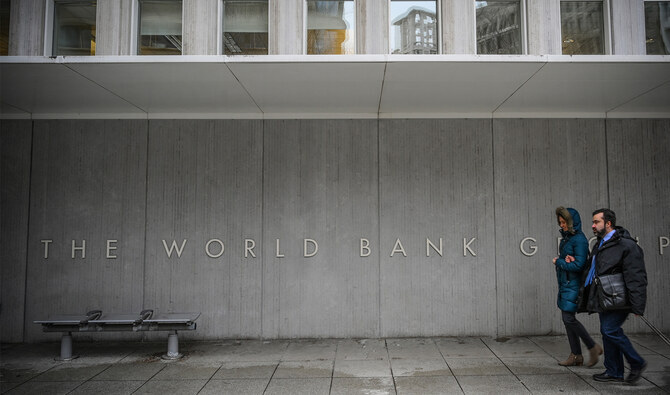
Two perosns walk by the building of the Washington-based global development lender, The World Bank Group, in Washington on January 17, 2019. (AFP/File)
Short Url
Updated 27 January 2025
Follow

World Bank mission in Pakistan to discuss plan to improve power stability system

  • World Bank mission to advance preparations for systems that manage, improve quality of power in electrical grids
  • Pakistan has taken steps recently to reform its energy sector, lower electricity costs and reduce transmission losses

ISLAMABAD: A World Bank mission is in Pakistan to discuss a plan to improve the power stability system in the energy-starved South Asian country, a spokesperson of the financial institution confirmed on Monday. 

As per local media reports, the World Bank mission was due to arrive in Pakistan on Monday for a two-day visit to develop a work plan and agree on the next steps to advance the preparation of Reactive Compensation Devices. 

Reactive Compensation Devices are electrical systems used to manage and improve the quality of power in electrical grids by controlling the flow of reactive power.

“There is a mission in town. That’s all I can confirm at this point,” Maryam Altaf, the communications officer at the World Bank’s Pakistan office, told Arab News when asked to confirm reports. 

Pakistan has been eagerly attempting to reform its energy sector, lower electricity costs and reduce transmission losses in its bid to curtail its mounting circular debt.

Prime Minister Shehbaz Sharif’s government has increasingly spoken about its desire to reduce electricity theft and transmission losses through energy sector reforms. This has resulted in the country suffering long hours of power outages, especially during summers, and suffering huge economic losses as a result. 

Earlier this month, the federal cabinet approved a plan to renegotiate agreements with 14 independent power producers (IPPs). The government said the revised agreements with the IPPs would cause a reduction of Rs802 billion ($2.9 billion) in costs and profits, including a Rs35 billion ($126 million) cut in past excess profits. 

At the core of Pakistan’s energy problems are capacity charges, or payments made to IPPs regardless of electricity consumption, which have exacerbated Pakistan’s circular debt, now exceeding Rs2.4 trillion ($8.6 billion), as per energy minister Sardar Awais Ahmad Laghari.

Laghari also announced earlier this month that the government will implement a new energy market system through which consumers will be able to buy power from multiple suppliers starting March. 

Russia urges diplomacy, offers assistance to ease Pakistan-Afghanistan tensions

Updated 16 November 2025
Follow

Russia urges diplomacy, offers assistance to ease Pakistan-Afghanistan tensions

  • Pakistan, Afghanistan engaged in fierce clashes last month after Pakistan hit what it said were TTP-linked targets in Afghanistan
  • Tensions remain high between the neighbors after two subsequent rounds of talks in Istanbul failed to firm up an Oct. 19 ceasefire

ISLAMABAD: Russia has urged Pakistan and Afghanistan to resolve their differences through political and diplomatic means and offered to assist both sides in lowering tensions, Pakistani state media reported on Sunday, citing a Russian broadcaster.

Pakistan and Afghanistan engaged in fierce clashes along their shared border on Oct. 11 after Pakistan conducted airstrikes inside Afghanistan against what it said were Tehreek-e-Taliban Pakistan-linked targets.

While the two sides reached a ceasefire in Doha on Oct. 19, tensions remain high between the neighbors after two subsequent rounds of talks to firm up the truce failed in Istanbul.

Islamabad wants the Afghan government to take "verifiable" actions against militant groups operating on Afghan soil. Kabul denies harboring TTP or other groups and wants its territorial sovereignty to be respected.

“We call on Kabul and Islamabad to resolve any disagreements exclusively through political and diplomatic means and by peaceful methods,” Russian foreign ministry spokesperson Maria Zakharova was quoted as saying by TASS news agency at a press briefing this week.

“The Russian Federation is always ready to contribute to promoting peace if it is requested by the conflicting parties. We have such experience, and we are ready for it.”

The TTP has been behind some of the deadliest attacks in Pakistan since late 2000s. The group has stepped up its attacks against Pakistani security forces and law enforcement agencies since the Taliban’s return to power in Afghanistan.

Zakharova said that tensions between Pakistan and Afghanistan “remains a matter of concern not only for Russia but… for the entire international community,” adding that “Russia stands in solidarity with its partners.”

There have also been reports that Iran is planning to hold a regional meeting to mediate between Afghanistan and Pakistan.

While there has been no comment by Pakistan on the statement by the Russian foreign ministry spokesperson, Pakistani foreign office spokesperson Tahir Andrabi on Sunday said that Islamabad welcomes Iran’s offer of mediation and will “not shy away from” it, Pakistan's Dawn newspaper reported.

“Pakistan is always in favour of finding peaceful resolutions of issues through dialogue and diplomacy, and we appreciate the offer of mediation of our brotherly country, Iran,” Andrabi was quoted as saying by the newspaper.

“We believe that Iran can play an important role. We would not shy away from any mediatory role by Iran. Mediations are always welcome,” he said, adding that Pakistan had a “very strong case.”

“Generally, mediations are resented by a country or a side which is on a weak legal or a political case. Pakistan’s case on this issue, on terrorism emanating from Afghanistan, is very strong. So, obviously we will not shy away from mediation.”