

World Bank mission in Pakistan to discuss plan to improve power stability system

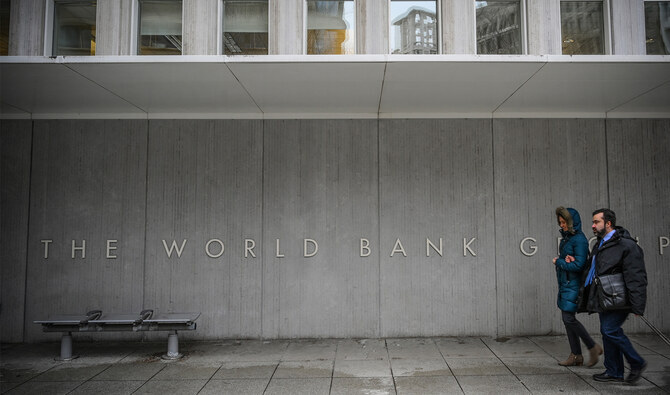
Two perosns walk by the building of the Washington-based global development lender, The World Bank Group, in Washington on January 17, 2019. (AFP/File)
Short Url
Updated 27 January 2025
Follow

World Bank mission in Pakistan to discuss plan to improve power stability system

  • World Bank mission to advance preparations for systems that manage, improve quality of power in electrical grids
  • Pakistan has taken steps recently to reform its energy sector, lower electricity costs and reduce transmission losses

ISLAMABAD: A World Bank mission is in Pakistan to discuss a plan to improve the power stability system in the energy-starved South Asian country, a spokesperson of the financial institution confirmed on Monday. 

As per local media reports, the World Bank mission was due to arrive in Pakistan on Monday for a two-day visit to develop a work plan and agree on the next steps to advance the preparation of Reactive Compensation Devices. 

Reactive Compensation Devices are electrical systems used to manage and improve the quality of power in electrical grids by controlling the flow of reactive power.

“There is a mission in town. That’s all I can confirm at this point,” Maryam Altaf, the communications officer at the World Bank’s Pakistan office, told Arab News when asked to confirm reports. 

Pakistan has been eagerly attempting to reform its energy sector, lower electricity costs and reduce transmission losses in its bid to curtail its mounting circular debt.

Prime Minister Shehbaz Sharif’s government has increasingly spoken about its desire to reduce electricity theft and transmission losses through energy sector reforms. This has resulted in the country suffering long hours of power outages, especially during summers, and suffering huge economic losses as a result. 

Earlier this month, the federal cabinet approved a plan to renegotiate agreements with 14 independent power producers (IPPs). The government said the revised agreements with the IPPs would cause a reduction of Rs802 billion ($2.9 billion) in costs and profits, including a Rs35 billion ($126 million) cut in past excess profits. 

At the core of Pakistan’s energy problems are capacity charges, or payments made to IPPs regardless of electricity consumption, which have exacerbated Pakistan’s circular debt, now exceeding Rs2.4 trillion ($8.6 billion), as per energy minister Sardar Awais Ahmad Laghari.

Laghari also announced earlier this month that the government will implement a new energy market system through which consumers will be able to buy power from multiple suppliers starting March. 


Government says Pakistan’s IT exports hit record monthly high in December

Updated 4 sec ago
Follow

Government says Pakistan’s IT exports hit record monthly high in December

  • Finance adviser says IT exports crossed $400 million for first time in a month
  • Pakistan aims to double exports to $60 billion in four years, with IT a key driver

ISLAMABAD: Pakistan’s information technology exports climbed to a record $437 million in December, crossing the $400 million mark for the first time on a monthly basis, the government’s finance adviser Khurram Schehzad said in a social media post on Monday.

The surge underscores the growing role of the tech sector as Pakistan seeks to boost exports while emerging from a prolonged economic crisis that drained foreign exchange reserves, widened balance-of-payments pressures and weakened the currency.

The government is now aiming for export-led growth as part of broader structural reforms under a $7 billion International Monetary Fund (IMF) loan program.

“December 2025 exports reached $437 million — crossing $400 million in a month for the first time ever,” Schehzad said in a post on X, adding that this represented 23 percent month-on-month growth from November and 26 percent year-on-year growth compared with December 2024.

For the first half of the current fiscal year, IT exports reached $2.24 billion, up 20 percent from a year earlier, making the sector the largest and most consistent contributor within services exports, he said.

Pakistan has been under pressure to sharply lift exports as it works to stabilize its economy.

Earlier this month, Planning Minister Ahsan Iqbal said the country must double its exports to $60 billion within four years or risk returning to the IMF.

Pakistan’s IT exports have been on a steady upward trajectory in recent years. They reached a record $3.8 billion in the 2024–25 financial year, according to official data.

The momentum has carried into the current fiscal year, with IT exports posting 19 percent year-on-year growth during the first five months from July to November.

Exports during the period stood at $1.8 billion, according to data released by the State Bank of Pakistan.

The government has said it sees the technology sector as a key driver of foreign exchange earnings and job creation as Pakistan seeks to lock in recent macroeconomic gains and attract new investment.