ISLAMABAD: After working for years alongside the United States to combat the Taliban in Afghanistan, Zahra says she was just days from being evacuated to America when President Donald Trump suspended refugee admissions.
She sold her belongings as she awaited a flight out of Pakistan, where she has been embroiled in a three-year process applying for a refugee scheme Trump froze in one of his first acts back in office.
“We stood with them for the past 20 years, all I want is for them to stand up for the promise they made,” the 27-year-old former Afghanistan defense ministry worker told AFP from Islamabad.
“The only wish we have is to be safe and live where we can have peace and an ordinary human life,” she said, sobbing down the phone and speaking under a pseudonym to protect her identity.
The 2021 withdrawal of US-led troops from Kabul ended two decades of war but began a new exodus, as Afghans clamoured to escape Taliban government curbs and fears of reprisal for working with Washington.
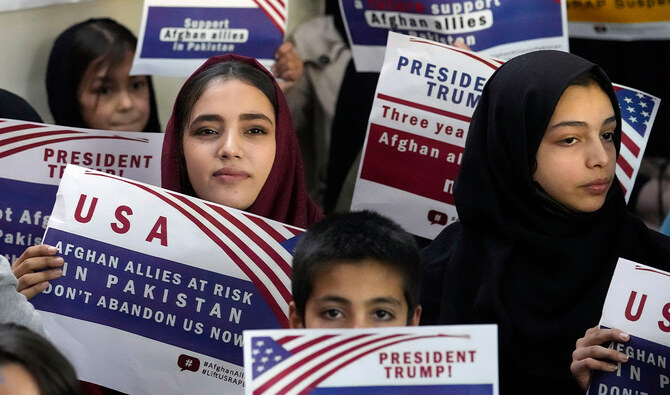
Trump’s executive order to pause admissions for at least 90 days starting from January 27 has blocked around 10,000 Afghans approved for entry from starting new lives in the United States, according to non-profit #AfghanEvac.
Tens of thousands more applications in process have also been frozen, the US-based organization said.
“All sorts of people that stood up for the idea of America, now they’re in danger,” #AfghanEvac chief Shawn VanDiver told AFP.
“We owe it to them to get them out.”
Trump’s order said “the United States lacks the ability to absorb large numbers of migrants, and in particular, refugees,” and stopped the relocation scheme until it “aligns with the interests of the United States.”
But campaigners argue the country owes a debt to Afghans left in the lurch by their withdrawal — which Trump committed to in his first term but was overseen by his successor president Joe Biden.
A special visa program for Afghans who were employed by or on behalf of the United States remains active.
But the more wide-reaching refugee scheme was relied on by applicants including ex-Afghan soldiers and employees of the US-backed government, as well as their family members.
With America’s Kabul embassy shut, many traveled to neighboring Pakistan to enter paperwork, conduct interviews and undergo vetting.
Female applicants are fleeing the country where the Taliban government has banned them from secondary school and university, squeezed them from public life and ordered them to wear all-covering clothes.
“I had a lot of hopes for my sisters, that they should graduate from school and pursue education,” said one of five daughters of an ex-government employee’s family seeking resettlement from Pakistan.
“All my hopes are shattered,” said the 23-year-old. “I have nightmares and when I wake up in the morning, I feel like I can’t fall asleep again. I’m very anxious.”
The European Court of Justice ruled last year that Afghan women have the right to be recognized as refugees in the EU because Taliban government curbs on women “constitute acts of persecution.”
This week, the International Criminal Court chief prosecutor said he was seeking arrest warrants for Taliban government leaders because there are grounds to suspect they “bear criminal responsibility for the crime against humanity of persecution on gender grounds.”
Moniza Kakar, a lawyer who works with Afghan refugees in Pakistan, said some women told her they “prefer suicide than going back to Afghanistan.”
The Taliban government has announced an amnesty and encouraged those who fled to return to rebuild the country, presenting it as a haven of Islamic values.
But a 2023 report by UN rights experts said “the amnesty for former government and military officials is being violated” and there were “consistent credible reports of summary executions and acts tantamount to enforced disappearances.”
Last summer, Pakistan’s foreign ministry complained as many as 25,000 Afghans were in the country awaiting relocation to the United States.
Islamabad announced a sweeping campaign in 2023 to evict undocumented Afghans , ordering them to leave or face arrest as relations soured with the Taliban government.
At least 800,000 Afghans have left since October 2023, according to the Norwegian Refugee Council.
But Afghans awaiting refugee relocation have also reported widespread harassment to leave by authorities in Pakistan.
A foreign ministry spokesman told reporters this week Trump’s administration had not yet communicated any new refugee policy to Pakistan.
Islamabad is following “the same old plan” where Washington has committed to taking in refugees this year, Shafqat Ali Khan said.
Afghans awaiting new lives abroad feel caught between a canceled future and the haunting prospect of returning to their homeland.
“I don’t have the option of returning to Afghanistan, and my situation here is dire,” said 52-year-old former Afghan journalist Zahir Bahand.
“There is no life left for me, no peace, no future, no visa, no home, no work: nothing is left for me.”


![]()

Trump refugee embargo cancels hope for Afghan migrants in Pakistan
Short Url
https://arab.news/8wtqk
Trump refugee embargo cancels hope for Afghan migrants in Pakistan
- Trump’s order to pause admissions for 90 days starting Jan. 27 has blocked around 10,000 Afghans from entry in US
- Tens of thousands more applications in process have also been frozen, according to a US-based non-profit AfghanEvac
Latest updates


© 2026 SAUDI RESEARCH & PUBLISHING COMPANY, All Rights Reserved And subject to Terms of Use Agreement.