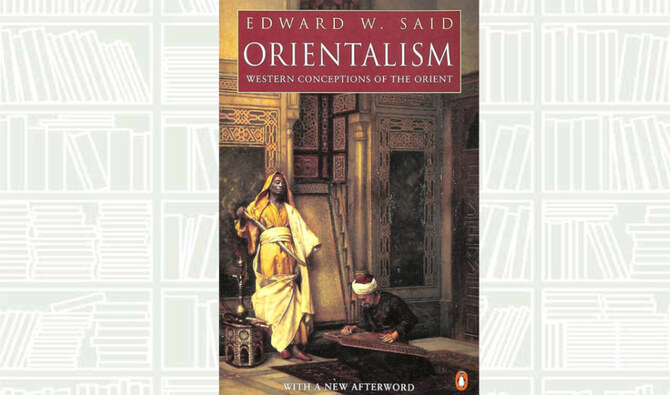

Author: Edward Said
Edward Said’s “Orientalism” is a landmark work that reshaped the understanding of how the West perceives and portrays the East.
First published in 1978, the book is a critique of the constructed image of the “Orient” as an exotic, monolithic “other,” created by the West to assert cultural and political dominance.
Through a meticulous examination of literature, art, and academic scholarship, Said reveals how this distorted portrayal served to justify colonial rule and perpetuate stereotypes.
Central to Said’s argument is the idea that orientalism is not merely a scholarly discipline but a political and cultural discourse used to reinforce Western superiority. He illustrates how this discourse characterizes the East as irrational, backward, and static, contrasting it with a rational and progressive West.
This binary framing, Said argues, has historically shaped Western attitudes and policies toward the Middle East, Asia, and North Africa, with effects that persist today.
Said’s interdisciplinary approach draws on history, literature, and politics, making “Orientalism” a rich and provocative analysis. He sets out how even seemingly objective academic studies and media representations have reinforced reductive stereotypes, showing how power shapes knowledge. By doing so, he challenges readers to critically examine the narratives they encounter about the “East.”
Although “Orientalism” is deeply rooted in historical context, its relevance endures in contemporary discussions of cultural representation and global politics. It continues to resonate in a world where stereotypes and biases influence international relations and public perception.
Said’s writing is both rigorous and accessible, blending scholarly depth with a moral clarity that makes his arguments compelling. While the book’s density may challenge some readers, its insights are invaluable for understanding how cultural narratives are constructed and used to assert dominance.
Ultimately, “Orientalism” is a profound critique of the structures that perpetuate inequality and division. It remains an essential read for anyone seeking to understand the cultural legacies of imperialism and the enduring power of representation.
Said’s work is not only an academic achievement but also a call to rethink entrenched attitudes and strive for a more equitable understanding of cultural difference.