


RIYADH: Saudi Arabia’s hydroponic farming sector is poised for a boost, as the Kingdom-based agritech startup Arable announces the successful closure of a $2.55 million seed funding round, led by undisclosed investors.
The funding round attracted both institutional and private investors, with 90 percent of the capital coming from foreign investors. The funds will be allocated within Saudi Arabia to help advance the country’s agricultural sector, the company stated in a press release.
Saudi Arabia, facing limited water resources and harsh climate conditions, grapples with significant agricultural challenges, including groundwater salinization.
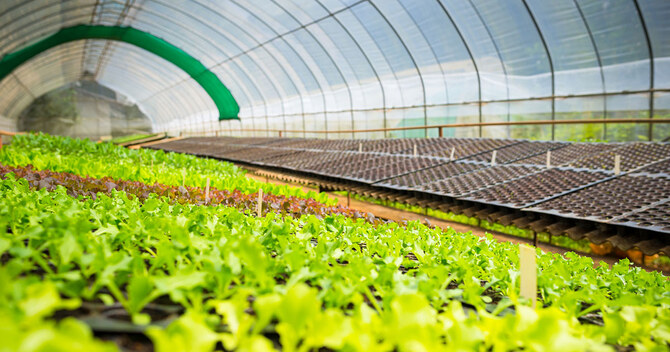
Hydroponic farming presents a promising solution to improve produce yields and conserve water in the Arabian peninsula—one of the driest regions in the world, with little rainfall.
Arable emphasized that its growth is supported by key strategic partnerships and government backing, which have bolstered the company's progress in the region's agricultural landscape.
“Saudi Arabia offers an unparalleled ecosystem for startups like Arable to thrive. Thanks to the support of organizations such as the Ministry of Environment, Water, and Agriculture, the Ministry of Investment, the National Technology Development Program, and the General Authority of SMEs, we’ve been able to scale rapidly and bring innovation directly into the Kingdom,” said Lawrence Ong, CEO of Arable.
Founded last year by Ong and Christina Khalife, Arable designs and operates hydroponic farming systems. The company claims its innovative approach enables faster, more cost-effective setups with lower operational expenses.
Arable’s goal is to provide an affordable method of vegetable production by growing plants without soil, using nutrient-rich water solutions to deliver essential minerals directly to the roots—ideal for the Kingdom’s challenging desert climate. The company also points out that 80 percent of its system’s components can be sourced or manufactured locally.
The firm aims to contribute to Saudi Arabia’s agricultural transformation by offering a sustainable and scalable solution for growing fruits and vegetables, aligning with the Kingdom’s Vision 2030 goals of reducing food imports and increasing local food production.
“The Saudi Ministry of Investment supports foreign investment and local innovation by streamlining the investor journey and ensuring a seamless experience. At MISA, we facilitate various initiatives and strategies aligned with Vision 2030, supporting the growth of businesses across all sectors, including those such as Arable, which address critical needs such as food security,” said Mohammad Abahussain, deputy minister at the Ministry of Investment.
Hydroponic farming has the potential to thrive even in harsh environments by promoting fibrous root development, which allows better nutrient absorption, reduces the risk of root rot, and accelerates plant maturity.
“Arable’s impressive achievement in raising significant funding, with a majority from international investors, highlights the innovative potential of Saudi Arabia’s agricultural sector,” said Ali Al-Sabhan, general manager of entrepreneurship at MEWA.
He added that the company’s hydroponic system, designed specifically for local conditions and at a significantly reduced cost—with most components sourced locally—sets a new standard for efficiency and sustainability.
“We are proud to have them as part of the Sunbulah platform, as this startup not only enhances our agricultural self-sufficiency but also attracts global interest, aligning perfectly with our vision for a diversified economy,” Al-Sabhan concluded.
A report from MEWA on technology adoption within the Kingdom’s agricultural sectors highlights significant growth in key areas. The global market for agricultural drones, for instance, is expected to surge from $1.1 billion in 2022 to $7.19 billion by 2032, driven by the increasing use of drone technology in precision farming.
At the same time, the overall agricultural market is projected to expand from $13.6 billion in 2022 to $33.6 billion by 2032, with a compound annual growth rate of 9.8 percent, according to the report.
The global agricultural biotechnology market is also set for substantial growth, with forecasts indicating it will rise from $106.62 billion in 2022 to $242.17 billion by 2032. This growth reflects the growing impact of biotech innovations in boosting crop yields and enhancing sustainability.


