

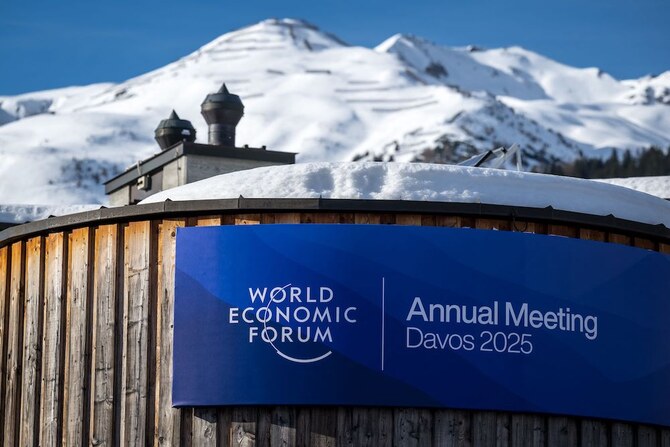

DAVOS: The World Economic Forum’s Annual Meeting in Davos is welcoming global elites as US President Donald Trump’s inauguration dominates both conversations and headlines.
Day one of the forum’s flagship event was more of a prelude to what is to come, with only one panel taking place, titled “First Impressions: Inauguration Day.”
The rest of the program was free for networking within the Congress Center’s cafes, lounges and hallways. A new booth serving crepes in front of the high-level delegates lounge is a popular addition to this year’s meeting.
What was unpopular — so to say — but widely spoken of, was the warmer weather, an unavoidable consequence of the climate change that the World Economic Forum has so desperately tried to combat.
Indeed, looking out of the window as the SBB train curls around the Swiss Alps overlooking the ski-resort towns of Klosters and Davos, the usually snow-blanketed mountains and hills appear patchy. While nobody complains about the sun shining above, it still serves as a dreadful reminder that not even the elites can hide from the unsuspecting elements affected by humans.
“It’s getting warmer each year. Who knows what will happen five years from now,” one of the drivers of the fleet of shuttles bussing participants back and forth between Klosters and Davos tells me, wearing a tight-fitting short-sleeved shirt and colorful sport glasses.
Davos chic was on full display on the promenade, where pricey suits were paired with clunky snow boots. And with the temperature not dissimilar to that of London’s, participants kept their jackets in the cloak rooms as they walked through the several different tech, government and NGO pavilions that graced the slush-slapped street.
Among the new pavilions — termed “houses” — is Saudi House, dedicated to hosting distinguished, Davos-accredited panels, talks and discussions revolving around Saudi Arabia and its role in the world.
“Saudi House was designed to facilitate the participation of all the (Saudi) government entities taking part in Davos in one location,” Faisal Alibrahim, the Saudi minister of economy and planning, told Arab News in a previous interview.
“We think putting everyone in one place will create the vibrancy that can demonstrate and echo the vibrancy we are seeing here in the Kingdom.”
Other items on display at the house are dishes and drinks from Saudi cuisine. Plates of lamb kabsa — a hearty, spiced rice dish — were lapped up by attendees and washed down with a fluorescent red concoction made from rose-water and hibiscus juice. The other drink, what can only be described as a neon green fluid that looked as if it came from a lava lamp, was a surprisingly refreshing mix of mint and Curacao syrup.
As Washington ushers in a new president, who has vowed to “very simply, put America first” — all those attending the World Economic Forum’s Annual Meeting are bracing themselves to working through another four years of Trumpmania.


