

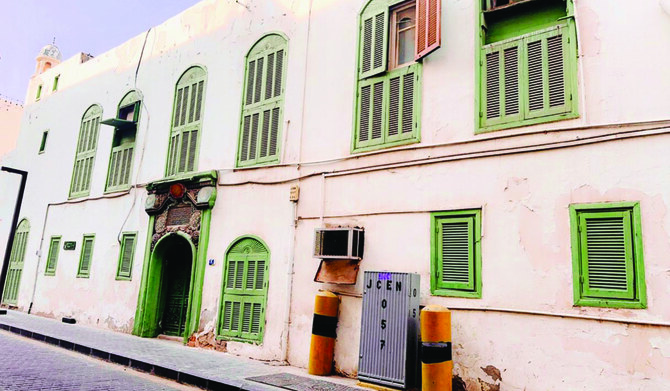
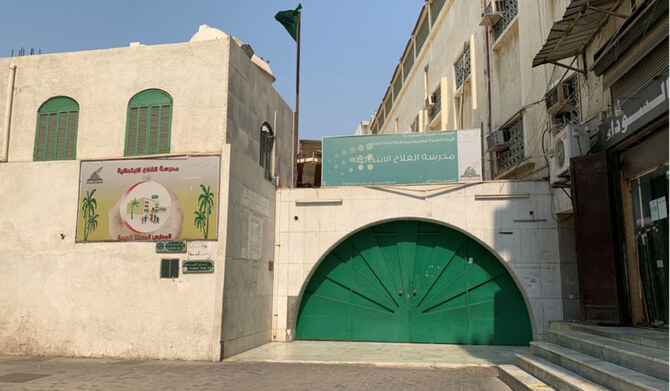

JEDDAH: The first school formally established in the Arabian Peninsula is poised for a new chapter as a museum, according to Ali Al-Sulimani, the managing director.
The historical section of Al-Falah School building will be handed over to the Ministry of Culture for its transformation into a cultural landmark.
It was built in 1905 by Saudi businessman Sheikh Mohammed Ali Zainal Alireza as the first boys’ school in Jeddah at a time when the Hijaz, the western part of modern Saudi Arabia, was partially under Ottoman Turkish rule and both poverty and illiteracy were common.

An archival image of students in class. (Supplied)
Although Zainal went through major financial crises, he continued funding the school with help from other business families. Eventually, the Kingdom’s founder King Abdulaziz visited it and appreciated its great educational and social role, and arranged for government support.
The school marks the onset of modern education in Saudi Arabia and has been the alma mater of numerous national figures, including former Minister of Information Mohammed Abdu Yamani, former Minister of Commerce Abdullah Zail, former Minister of Petroleum and Mineral Resources Ahmed Zaki Yamani, and former Minister of Hajj Hamid Harasani among others.
Al-Falah School, is located in the heart of the historical area in Jeddah, has continued to the present day, and includes two buildings, the older of them dating back more than 120 years.

The school offers three levels of education — elementary, intermediate and high school — with each having its own playground. (AN photo by Ghazi Mahdi)
According to Al-Sulimani the older building will be a fully integrated museum, including a cultural space, a cafe with a heritage theme and seating areas where visitors can learn about the historical area and the history of the school.
“The old part was handed over to the Ministry of Culture to be prepared to comply with the development plans for the old buildings in the historic area,” he said.
One former pupil, 82-year-old Hamza Awfi, told Arab News: “The school was based on a solid foundation. It is the place I considered as our second home. Here I have met many students who graduated and later held important leadership positions and I still remember them, young and old.
It was a place of knowledge and it provided me a wonderful environment and opportunity to learn and grow myself in every field.
Ahmed Abdulgader Al-Noaman, 72-year-old alum
“We really hold great memories, and by the way, I and other friends who graduated from this school, still go and visit it from time to time to remember our old good days.”
Awfi added that keeping the modern building for education as a symbol of resilience and enlightenment while at the same time transforming the old building into a museum is a great idea.
Another former pupil, 72-year-old Ahmed Abdulgader Al-Noaman, told Arab News: “My four years at Al-Falah have been an excellent memory to cherish for a lifetime. The time spent has been full of learning opportunities. It was a place of knowledge and it provided me a wonderful environment and opportunity to learn and grow myself in every field.”
The school offers three levels of education — elementary, intermediate and high school — with each having its own playground. Today, the old U-shaped building stands in the center of the complex and is used by elementary students. The classrooms remain their original size, which is considered small by current standards.
The floors, ceilings, and doors of the school’s original building are made from wood they were restored, with their traditional character retained in order to preserve the school’s history and heritage. The original green dome still rests on top of the old building.


