

More than 84,000 visitors attend Hira Winter events in Makkah

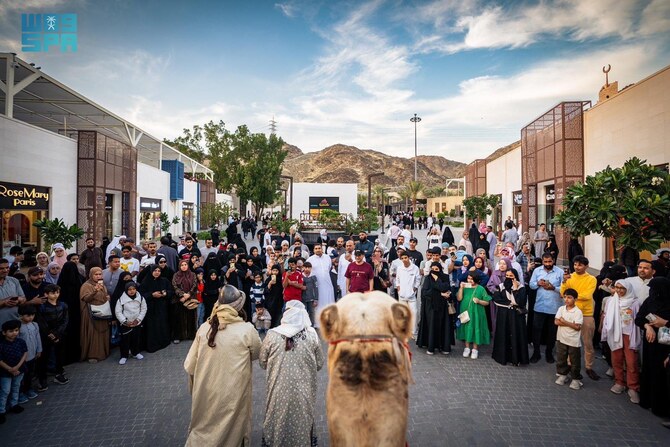
Visitors were taken back to ancient trade routes where camels played a key role in transporting goods and facilitating travel. (SPA)
Short Url
Updated 19 January 2025
Follow

More than 84,000 visitors attend Hira Winter events in Makkah

RIYADH: The Hira Winter events, organized by the Hira Cultural District and which recently concluded in Makkah, attracted more than 84,000 visitors.

Highlights included the Revelation Exhibition, which used cutting-edge technology to simulate the story of Prophet Muhammad’s revelation, blending tradition and innovation.

The exhibition featured a pavilion detailing the Cave of Hira and Khadijah bint Khuwaylid, the Mother of Believers, along with a depiction of the first revelation.

Rare historical artifacts, such as a photographed copy of the Qur’an manuscript of Uthman bin Affan and ancient stone inscriptions of Qur’anic verses, gave visitors a unique experience that combined the past and present.

Poetic performances inspired by Arab heritage underscored poetry’s role as the Arabs' diwan (repository of culture) and a tool for documenting events and emotions.

Poetic jousts highlighted live interaction and pride in the Arabic language and literature, enriching the cultural experience.

The Caravan Experience revived the cultural heritage of camel caravans, underlining their role in ancient Arab trade and society.

Visitors were taken back to ancient trade routes where camels played a key role in transporting goods and facilitating travel.

The Challenge Zone attracted adventure enthusiasts with various games blending entertainment and competition.

The Winter Theater delighted visitors with interactive performances, including contests and games inspired by winter traditions.

The district also featured a Crafts and Heritage Industries Market, where visitors explored local products, bought souvenirs, and enjoyed traditional and contemporary food and beverages, creating a holistic experience of entertainment, culture and shopping.

The Hira Cultural District is an area of approximately 67,000 sq. meters near Jabal Hira, one of Makkah’s most famous landmarks. It is a tourist and educational destination, bridging the past and present, and aligns with Saudi Vision 2030 to enhance quality of life and visitor experiences.


History lives in stone in AlUla’s ancient city of Dadan

Updated 10 January 2026
Follow

History lives in stone in AlUla’s ancient city of Dadan

ALULA: The ancient city of Dadan is “one of the most significant historical discoveries in AlUla governorate and a key landmark reflecting the depth of human history in northwest Arabia,” according to an article published by the Saudi Press Agency on Saturday.

Dadan served as the capital of the Kingdom of Dadan and later of the Kingdom of Lihyan, from the late ninth century to the early first century B.C., the report stated.

Among the site’s most striking features are tombs carved into red rock cliff faces. Some are distinguished by rectangular facades crowned with lion carvings, a symbol often associated with power. “These structures reflect a sophisticated level of artistic and architectural skill, highlighting the advanced craftsmanship of the region’s ancient inhabitants,” the SPA wrote.

Constructed primarily from local stone, the city developed into an important hub for agriculture and trade. Its strategic position along the Incense Route — one of the most vital trade routes in the ancient world — enabled Dadan to flourish economically while facilitating cultural exchange.

Merchants, travelers and envoys passing through the city contributed to the circulation of goods and ideas across the Arabian Peninsula and beyond.

Archeological excavations at Dadan are ongoing, with teams of specialists conducting “systematic research in successive scientific phases to uncover additional structures, inscriptions and artifacts that may further clarify the city’s historical role and daily life,” according to the SPA.

AlUla’s recorded history spans more than 7,000 years of human presence. Discoveries at Dadan — including inscriptions and written records — continue to reshape understanding of the region’s social, economic and political development, “reinforcing AlUla’s status as an open-air archive of ancient civilization,” the SPA concluded.