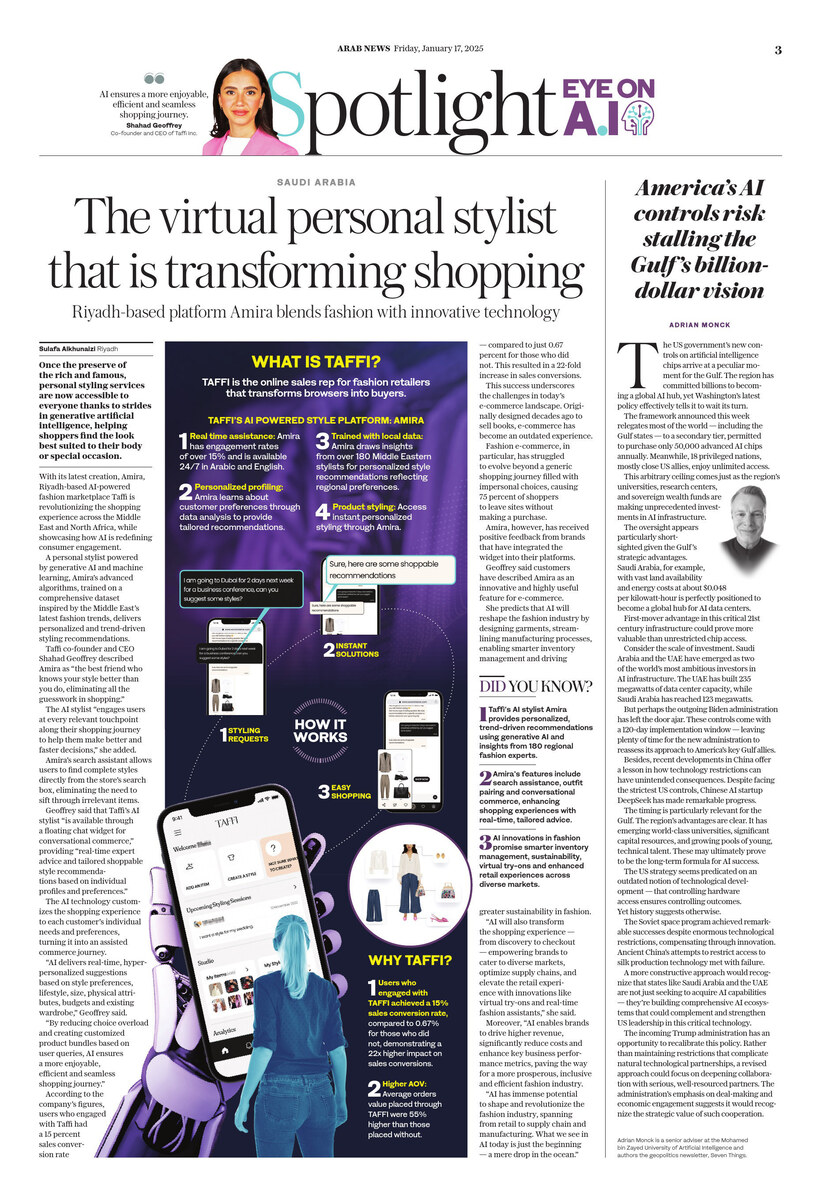
- AI innovations in fashion promise smarter inventory management, sustainability, virtual try-ons, and enhanced sales
- Billed as a virtual personal stylist, Amira by Taffi Inc. offers search assistance, outfit pairing, and conversational commerce
RIYADH: Once the preserve of the rich and famous, personal styling services are now accessible to everyone thanks to strides in generative artificial intelligence, helping shoppers find the look best suited to their body or special occasion.
With its latest creation, Amira, Riyadh-based AI-powered fashion marketplace Taffi is revolutionizing the shopping experience across the Middle East and North Africa, while showcasing how AI is redefining consumer engagement.
A personal stylist powered by generative AI and machine learning, Amira’s advanced algorithms, trained on a comprehensive dataset inspired by the Middle East’s latest fashion trends, delivers personalized and trend-driven styling recommendations.
Launched in September, Amira has been trained by a network of more than 180 expert fashion stylists from across the region. These professionals have contributed tens of thousands of recommendations, reflecting local tastes and cultural preferences.
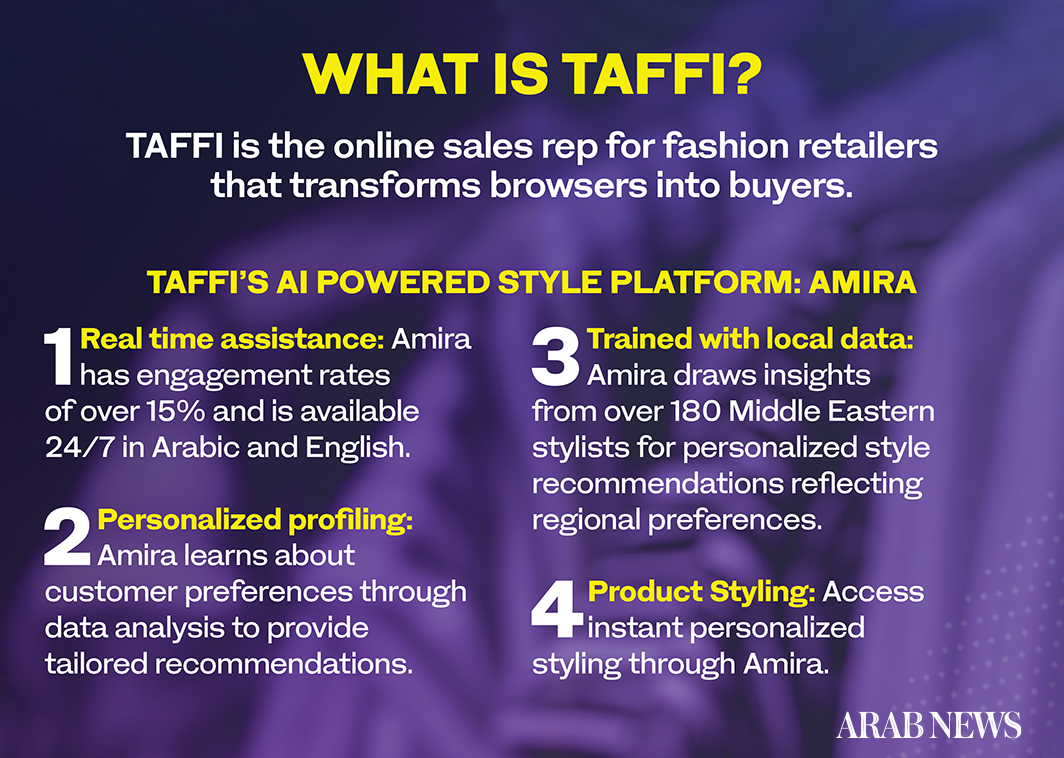
Taffi co-founder and CEO Shahad Geoffrey described Amira as “the best friend who knows your style better than you do, eliminating all the guesswork in shopping.”
The AI stylist “engages users at every relevant touchpoint along their shopping journey to help them make better and faster decisions,” she added.
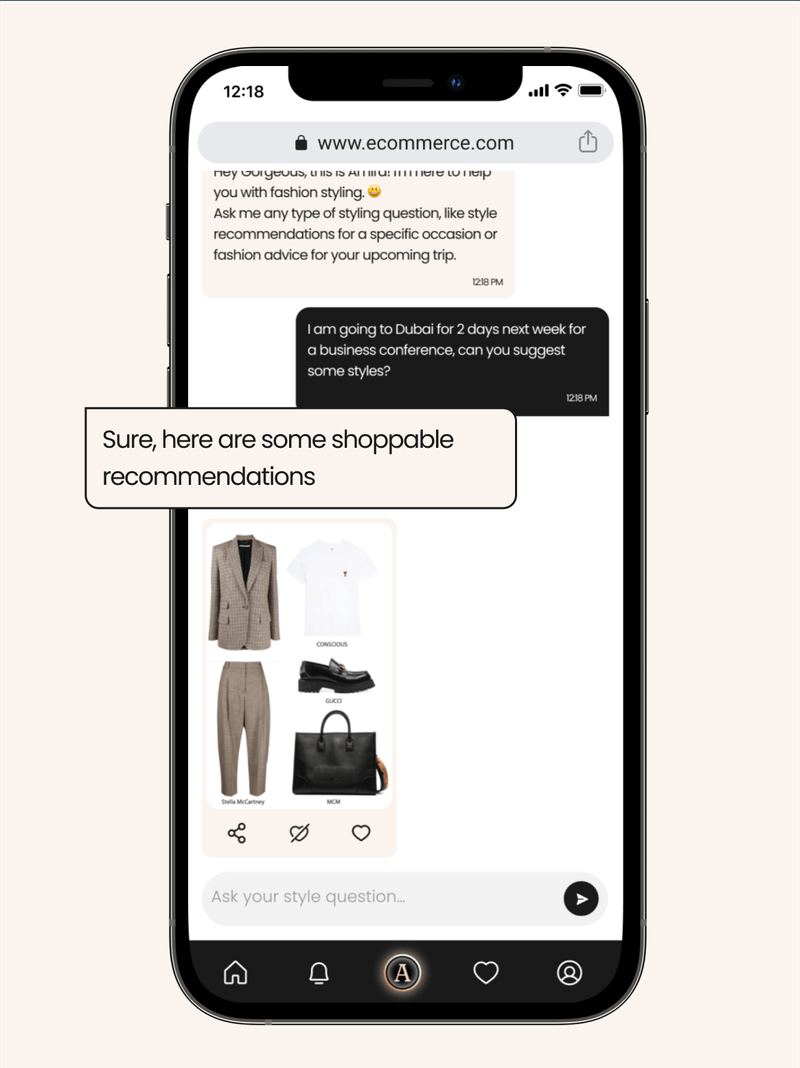
Amira’s search assistant allows users to find complete styles directly from the store’s search box, eliminating the need to sift through irrelevant items. The AI stylist’s discovery assistant recommends relevant new products, while the product stylist pairs items with complementary upsell suggestions.
Geoffrey said that Taffi’s AI stylist “is available through a floating chat widget for conversational commerce,” providing “real-time expert advice and tailored shoppable style recommendations based on individual profiles and preferences to help customers quickly find their best styles via their natural language.”

The AI technology customizes the shopping experience to each customer’s individual needs and preferences, turning it into an assisted commerce journey.
This innovation is revolutionizing how shoppers discover new products, find purpose-driven outfits and complete tasks more efficiently — saving time, offering trusted recommendations and providing access to great deals.
“AI delivers real-time, hyper-personalized suggestions based on style preferences, lifestyle, size, physical attributes, budgets and existing wardrobe,” Geoffrey said. “It also inspires shoppers by offering ideas for mixing and matching outfits and exploring new trends.
“By reducing choice overload and creating customized product bundles based on user queries, AI ensures a more enjoyable, efficient and seamless shopping journey.”
Saudi Arabia’s fashion industry is expected to see cumulative annual growth of 48 percent from 2021 to 2025 as the Kingdom diversifies its economy, according to a 2024 report by the Small and Medium Enterprises General Authority.
The report also highlighted that the total value of the fashion sector in Saudi Arabia, including international brands, was $24.6 billion in 2022.
Taffi’s Amira was born from Geoffrey’s own frustration with the endless sea of fashion choices and the “static, impersonal shopping experiences.
“I always dreamed of having a virtual fashion assistant that truly understood my needs and preferences, finding personalized clothing effortlessly,” she said.
“Taffi was born to bring that vision to life, empowering shoppers with an AI fashion assistant that simplifies the shopping journey, making it seamless to discover and find outfits and tailor experiences to their unique preferences.”
Founded in 2021 by Geoffrey and Pradeep Bisht, the AI-powered fashion-focused shopping platform uses machine-learning, ChatGPT-4 and generative AI to provide users with styling recommendations based on their preferences, occasion and budget.
According to the company’s figures, users who engaged with Taffi had a 15 percent sales conversion rate — compared to just 0.67 percent for those who did not. This resulted in a 22-fold increase in sales conversions.
Additionally, Geoffrey highlighted that the average order value for purchases made through Taffi was 55 percent higher than those made without the platform

This success underscores the challenges in today’s e-commerce landscape. Originally designed decades ago to sell books, e-commerce has become an outdated experience.
Fashion e-commerce, in particular, has struggled to evolve beyond a generic shopping journey filled with impersonal choices, causing 75 percent of shoppers to leave sites without making a purchase. In fact, just 1-2 percent of visitors ever convert into buyers.
Frustrated customers often receive no response from overwhelmed customer support teams and return items at alarming rates. This creates a cycle of dissatisfaction for consumers while putting businesses under strain.
Amira, however, has received positive feedback from brands that have integrated the widget into their platforms.
Geoffrey said customers have described Amira as an innovative and highly useful feature for e-commerce, noting that it has significantly uplifted their brand image and dramatically enhanced the customer experience.

She predicts that AI will reshape the fashion industry by designing garments, streamlining manufacturing processes, enabling smarter inventory management and driving greater sustainability in fashion.
“AI will also transform the shopping experience — from discovery to checkout — empowering brands to cater to diverse markets, optimize supply chains, and elevate the retail experience with innovations like virtual try-ons and real-time fashion assistants,” she said.
Moreover, “AI enables brands to drive higher revenue, significantly reduce costs and enhance key business performance metrics, paving the way for a more prosperous, inclusive and efficient fashion industry.
“AI has immense potential to shape and revolutionize the fashion industry, spanning from retail to supply chain and manufacturing. What we see in AI today is just the beginning — a mere drop in the ocean.”