LONDON: Vehicles have a long history as tools of terror, but their use has surged in recent years, becoming a preferred method for attackers seeking to cause mass casualty events, creating headaches for security agencies.
On Jan. 1, at approximately 3:15 p.m. local time, a Ford pickup truck plowed into a crowd on Bourbon Street in New Orleans, Louisiana, killing 14 people and injuring dozens more. The FBI has classified the attack as terrorism.
The driver, identified as Shamsud-Din Jabbar, a Texas native, was found to have a Daesh flag inside the vehicle. Before he was shot dead by police, Jabbar recorded videos referencing his divorce and how he joined Daesh earlier in the summer, authorities revealed.
Initially believed to have acted alone, investigators said on Monday they were pursuing leads related to his recent travels to Egypt, Canada, and several US cities.
On the same day as the New Orleans attack, another incident took place in Las Vegas, Nevada, when a Tesla Cybertruck packed with explosives burst into flames outside the Trump International Hotel.
The perpetrator, Matthew Livelsberger, a 37-year-old Green Beret and highly decorated soldier from Colorado Springs, refrained from labeling his actions as terrorism.

A Tesla Cybertruck exploded outside President-elect Donald Trump’s Las Vegas hotel on Jan. 1. (AFP)
In notes discovered by authorities, Livelsberger, who suffered from post-traumatic stress disorder, described the act as a “wake-up call” rather than a terrorist attack. Despite this, the method — the use of a vehicle as a weapon — was a common feature.
Earlier in December, a rented black BMW SUV was driven into a crowd at a Christmas market in Magdeburg, central Germany, killing six and injuring almost 300. The suspect, Taleb Al-Abdulmohsen, a German citizen of Saudi origin, was arrested at the scene.
While his social media history revealed anti-Islam and anti-immigration remarks, German authorities are continuing to search for a motive, emphasizing that he appeared to have acted alone.
While these incidents may seem unrelated, they again share a critical commonality: the weapon of choice.
“While accessibility is a key factor, vehicles also appeal to terrorists for strategic and technological reasons,” Danielle Cosgrove, a member of the Counterterrorism Group at the Atlantic Council, told Arab News.
“Their widespread availability and ability to blend into myriad environments allow attackers to operate under the radar,” she said, adding that platforms like peer-to-peer car rental services — including Turo, which was used by both US attackers — coupled with cryptocurrency payments, have made it easier for attackers to rent vehicles anonymously, avoiding traditional paper trails.

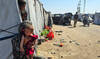
An artist lights candles at a memorial on Bourbon Street in New Orleans, Louisiana. (Getty Images/AFP)
Since the turn of the century, terrorism has shaped global debates and drastically influenced government policies and budgets. According to the Watson Institute for International and Public Affairs at Brown University, the US alone — by far the largest spender — allocated around $8 trillion to the global war on terror between 2001 and 2022.
Despite this immense expenditure, the number of “vehicle-as-a-weapon,” or VAW, attacks has risen. More than 40 such incidents have occurred globally in recent years, although the exact figure varies due to inconsistent reporting and regional definitions.
A 2019 study by the Mineta Transportation Institute at San Jose State University found that the majority of these attacks took place in Israel and the West Bank.
FASTFACTS
• Vehicle-as-a-weapon attacks have surged globally, with more than 40 incidents in recent years targeting crowded areas.
• Groups like Daesh and Al-Qaeda promote vehicle attacks for their accessibility, ease of use, and high casualty potential.
• Experts advocate AI surveillance, stricter rental policies, and smart urban designs to prevent future vehicle-based attacks.
“Vehicle-based attacks remain prevalent because they are able to exploit gaps in both physical security and digital infrastructure,” Cosgrove said.
She explained that while “modern counterterrorism efforts have become highly effective at identifying organized plots, lone-wolf terrorists — often radicalized online — pose a different kind of challenge.”
Although terrorist groups began using ramming attacks in the 1990s, calls for such attacks intensified a decade later. In 2010, Al-Qaeda encouraged its followers through its magazine, Inspire, to use vehicles to “mow down the enemies of Allah.”

A car drives through the annual Christmas market in Magdeburg, Germany. (CCTV Video)
The tactic — propelled by the rise of online forums and propaganda networks offering tactical guidance, including detailed step-by-step instructions — gained momentum years later, as groups like Daesh and Al-Qaeda in the Arabian Peninsula publicly advocated for vehicle-based attacks, recommending four-wheel-drive pickup trucks for their strength and effectiveness in targeting crowded places such as markets and public events.
“Beyond logistical ease, vehicles create mass casualties in crowded areas and generate widespread media attention, aligning with terrorists’ goals of fear and disruption,” Cosgrove said.
In one of the deadliest VAW attacks in history, in July 2016, more than 80 people were killed and hundreds injured when a man drove a 19-ton truck through a crowd gathered to watch Bastille Day fireworks in Nice, southern France, before the driver was shot dead by police at the scene.
Daesh claimed responsibility for the attack, calling it a “special operation using a truck” carried out by one of its “soldiers” — Mohamed Lahouaiej-Bouhlel, a 31-year-old Tunisian man with French residency status.
However, despite a 2022 French court sentencing eight individuals for aiding the attack, authorities found no concrete links between the perpetrator and the extremist group. The case highlighted what officials called “the extreme difficulty of the fight against terrorism.”
“The biggest challenge in spotting these attacks before they happen lies in identifying intent rather than capability,” said Cosgrove, explaining that vehicles, being easily accessible and requiring limited training or skill, allow attackers to “operate under the radar.”
She added that the “rise of AI-driven radicalization also complicates early intervention, as lone wolves often operate outside of traditional terrorist networks in spite of ideological backing.”

People attend a commemoration after the Christmas market car-ramming attack in Magdeburg, eastern Germany. (AFP)
While Daesh has claimed many VAW attacks in the US and Europe — where access to firearms is more restricted — authorities have struggled to establish concrete links beyond ideological inspiration. Regardless of the motives, such attacks have proven extremely difficult to prevent.
Following a wave of vehicle ramming incidents between 2014 and 2017, many cities implemented urban design changes, such as installing barriers and bollards. Yet, Cosgrove says these measures provide only limited reassurance.
“To mitigate these risks, cities and countries should adopt a multi-layered approach,” she said.
This includes artificial-intelligence-powered surveillance to flag anomalies such as erratic driving or rapid vehicle rentals under different aliases, stricter regulations for rental platforms such as “know your customer” policies, geofencing, smart urban design to limit access to high-risk areas, and blockchain forensics to track suspicious transactions tied to vehicle rentals or extremist financing.
However, with the rapid advance of technologies like self-driving cars, Cosgrove says authorities must act swiftly to address potential vulnerabilities. “Self-driving cars introduce both risks and opportunities,” she said.

Police secured the area where a car exploded in Las Vegas. (Getty Images/AFP)
“On one hand, autonomous vehicles could be hijacked digitally, turning them into remotely controlled weapons. On the other hand, self-driving technology also presents opportunities for prevention,” allowing autonomous technology to be programmed with safeguards like geofencing to block entry into pedestrian zones or high-risk areas.
“The key challenge will be cybersecurity. As autonomous vehicles become more widespread, policymakers ought to prioritize regulations to close vulnerabilities before they can be exploited.
“Strengthening digital security, enforcing smarter regulations, and designing urban defenses must go hand in hand to address both physical and digital vulnerabilities in the fight against terrorism in a digital age.”