ANKARA: Talks between politicians from Turkiye’s pro-Kurdish party and jailed Kurdish leaders have been gathering steam as they try to end 40 years of fighting between the state and the Kurdistan Workers’ Party, or PKK.
The latest peace effort comes at a time of heightened instability and fundamental changes reshaping the region. These include the ongoing Israel-Hamas war in Gaza, the weakening of the Hezbollah militant movement in Lebanon, and the reconfiguration of power in Syria after the toppling of President Bashar Assad.
The cautious process was initiated in October by Devlet Bahceli, a firebrand ultranationalist who has usually opposed any concessions to Kurdish identity or rights.
Since then, the fall of Assad in a lightning rebel offensive has triggered intensified fighting between Turkish-backed and Kurdish groups in northern Syria.
The Kurdish-led Syrian Democratic Forces, who have controlled northeast Syria for the past decade, are under attack from the Syrian National Army, an umbrella of militias fighting on behalf of Turkiye, which regards the SDF as an extension of the PKK and wants to neutralize it as an independent fighting force.
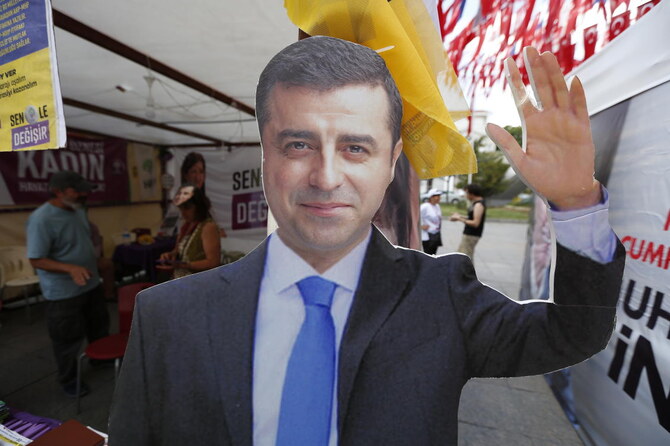
Recently, senior members of the Peoples’ Equality and Democracy Party, or DEM, met jailed PKK leader Abdullah Ocalan and Selahattin Demirtas, another imprisoned figurehead of the Kurdish movement. They have also met with the leaders of other political parties to explain their discussions.
What is the PKK?
The Kurdistan Workers’ Party, or PKK, has waged an armed insurgency against Turkiye since 1984, initially with the aim of establishing a Kurdish state in the southeast of the country. Over time, the objective evolved into a campaign for autonomy and rights for Kurds within Turkiye.
The conflict between militants and state forces, which has spread beyond Turkiye’s borders into Iraq and Syria, has killed tens of thousands of people. The PKK is considered to be a terror group by Turkiye, the United States and the European Union.
Who is Ocalan?
Abdullah Ocalan, who as a student of political science in Ankara became deeply involved in leftist movements, formed the PKK in 1978 as a Marxist organization. He fled to Syria in 1979, along with other PKK members, where he remained until 1998, when Syria expelled him under intense pressure from Turkiye.
Ocalan was captured in Kenya in 1999 and imprisoned on Imrali island in the Sea of Marmara, where he remains to this day. His death sentence for treason was commuted to a life term in prison after Turkiye abolished the death penalty.
The 75-year-old endures as a symbol for Kurdish independence and rights and continues to wield influence over the Kurdish movement, with past messages relayed through family members or lawyers resonating beyond Turkiye, in Iraq and Syria.
In a message relayed by his nephew in December, Ocalan said he has the power to end the conflict if the conditions are right.
Renewed effort for peace
In October, Bahceli, a close ally of President Recep Tayyip Erdogan, suggested Ocalan could be granted parole if he renounces violence and disbands the PKK. It was a major shift for the hard-line politician who had previously strongly supported the state’s military action against the militant group and its affiliates in neighboring Syria and rejected any notion of negotiation.
Erdogan appears to have endorsed Bahceli’s stance.
There is a mixed reaction among politicians and analysts to suggestions of a new peace effort. Some describe it it as a historic opportunity, while others strongly oppose any notion of leniency toward Ocalan or the PKK.
A recent attack on Turkiye’s key aerospace company outside of Ankara that killed several people was claimed by the PKK, complicating the debate.
Past peace efforts
There have been several peace efforts between the Turkish state and the PKK over the years, including secret negotiations held in Oslo, Norway from 2009 until 2011. However, none have yielded results.
The last attempt to reach a peace deal took place between 2013 and 2015 with a series of talks between Turkish officials and Ocalan, who declared a ceasefire and withdrew fighters to bases in northern Iraq.
Turkish officials took steps to improve Kurdish rights, including allowing Kurdish-language broadcasts. The process collapsed in July 2015, after a series of violent attacks, including one by the Daesh group that killed 33 pro-Kurdish activists.
Since then, Turkiye has cracked down on its pro-Kurdish movement and has jailed thousands of people, including the former leader of the main pro-Kurdish political party, Selahattin Demirtas, over alleged links to the PKK.
Why now?
The latest peace effort comes at a time when Turkiye and the Kurds are both seeking security to face the challenges in the Middle East.
However, some believe the main aim of the reconciliation effort is for Erdogan’s government to garner Kurdish support for a new constitution that would allow him to remain in power beyond 2028, when his term ends.
Bahceli has openly called for a new constitution, saying it was essential to keep Erdogan in power for Turkiye’s future. Erdogan and Bahceli are reportedly seeking parliamentary support from the DEM.


![]()

What to know about the latest effort to bring an end to Turkiye’s 40-year Kurdish conflict
Short Url
https://arab.news/5n4ft
What to know about the latest effort to bring an end to Turkiye’s 40-year Kurdish conflict
- The objective evolved into a campaign for autonomy and rights for Kurds within Turkiye


Latest updates


© 2026 SAUDI RESEARCH & PUBLISHING COMPANY, All Rights Reserved And subject to Terms of Use Agreement.