Franco-Algerian influencer to stand trial in March

1 / 2
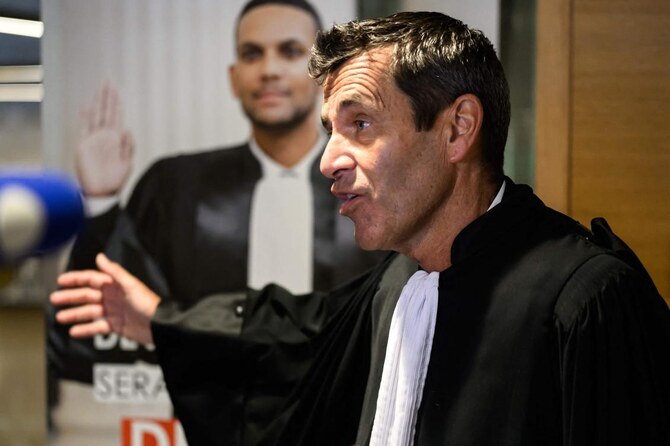
Frederic Lalliard, lawyer of the French-Algerian social media influencer Sofia Benlemmane, speaks to press as he arrives at the public prosecutor’s office in Lyon on Jan. 11, 2025 ,as part of an investigation into online hate videos. (AFP)
2 / 2
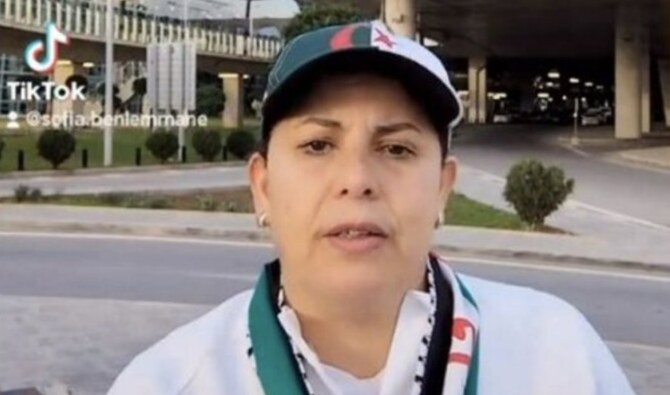
Sofia Benlemmane, a Franco-Algerian woman in her fifties, was arrested on Thursday. (X/@ADIL_NEWS_OFF)
Short Url
Updated 11 January 2025
Follow

Franco-Algerian influencer to stand trial in March

  • A diplomatic row between France and Algeria has flared up over the arrests of several Algerian social media influencers accused of inciting violence
  • Sofia Benlemmane, a Franco-Algerian woman in her fifties, was arrested on Thursday

LYON: A Franco-Algerian influencer, arrested as part of an investigation into online hate videos, appeared before French prosecutors on Saturday and will stand trial in March, authorities said.
A diplomatic row between France and Algeria has flared up over the arrests of several Algerian social media influencers accused of inciting violence.
Sofia Benlemmane, a Franco-Algerian woman in her fifties, was arrested on Thursday.
Followed on TikTok and Facebook by more than 300,000 people, she is accused of spreading hate messages and threats against Internet users and against opponents of the Algerian authorities, as well as insulting statements about France.
She was ordered to appear before a criminal court on March 18, the public prosecutor’s office said.
She is being prosecuted for a series of offenses including incitement to commit a crime, death threats and “public insult based on origin, ethnicity, nation, race or religion.”
The blogger had insulted a woman during a live broadcast in September, shouting “I hope you get killed, I hope they kill you.”
Her lawyer Frederic Lalliard argued that Benlemmane had committed no criminal offense, even though her comments “may irritate or shock.”
Benlemmane, a former football player, made headlines in 2001 when she was given a seven-month suspended prison sentence for entering the Stade de France pitch outside Paris with an Algerian flag during a France-Algeria friendly match.
Although she was firmly opposed to the government in Algiers in the past, her views have since changed and she now supports the current authorities in Algeria.
Several other Algerian influencers have been the target of legal proceedings in France for hate speech.
Former prime minister Gabriel Attal said that France should cancel a 1968 accord with Algeria that gives Algerians special rights to live and work in France because of the dispute over what he called “preachers of hate.”
Algeria won independence from France in 1962 after a seven-year war.


Israeli Druze leader seeks US security guarantees for Syrian minority

Updated 4 sec ago
Follow

Israeli Druze leader seeks US security guarantees for Syrian minority

  • Washington needed to fulfill its “duty” to safeguard the rights of Syria’s minorities in order to encourage stability, said Tarif
  • He stressed the need for self-determination, as well as rights and safety for all minorities

GENEVA: Israeli Druze leader Sheikh Mowafaq Tarif urged the United States to guarantee the security of the Druze community in Syria to prevent a recurrence of intense violence earlier this year in Sweida, a Druze-majority province.
Washington needed to fulfill its “duty” to safeguard the rights of Syria’s minorities in order to encourage stability, Tarif told Reuters on Tuesday during an official visit to the UN in Geneva, adding that US support would also remove the need for Israeli intervention in Syria’s south.
“We hope that the United States, President Trump, and America as a great power, we want it to guarantee the rights of all minorities in Syria ... preventing any further massacres,” he said.
US President Donald Trump vowed in November to do everything he can to make Syria successful after landmark talks with Syrian President Ahmed Al-Sharaa.

BLOODY CLASHES IN JULY
The Druze are a minority group whose faith is an offshoot of Islam and have followers in Israel, Syria and Lebanon.
In July, clashes between Druze and Bedouin residents broke out in Sweida after tit-for-tat kidnappings, leading to a week of bloodletting that shattered generations of fragile coexistence.
The violence worsened when government forces dispatched to restore order clashed with Druze militiamen, with widespread reports of looting, summary killings and other abuses.
Israel entered the fray with encouragement from its Druze minority, attacking government forces with the stated aims of protecting Syrian Druze and keeping its borders free from militants.
Tens of thousands of people from both communities were uprooted, with the unrest all but ending the Bedouins’ presence across much of Sweida. In the aftermath, Druze leaders called for a humanitarian corridor from the Israeli-occupied Golan to Sweida and demanded self-determination, which the government rejects. ‘NEED TO REBUILD TRUST’
Asked about proposals by influential Druze Sheikh Hikmat Al-Hajjari to separate Sweida from Syria, Tarif stressed the need for self-determination, as well as rights and safety for all minorities.
It was inconceivable to ask the Druze to surrender their weapons, he said. Talks to bring Sweida’s former police force onto Damascus’ payroll — while allowing the Druze to retain wide local autonomy — had been making steady progress until July’s bloodshed derailed them.
Al-Sharaa, who led rebel factions that ousted former long-time leader Bashar Assad last December, has vowed to protect the Druze. However, Hajjari insists he poses an existential threat to his community and in September rejected a 13-point, US-brokered roadmap to resolve the conflict.
Asked if talks should be revived, Tarif said trust had to be rebuilt by allowing residents to return to their homes, and permitting full humanitarian access to Sweida.
“There is no trust today ... Trust must be rebuilt,” he said.