BANGKOK: A group of Uyghur men who were detained in Thailand over a decade ago say that the Thai government is preparing to deport them to China, alarming activists and family members who say the men are at risk of abuse and torture if they are sent back.
In a letter obtained by The Associated Press, 43 Uyghur men held in Bangkok made a public appeal to halt what they called an imminent threat of deportation.
“We could be imprisoned, and we might even lose our lives,” the letter said. “We urgently appeal to all international organizations and countries concerned with human rights to intervene immediately to save us from this tragic fate before it is too late.”
The Uyghurs are a Turkic, majority Muslim ethnicity native to China’s far west Xinjiang region. After decades of conflict with Beijing over discrimination and suppression of their cultural identity, the Chinese government launched a brutal crackdown on the Uyghurs that some Western governments deem a genocide. Hundreds of thousands of Uyghurs, possibly a million or more, were swept into camps and prisons, with former detainees reporting abuse, disease, and in some cases, death.
Over 300 Uyghurs fleeing China were detained in 2014 by Thai authorities near the Malaysian border. In 2015, Thailand deported 109 detainees to China against their will, prompting international outcry. Another group of 173 Uyghurs, mostly women and children, were sent to Turkiye, leaving 53 Uyghurs stuck in Thai immigration detention and seeking asylum. Since then, five have died in detention, including two children.
Of the 48 still detained by Thai authorities, five are serving prison terms after a failed escape attempt. It is unclear whether they face the same fate as those in immigration detention.
Advocates and relatives describe harsh conditions in immigration detention. They say the men are fed poorly, kept in overcrowded concrete cells with few toilets, denied sanitary goods like toothbrushes or razors, and are forbidden contact with relatives, lawyers, and international organizations. The Thai government’s treatment of the detainees may constitute a violation of international law, according to a February 2024 letter sent to the Thai government by United Nations human rights experts.
The immigration police has said they have been trying to take care of the detainees as best as they could.
Recordings and chat records obtained exclusively by the AP show that on Jan. 8, the Uyghur detainees were asked to sign voluntary deportation papers by Thai immigration officials.
The move panicked detainees, as similar documents were presented to the Uyghurs deported to China in 2015. The detainees refused to sign.
Three people, including a Thai lawmaker and two others in touch with Thai authorities, told the AP there have been recent discussions within the government about deporting the Uyghurs to China, though the people had not yet seen or heard of any formal directive to do so.
Two of the people said that Thai officials pushing for the deportations are choosing to do so now because this year is the 50th anniversary of diplomatic relations between Thailand and China, and because of the perception that backlash from Washington will be muted as the US prepares for a presidential transition in less than two weeks.
The people spoke on condition of anonymity in order to describe sensitive internal discussions. The Thai and Chinese foreign ministries did not immediately respond to requests for comment.
Beijing says the Uyghurs are jihadists, but has not presented evidence. Uyghur activists and rights groups say the men are innocent and expressed alarm over their possible deportation, saying they face persecution, imprisonment, and possible death back in China.
“There’s no evidence that the 43 Uyghurs have committed any crime,” said Peter Irwin, Associate Director for Research and Advocacy at the Uyghur Human Rights Project. “The group has a clear right not to be deported and they’re acting within international law by fleeing China.”
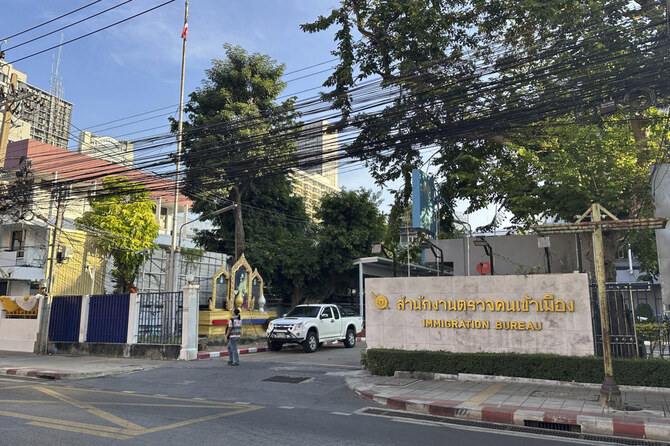
On Saturday morning, the detention center where the Uyghurs are being held was quiet. A guard told a visiting AP journalist the center was closed until Monday.
Two people with direct knowledge of the matter told the AP that all of the Uyghurs detained in Thailand submitted asylum applications to the United Nations High Commissioner for Refugees, which the AP verified by reviewing copies of the letters. The UN agency acknowledged receipt of the applications but has been barred from visiting the Uyghurs by the Thai government to this day, the people said.
The UNHCR did not immediately respond to a request for comment.
Relatives of three of the Uyghurs detained told the AP that they were worried about the safety of their loved ones.
“We are all in the same situation — constant worry and fear,” said Bilal Ablet, whose elder brother is detained in Thailand. “World governments all know about this, but I think they’re pretending not to see or hear anything because they’re afraid of Chinese pressure.”
Ablet added that Thai officials told his brother no other government was willing to accept the Uyghurs, though an April 2023 letter authored by the chairwoman of the National Human Rights Commission of Thailand first leaked to the New York Times Magazine and independently seen by the AP said there are “countries that are ready to take these detainees to settle down.”
Abdullah Muhammad, a Uyghur living in Turkiye, said his father Muhammad Ahun is one of the men detained in Thailand. Muhammad says though his father crossed into Thailand illegally, he was innocent of any other crime and had already paid fines and spent over a decade in detention.
“I don’t understand what this is for. Why?” Muhammad said. “We have nothing to do with terrorism and we have not committed any terrorism.”


![]()

Uyghurs detained in Thailand say they face deportation and persecution in China
Short Url
https://arab.news/w9xz8
Uyghurs detained in Thailand say they face deportation and persecution in China
- Recordings and chat records obtained exclusively by the AP show the men were presented documents asking if they would like to be sent back to China


Latest updates


Recommended


© 2026 SAUDI RESEARCH & PUBLISHING COMPANY, All Rights Reserved And subject to Terms of Use Agreement.