

First PIA flight leaves for Paris as Pakistani carrier resumes Europe operations

Passengers arrive at the immigration counter before boarding their first flight to Paris at the Islamabad International Airport on January 10, 2025, as EU authorities lift a four-year ban. (AFP)
Short Url
Updated 10 January 2025
Follow

First PIA flight leaves for Paris as Pakistani carrier resumes Europe operations

  • PIA flights to Europe were suspended after an air crash in Karachi that killed 97 people in 2020
  • The resumption of flights to Europe will boost PIA’s revenue and improve privatization prospects

ISLAMABAD: The Pakistan International Airlines (PIA) on Friday resumed its Europe operations with a flight to Paris, the Pakistani national air carrier said, following the removal of a four-year ban by European regulators.
The European Union Aviation Safety Agency (EASA) suspended PIA’s authorization to operate in the EU in June 2020 over concerns about the ability of Pakistani aviation authorities to ensure compliance with international standards.
EASA, United Kingdom and United States authorities suspended permission for PIA to operate in the region after Pakistan began investigating the validity of pilots’ licenses following a deadly plane crash that killed 97 people.
On Friday, PIA said it was resuming two direct weekly flights to Paris, and the first flight took off from Islamabad at 12:40pm Pakistan time.
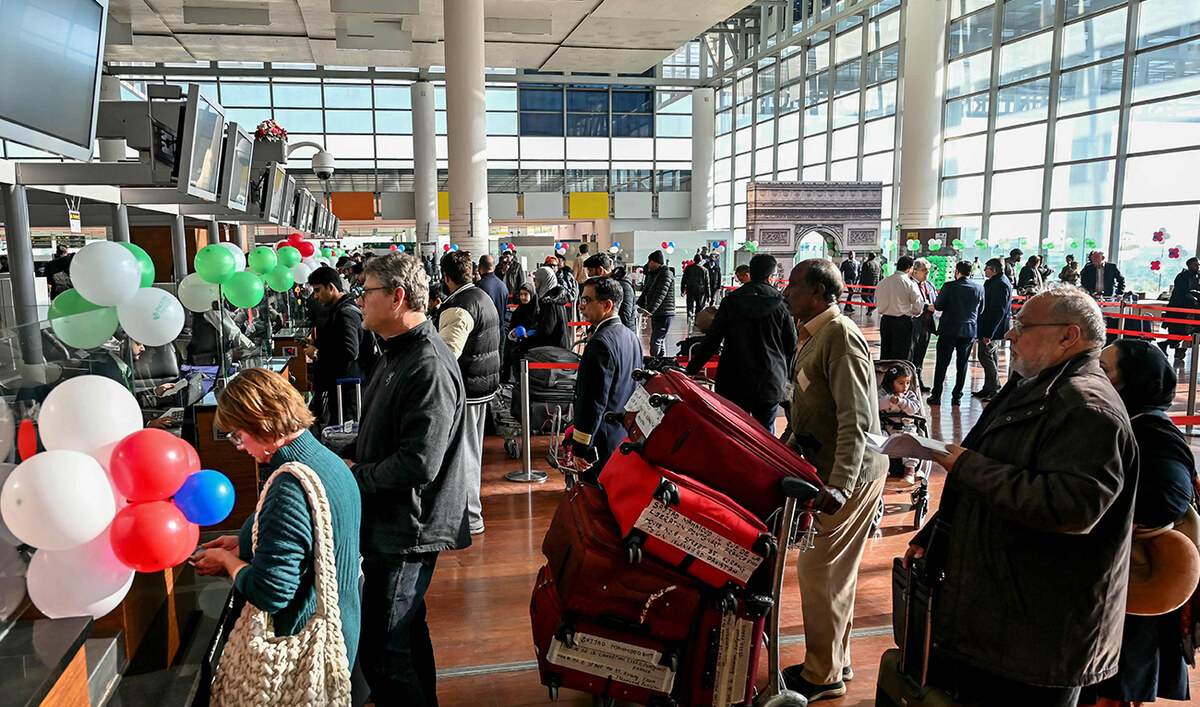


Passengers wait at the immigration counter before boarding their first flight to Paris at the Islamabad International Airport on January 10, 2025, as EU authorities lift a four-year ban. (AFP)

“The suspension of flights caused billions of dollars in losses to the national airline and damaged its reputation,” Prime Minister Shehbaz Sharif said in a statement.
“By the grace of Allah, the government has restored the image of the national airline. After the resumption of flights to Europe, PIA is moving toward progress.”
In November, the EASA announced it had lifted the ban, however, the airline remains barred from flying in the UK and the United States. The airline flies to multiple cities inside Pakistan, including the mountainous north, as well as to the Gulf and Southeast Asia.
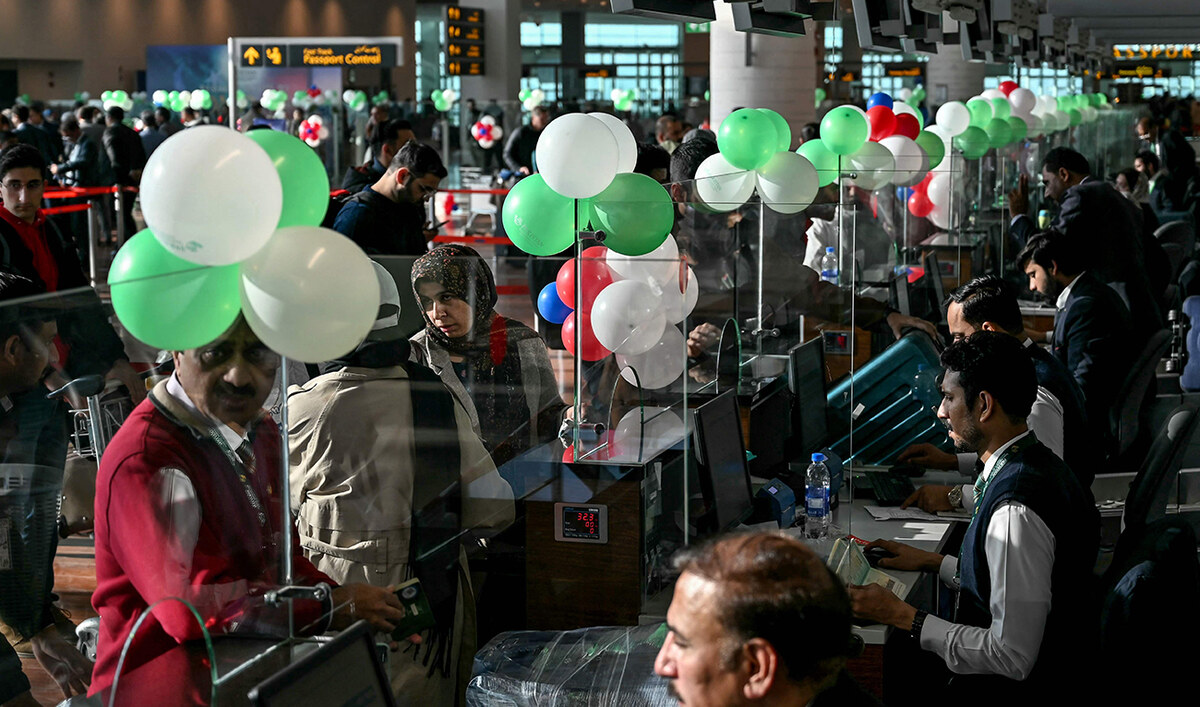


Passengers wait at the immigration counter before boarding their first flight to Paris at the Islamabad International Airport on January 10, 2025, as EU authorities lift a four-year ban. (AFP)

PIA, which employs 7,000 people, has long been accused of being bloated and poorly run — hobbled by unpaid bills, a poor safety record and regulatory issues.
Pakistan’s government has said it is committed to privatising the debt-ridden airline and has been scrambling to find a buyer. Late last year, a deal fell through after a potential buyer reportedly offered a fraction of the asking price.
The government hopes the opening of European routes, which officials expect will be followed by a similar announcement by the UK later this year, will boost its selling potential.
PIA posted losses of $270 million in 2023, according to local media. Its liabilities were nearly $3 billion, about five times the total worth of its assets.
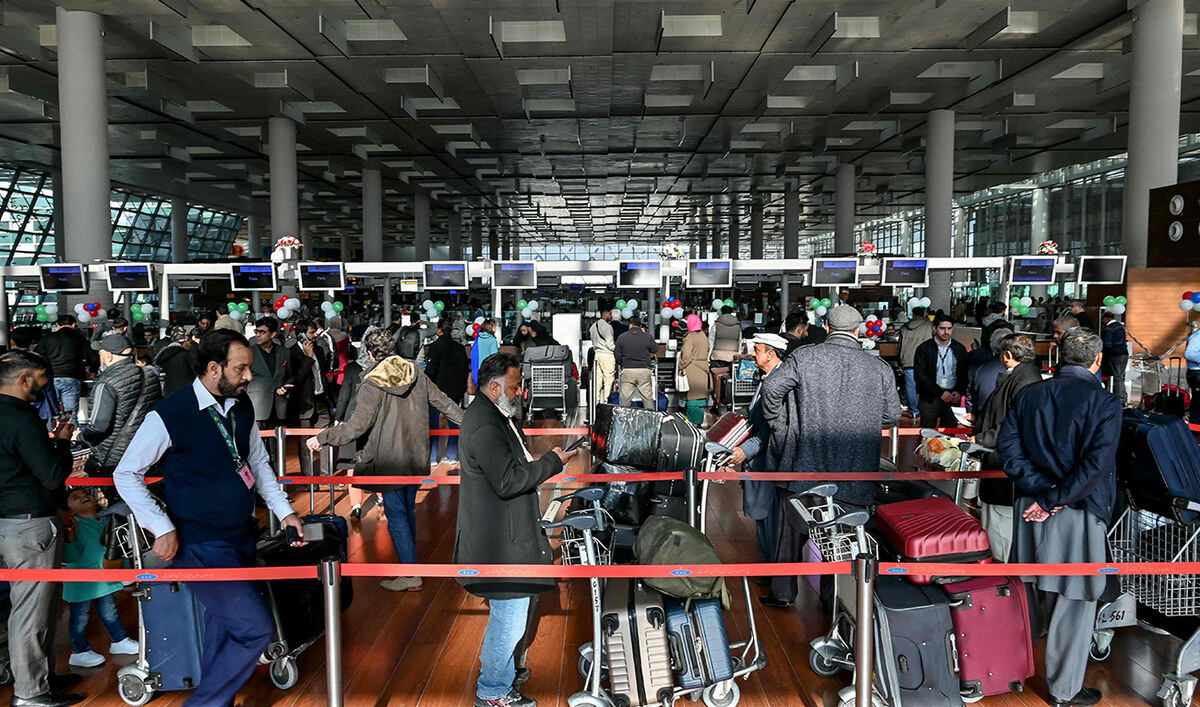


Passengers wait at the immigration counter before boarding their first flight to Paris at the Islamabad International Airport on January 10, 2025, as EU authorities lift a four-year ban. (AFP)

In the same year, amid a national economic crisis, dozens of domestic flights were canceled when it could not afford fuel for its planes.
PIA came into being in 1955 when the government nationalized a loss-making commercial airline, and enjoyed rapid growth until the 1990s.


Pakistan stocks close at record high over current account surplus, falling bond yields

Updated 18 December 2025
Follow

Pakistan stocks close at record high over current account surplus, falling bond yields

  • KSE-100 index gains 1,646.79 points or 0.97% to close at new high of 171,960.64 points
  • Pakistan’s central bank posted a current account surplus of $100 million in November

KARACHI: Pakistani stocks closed at an all-time high of 171,960.4 points on Thursday, with financial analysts attributing the surge to increasing investor confidence stemming from a current account surplus reported in November and a drop in government bond yields.

The benchmark KSE-100 index gained 1,646.79 points or 0.97% to close at an all-time high of 171,960.64 points on Thursday. The previous day, Pakistani stocks surged to 170,313.85 points at close of business. 

Ahsan Mehanti, chief executive officer at Arif Habib Commodities, said the optimistic mood at the stock exchange was fueled by the $100 million current account surplus reported by the central bank in November.

“Speculations ahead of year-end close and fall in government bond yields up to 70 basis points after the SBP (State Bank of Pakistan) policy easing played the catalyst role in bullish activity at PSX,” Mehanti told Arab News. 

The surplus was a welcome development for Islamabad as Pakistan’s central bank reported a $291 million deficit in October.

Topline Securities, a Pakistani brokerage firm, said in its daily market review that strong buying by local funds followed a drop in Pakistan Investment Bond (PIB) yields, which boosted investor confidence.

PIB yields are the returns on bonds or government-backed securities that pay fixed semi-annual interest, with rates influenced by market demand and SBP auctions.

“Strength in ENGRO (Engro Corporation), FFC (Fauji Fertilizer Company), UBL (United Bank Limited), LUCK (Lucky Cement) and BAHL (Bank AL Habib) underpinned positive momentum, collectively contributing 1,504 points to the index,” the brokerage firm wrote on X. 

“This upside was partly offset by declines in PIOC (Pakistan International Oil Company), DHPL (D.H. Corporation Limited) and MLCF (Millat Tractor Limited), which together subtracted 176 points.”

The sustained rise in equities comes amid improving liquidity conditions and continued investor participation, with market participants focusing on corporate earnings, sector-specific developments and broader macroeconomic signals.

Earlier on Monday, Pakistan’s central bank cut its key policy interest rate by 50 basis points to 10.5%, a move that surprised analysts and followed four consecutive policy meetings where rates were held unchanged.

The cut came despite an International Monetary Fund staff report earlier this month cautioning against premature monetary easing.

Inflation eased to 6.1% in November, remaining within the SBP’s target band, though analysts have warned that price pressures could resurface later in the fiscal year as base effects fade and food and transport costs remain volatile.