- French foreign ministry said Joseph Aoun's election “opens a new page" for Lebanon
- Qatari foreign ministry called for “stability”
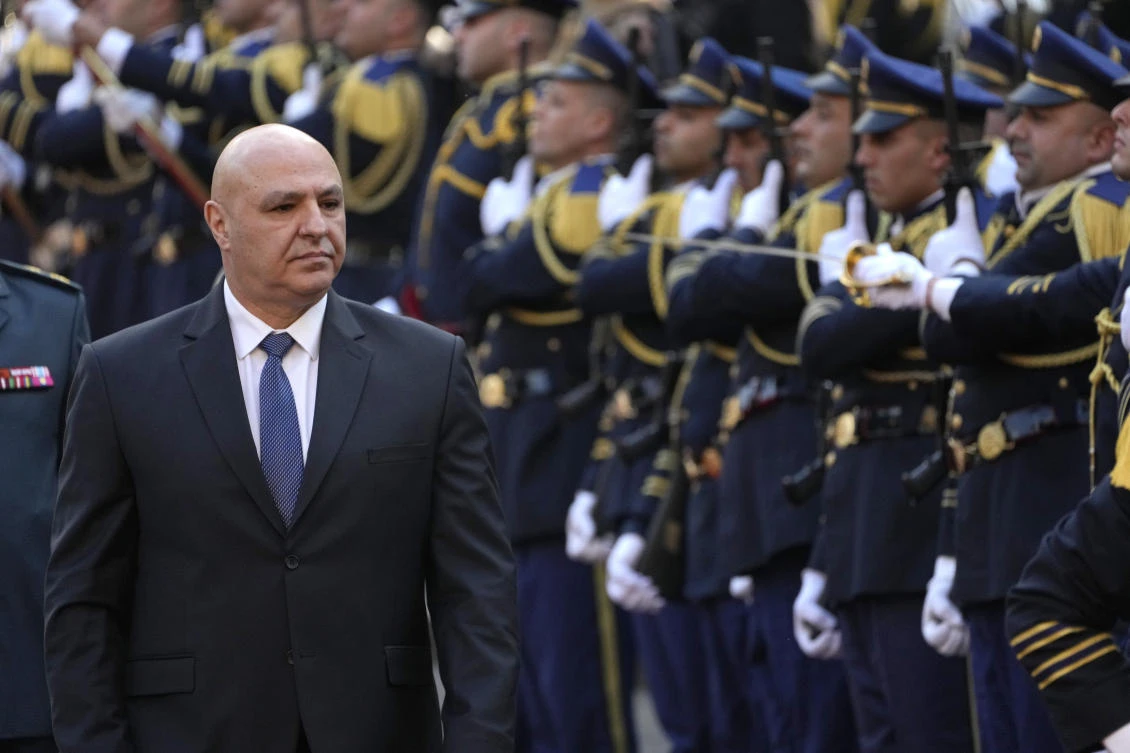
PARIS: French President Emmanuel Macron on Thursday welcomed the “crucial election” by Lebanese lawmakers of army chief Joseph Aoun as president after a two-year vacuum at the top, calling his victory an opportunity for reform in the country.
Aoun faces the daunting tasks of overseeing a ceasefire in south Lebanon and naming a prime minister able to lead reforms demanded by international creditors to save the country from its worst economic crisis in history.
Aoun is perceived as being best placed to maintain the fragile ceasefire between Israel and Hezbollah after a devastating war this autumn.
“Congratulations to President Joseph Aoun on this crucial election,” Macron wrote on X in a message in both French and Arabic.
“It paves the way for reform and the restoration of Lebanon’s sovereignty and prosperity,” he added.
The French foreign ministry urged the formation of a strong government to drag the country out of a political and economic crisis.
Extending France’s “warm congratulations” to Aoun, the French foreign ministry said his election “opens a new page for the Lebanese” and urged “the appointment of a strong government” that can help the country recover.
Qatar also praised the election of Aoun as president on Thursday, calling for “stability” after the more than two year vacancy was filled.
“The State of Qatar welcomes the election of Lebanese army commander General Joseph Aoun,” the foreign ministry said in a statement, adding that it hoped his election would “contribute to establishing security and stability in Lebanon.”
GCC Secretary-General Jasem Albudaiwi congratulated Aoun and wished him success in achieving stability, prosperity, and stronger ties with the GCC.
Albudaiwi reiterated the GCC's support for Lebanon's sovereignty, security, and stability, as well as its armed forces.
He emphasized the need to implement UN Security Council Resolution 1701 to maintain Lebanon's political independence and territorial integrity. He also called on the Lebanese government to assert control over its territories per UN resolutions and the Taif Agreement.
Palestinian president Mahmoud Abbas said Lebanon would overcome the “repercussions of Israeli aggression” under the leadership of its new president.
“We are confident that our brotherly Lebanon will overcome the repercussions of the Israeli occupation’s aggression and achieve development and prosperity,” Abbas said in a statement, referring to Israel’s war with Lebanese militant group Hezbollah, which ended late last year.
The United Nations Secretary-General Antonio Guterres congratulated Aoun on his election, said a statement released by his spokesman Stephane Dujarric on Thursday.
“Following a prolonged presidential vacuum of over two years, the Secretary-General welcomes this important development, the statement read.
“He encourages the swift formation of a new government, to address the needs and aspirations of the Lebanese people, including with respect to preserving the country’s security and stability, strengthening state authority across Lebanon as well as advancing much-needed reforms. The United Nations underscores its continued commitment and support in this regard.
“The Secretary-General reiterates the United Nations’ commitment to support the strengthening of the sovereignty, stability and political independence of Lebanon in accordance with the Taif Accord and Baabda declaration, and the effective implementation of Security Council resolutions 1701 (2006), 1559 (2004) and other relevant resolutions, which are essential to the stability of Lebanon and the region,” the statement added.
The UN Security Council also congratulated Aoun and affirmed “strong support for the territorial integrity, sovereignty and political independence of Lebanon” while also calling for a full implementation of resolution 1701, according to a statement read by president of the council for January, Algeria’s Amar Bendjama.
Council members also emphasized the importance of the election in ensuring fully functional state institutions to address the “pressing economic political and security challenges” of the country.
The UN Special Coordinator for Lebanon, Jeanine Hennis-Plasschaert, issued a statement congratulating Aoun, adding that she welcomed the election as a long-awaited first step toward overcoming Lebanon’s political and institutional vacuum and providing the Lebanese people with the functioning state institutions they deserved.
“A prime minister must be designated and a government formed without delay. The tasks ahead of the Lebanese state are too monumental to waste any more time,” she stressed.
“Now is the moment for each and every decision-maker to put the interest of Lebanon above all personal or political considerations.
“The election of a president offers renewed hope and an opportunity to pave the way for progress towards consolidating the cessation of hostilities and preserving the country’s security and stability, including by strengthening state authority across Lebanon and advancing comprehensive and sustainable reforms,” she added.
EU chief Ursula von der Leyen described the election of Aoun as Lebanon’s new president as a “moment of hope” for the war-battered country.
“The way is now open to stability and reforms. Europe supports this path,” the European Commission president wrote on X.
Germany’s Foreign Minister Annalena Baerbock said the election of Aoun as Lebanon’s new president was a chance for “reforms and change” in the war-ravaged country.
“After many years of crisis and stagnation, this is a moment of opportunity to bring about reforms and change,” Baerbock said on social media platform X. “Germany stands by the side of the people of Lebanon on the way forward.”
Russia also welcomed the election of a new president of Lebanon, which it hopes will bring political stability to the country.
The foreign ministry in a statement said the election of army chief Joseph Aoun “opened up the prospect of strengthening internal political stability in Lebanon and righting the country’s complex social and economic position.”
Britain welcomed the election of Aoun as Lebanon’s new president, saying it was looking forward to working with him to support stability in the war-battered nation.
“I congratulate General Joseph Aoun on his election as president of Lebanon,” Foreign Secretary David Lammy wrote in a post on the X social media platform. “I look forward to working with his government to support Lebanon’s stability and prosperity.”
* With agencies