

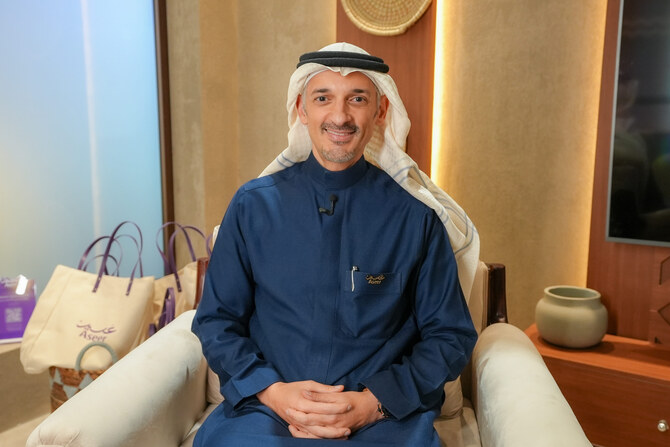

RIYADH: Saudi Arabia’s Asir region is set to shift from the planning phase to execution in 2025, with several major projects, including the Seven Entertainment Complex, scheduled for completion, according to a senior official.
Speaking to Arab News on the sidelines of the second day of the third Saudi Tourism Forum held in Riyadh from Jan. 7 to 9, Acting CEO of Asir Development Authority Hashem Al-Dabbagh explained that the entity is working with several parties to ensure that the projects in the pipeline progress this year.
This falls in line with the authority’s aim to attract approximately 8 million tourists by 2030.
It also aligns well with the entity’s goal to transform the region into a global destination that will become a world-class tourist hub, both within the Kingdom and internationally, by striking a balance between development and conservation.
Al-Dabbagh said: “2025 is a very exciting year for a number of reasons. Maybe the first one is that the first large project, Seven Entertainment Complex by the airport, will be completed in 2025. So, we launched a number of projects, but this is the first one that should be completed this year. So, we’re very excited about that.”
He added: “Many of our projects underway, which have to do with the planning of the Asir region, should be completed in 2025. So it’s nice to see us transition from planning and ideation to actual investment and execution in this year.”
The acting CEO highlighted that over the past three years, the authority has been working diligently with all counterparts in Saudi Arabia. He underlined that many agreements with key stakeholders, including government entities such as the Ministry of Tourism, the Ministry of Investment, and the Ministry of Culture, have already been signed.
“We’ve already signed with them, and we have ongoing relationships with all these entities, that allow us to see through our mandate,” Al-Dabbagh said.
“It’s also worthwhile to mention that the Asir Development Authority has a mandate to oversee, to coordinate, and to plan and to make sure everything goes well but the actual development on the ground takes place through other entities that either have a development mandate if they’re a public sector or by private sector entities,” he added.
During the interview, the acting CEO also shed light on how the investment sector within the Asir Development Authority works to distill capital regionally.
“So, they have a pipeline and every investment that we are following is in one of five phases, starting from the ideation phase to the operating phase,” Al-Dabbagh said.
He added: “We have been exceeding our targets over the past couple of years. As a matter of fact, if we sum the number of investments that just the investment sector has in the pipeline, it comes out to about SR28 billion ($7.45 billion), not including PIF (Public Investment Fund) investments. PIF investments are larger than that amount. So, when you add them together, you get a very large number.”
The acting CEO explained that this figure sums up the investments across all phases.
“Now naturally some of these investments are going to materialize and some of them are going to materialize in a way that is different from what we understand today, and some of them will not. So, that 28 (billion) number is sort of a goal if everything materializes as per the plan,” Al-Dabbagh said.
“Asir is the place to be if you are looking to invest in the tourism sector or adjacent sectors in Saudi Arabia,” he added.
The acting CEO explained that Asir is the only region among Saudi Arabia’s 13 areas with an approved strategy from the central government. The vision of this approach is to establish Asir as a premier year-round destination, leveraging its unique cultural and natural assets.
“This is very intimately related to the tourism strategy of Saudi Arabia,” he said.
Al-Dabbagh also discussed the Kingdom’s hosting of the FIFA World Cup in 2034.
“There are five regions within Saudi Arabia that are going to be hosting this World Cup , and they include Abha. So, Saudi Arabia and its five regions, including Abha, is going to be a host to probably the largest number of visitors coming from an event outside of the religious pilgrimage to Saudi Arabia,” he concluded.
Organized in partnership with the Saudi Tourism Authority and the Tourism Development Fund, the third edition of the forum features over 100 exhibitors.
It is a comprehensive platform for exploring the latest developments in the Kingdom’s tourism sector.
The event also offers visitors insights into major investment projects, prospects to elevate their skills, and avenues for forging collaboration that drives national tourism growth.


