LONDON: Getty Images said on Tuesday it would merge with rival Shutterstock to create a $3.7 billion stock-image powerhouse geared for the artificial intelligence era, in a deal likely to draw antitrust scrutiny.
The companies, two of the largest players in the licensed visual content industry, are betting that the combination will help them cut costs and grow their business by unlocking more revenue opportunities at a time when the growing use of generative AI tools such as Midjourney poses a threat to the industry.
Shutterstock shareholders can opt to receive either $28.80 per share in cash, or 13.67 shares of Getty, or a combination of 9.17 shares of Getty and $9.50 in cash for each Shutterstock share they own. The offer represents a deal value of more than $1 billion, according to Reuters calculations.
Shutterstock’s shares jumped 22.7 percent, while Getty was up 39.7 percent. Stocks of both companies have declined for at least the past four years, as the rising use of mobile cameras drives down demand for stock photography.
Getty CEO Craig Peters will lead the combined company, which will have annual revenues of nearly $2 billion and stands to benefit from Getty’s large library of visual content and the strong community on Shutterstock’s platform.
Peters downplayed the impact of AI on Tuesday and said that he was confident the merger would receive antitrust approval both in the United States and Europe.
“We don’t control the timing of (the approval), but we have a high confidence. This has been a situation where customers have not had choice. They’ve always had choice,” he said.
Some experts say US President-elect Donald Trump’s recent appointments to the Department of Justice Antitrust Division signal that there would be little change to the tough scrutiny that has come to define the regulator in recent years.
“With Gail Slater at the helm, the antitrust division is going to be a lot more aggressive under this Trump administration than it was under the first one,” said John Newman, professor of law at the University of Miami.
Regulators will examine how the deal impacts the old-school business model of selling images to legacy media customers, as well as the new business model of offering copyright-compliant generative-AI applications to the public.
The deal is expected to generate up to $200 million in cost savings three years after its close. Getty investors will own about 54.7 percent of the combined company, while Shutterstock stockholders will own the rest.
Getty competes with Reuters and the Associated Press in providing photos and videos for editorial use.


Getty Images, Shutterstock gear up for AI challenge with $3.7bn merger

https://arab.news/wtbx8
Getty Images, Shutterstock gear up for AI challenge with $3.7bn merger

- Deal faces potential antitrust scrutiny
- Merger aims to cut costs and unlock new revenue streams as companies grapple with the rise of generative AI tools


To infinity and beyond: Grendizer’s 50 years of inspiring Arabs
- 50 years after its creation, the Grendizer anime series continues to capture Arab imagination
- Arab News Japan speaks to creator Go Nagai, Middle Eastern fans and retells the story behind the UFO Robot tasked with protecting our planet
LONDON: Few cultural imports have crossed borders as unexpectedly, or as powerfully, as Grendizer, the Japanese giant robot that half a century ago became a childhood hero across the Arab world, nowhere more so than in Saudi Arabia.
Created in Japan in the mid-1970s by manga artist Go Nagai, Grendizer was part of the “mecha” tradition of giant robots. The genre was shaped by Japan’s experience during the Second World War, and explored themes of invasion, resistance and loss through the medium of science fiction.
But while the series enjoyed moderate success in Japan, its true legacy was established thousands of kilometers away in the Middle East.

The anime “UFO Robot Grendizer” arrived on television in the region in 1979, dubbed into Arabic and initially broadcast in Lebanon during the Lebanese civil war. The story it told of the heroic Duke Fleed, a displaced prince whose planet had been destroyed by alien invaders, struck a chord with children growing up amid regional conflict and occupation by Israel.
Its themes of defending one’s homeland, standing up to aggression and protecting the innocent were painfully relevant in the region, transforming the series from mere entertainment into a kind of emotional refuge.
Much of the show’s impact came from its successful Arabization. The powerful Arabic dubbing and emotionally charged voice-acting, especially by Lebanese actor Jihad El-Atrash as Duke Fleed, lent the show a moral gravity unmatched by other cartoons of the era.

The theme song for the series, performed by Sami Clark, became an anthem that the Lebanese singer continued to perform at concerts and festivals right up until his death in 2022.
By the early 1980s, “Grendizer” had spread across the Middle East, inspiring fandoms in Saudi Arabia, Kuwait, Iraq and beyond. For many, it was not only their first exposure to anime, it also delivered lessons on values such as justice and honor.
Grendizer was so influential in the region that it became the subject of scholarly research, which in addition to recognizing the ways in which the plight of the show’s characters resonated with the audience in the Middle East, also linked the show’s popularity to generational memories of displacement, particularly the Palestinian Nakba.
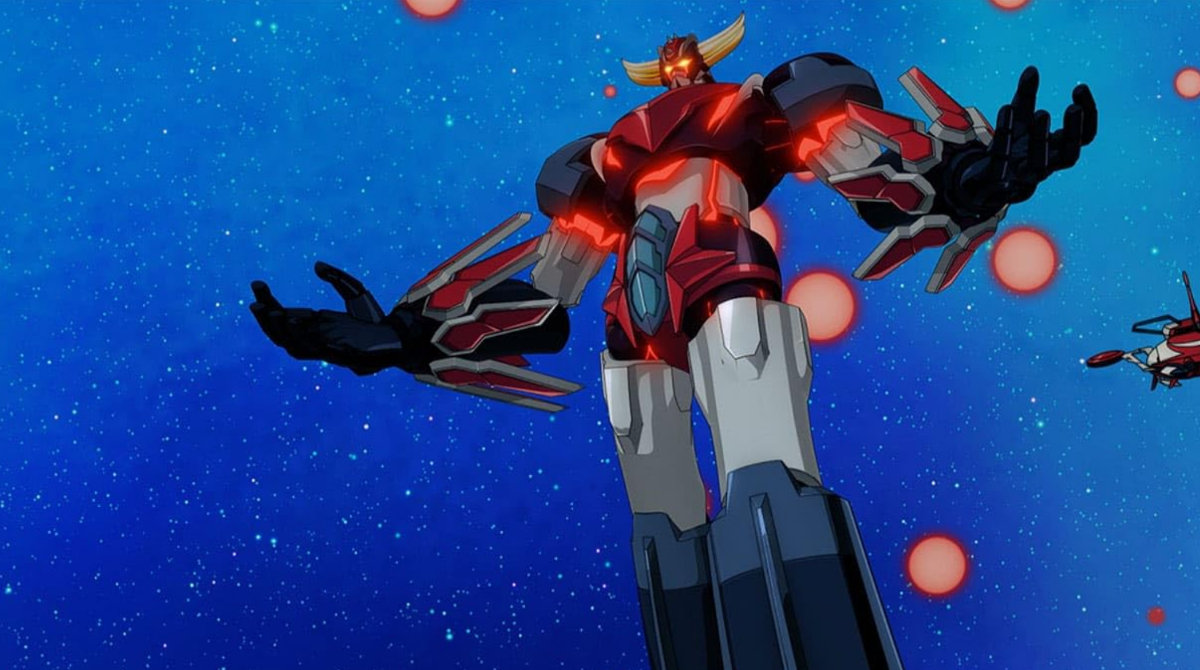
Half a century later, “Grendizer” remains culturally alive and relevant in the region. In Saudi Arabia, which embraced the original version of the show wholeheartedly, Manga Productions is now introducing a new generation of fans to a modernized version of the character, through a video game, The Feast of The Wolves, which is available in Arabic and eight other languages on platforms including PlayStation, Xbox and Nintendo Switch, and a new Arabic-language anime series, “Grendizer U,” which was broadcast last year.
Fifty years after the debut of the show, “Grendizer” is back — although to a generation of fans of the original series, their shelves still full of merchandise and memorabilia, it never really went away.


