KARACHI: Police in Pakistan’s southern port city of Karachi on Tuesday announced robust security measures for New Year’s Eve at the popular Seaview area, deploying over 2,400 officers and staff to ensure public safety and maintain order during celebrations, according to an official statement.
Young people traditionally step out to celebrate New Year’s Eve across urban centers in Pakistan, often resulting in road accidents or fatalities from aerial firing. Karachi’s Seaview remains a popular destination for such festivities, where police routinely ramp up precautions.
Amid a surge in street crimes in recent years, Karachi police are also on high alert to prevent potential incidents.
“To maintain law and order, six police platoons will be stationed at Seaview and adjacent areas,” Senior Superintendent Police Mahzur Ali was quoted in the statement as saying. “A total of 2,451 officers and personnel, including intelligence staff, have been deployed around Seaview, where hooliganism or aerial firing will not be tolerated.”
The statement highlighted that the security deployment includes several senior police officials and 80 mobile units along with 106 motorcycle patrols.
Mounted police, a specialized unit of law enforcement officers who patrol on horseback, will also monitor the area. Intelligence teams have been directed to stay vigilant.
The police have further implemented traffic management plans, converting both tracks from Seaview McDonald’s to Khayaban-e-Ittehad into one-way routes to ease congestion.
“No unlawful activities will be permitted,” added Ali.
The police also emphasized their commitment to ensuring a safe environment for citizens to celebrate responsibly.

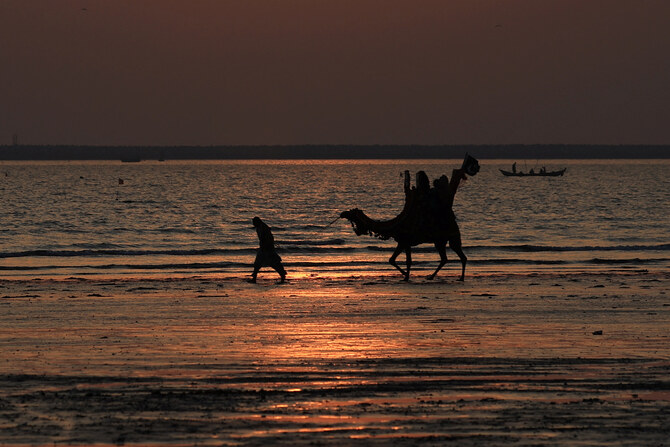
Karachi police deploy over 2,400 personnel for New Year’s Eve security at Seaview
https://arab.news/mgun2
Karachi police deploy over 2,400 personnel for New Year’s Eve security at Seaview
- Youngsters step out on New Year’s Eve across Pakistan, where fatalities from aerial firing are common
- Karachi police have also deployed intelligence teams, asking them to remain vigilant during celebrations
Pakistan grants commercial license to Kuwait-backed Shariah-compliant digital bank
- Pakistan has announced that Raqqami Islamic Digital Bank aims to launch operations this month with $100 million investment
- Prime Minister Shehbaz Sharif calls for Kuwait and Pakistan to translate cordial political relations into strong economic ties
ISLAMABAD: Prime Minister Shehbaz Sharif granted the Kuwait Investment Authority-backed Raqqami Islamic Digital Bank (RIDB) the commercial license to operate in Pakistan on Tuesday, stressing the need to convert cordial political ties between the two countries into a strong economic relationship.
Pakistan’s finance adviser Khurram Schehzad announced last month that RIDB intends to launch operations in the South Asian country from February with a $100 million investment.
The RIDB describes itself as Pakistan’s first fully Shariah-compliant digital bank. The retail bank offers online financing, savings and payment services to individuals and small and medium-sized enterprises, also focusing on financial inclusion for underserved segments.
Prime Minister Sharif participated in a ceremony to grant the license to RIDB in Islamabad. The event was attended by top RIDB officials including its Chairman Abdullah Al-Mutairi and Chief Executive Officer Umair Aijaz.
“This would go a long way in further strengthening our brotherly and our bilateral economic relations,” Sharif told participants. “You said very aptly that economic and brotherly relations go hand in hand. It cannot be that your political relations flourish but economic relations remain stagnant.”
He said the Shariah-compliant digital bank will also have features that will support and augment banking in Pakistan.
Sharif called on both nations to join hands to promote their bilateral economic, investment and trade relations “like never before.” He vowed that Pakistan’s government was committed to enhancing bilateral trade and economic ties by working closely with the Kuwaiti government.
Pakistan’s banking sector is dominated by a handful of large lenders with strong capital buffers and profits driven largely by holdings of government securities.
Pakistan has intensified its efforts in recent years to secure foreign investment, particularly from Gulf nations, as it seeks to ensure sustained economic progress. Schehzad has said that the RIDB’s entry into Pakistan reflects strengthening investment ties between Islamabad and Kuwait, particularly in the financial and digital economy sectors.


