Pakistan PM calls for collaborative efforts to stem polio amid alarming surge in cases

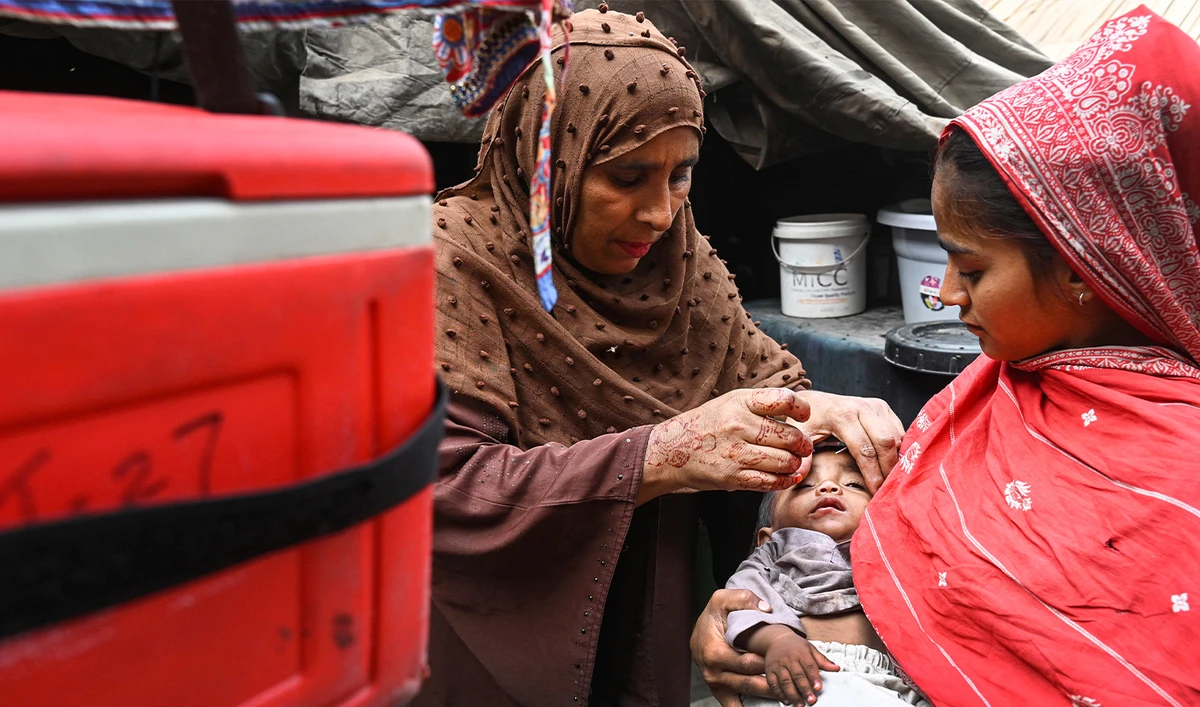
A health worker administers polio drops to a child during a door-to-door vaccination campaign in Lahore on October 28, 2024. (AFP/File)
Short Url
Updated 31 December 2024
Follow

Pakistan PM calls for collaborative efforts to stem polio amid alarming surge in cases

  • Pakistan has so far reported 68 poliovirus cases this year, 27 of them from Balochistan
  • Shehbaz Sharif says security of polio volunteers and vaccinators cannot be compromised

ISLAMABAD: Prime Minister Shehbaz Sharif has called for greater collaboration among the country’s health authorities to stem the spread of poliovirus, state-run media reported this week, as Pakistan witnesses an alarming surge in cases of the infection. 

Polio is a paralyzing disease that has no cure. Multiple doses of the oral polio vaccine and completion of the routine vaccination schedule for all children under the age of five is essential to provide children high immunity against this terrible disease. Pakistan, along with neighboring Afghanistan, remains the last polio-endemic country in the world.

Pakistan on Monday reported its 68th poliovirus case of the year when a child contracted the virus from the northwestern Dera Ismail Khan district. Sharif spoke to the national anti-polio team on Monday regarding efforts to curb the spread of the disease. 

“The Prime Minister said unfortunately, the number of polio-affected children is rising in Pakistan, which needs even more collaborative efforts,” the state-run Radio Pakistan reported on Monday. 

Sharif noted that the use of technology in Pakistan’s health sectors, including polio eradication, is being increased to modernize public health care and achieve better results. 

“He added that the security of polio workers cannot be compromised, and all possible measures should be taken in this regard,” Radio Pakistan said. 

Of the 68 cases reported this year, 27 were from Balochistan, 20 from Khyber Pakhtunkhwa, 19 from Sindh, and one each from Punjab and Islamabad, according to Pakistan’s anti-polio program.

A sub-national polio vaccination campaign was conducted across Punjab, Sindh, KP, Azad Kashmir, Gilgit-Baltistan and Islamabad on December 16–22, vaccinating over 42 million children.
Pakistan deputy PM directs authorities to monitor food prices ahead of Ramadan 

Updated 27 January 2026
Follow

Pakistan deputy PM directs authorities to monitor food prices ahead of Ramadan 

  • Prices of essential food items surge during holy month of Ramadan due to hoarding, profiteering by traders
  • Deputy PM Ishaq Dar directs authorities to prevent artificial price hikes, exploitation of consumers in Ramadan

ISLAMABAD: Pakistan’s Deputy Prime Minister Ishaq Dar on Tuesday directed authorities to monitor prices of essential food items ahead of Ramadan to prevent artificial price hikes and consumers from getting exploited, his office said. 

Pakistani increasingly shop for essential food items during the holy month of Ramadan, as millions across the country fast from dawn till sunset. Prices of essential food items surge during the holy month every year as traders often indulge in hoarding and profiteering. 

Dar chaired a meeting to review the availability and prices of essential commodities across the country on Tuesday, his office said. 

“DPM/FM [foreign minister] directed federal & provincial authorities to continue close monitoring, particularly in view of the approaching month of Ramazan, to prevent any artificial price hike or exploitation of consumers by unscrupulous elements,” Dar’s office said in a statement.

A central moon sighting committee in Pakistan, the Ruet-e-Hilal Committee, determines when Ramadan begins. The Islamic month is expected to start this year after mid-February, around Feb. 17 or Feb. 18.

Pakistan’s government also announces subsidies for the masses during the holy month to lower the prices of essential food items. 

In 2024, the Shehbaz Sharif-led government announced a Ramadan package comprising a subsidy of $26.8 million (Rs7.5 billion) to lower the prices of essential items for over 30,96,00,000 families.