Pakistan begins construction of $3.5 billion Chinese-designed nuclear energy project

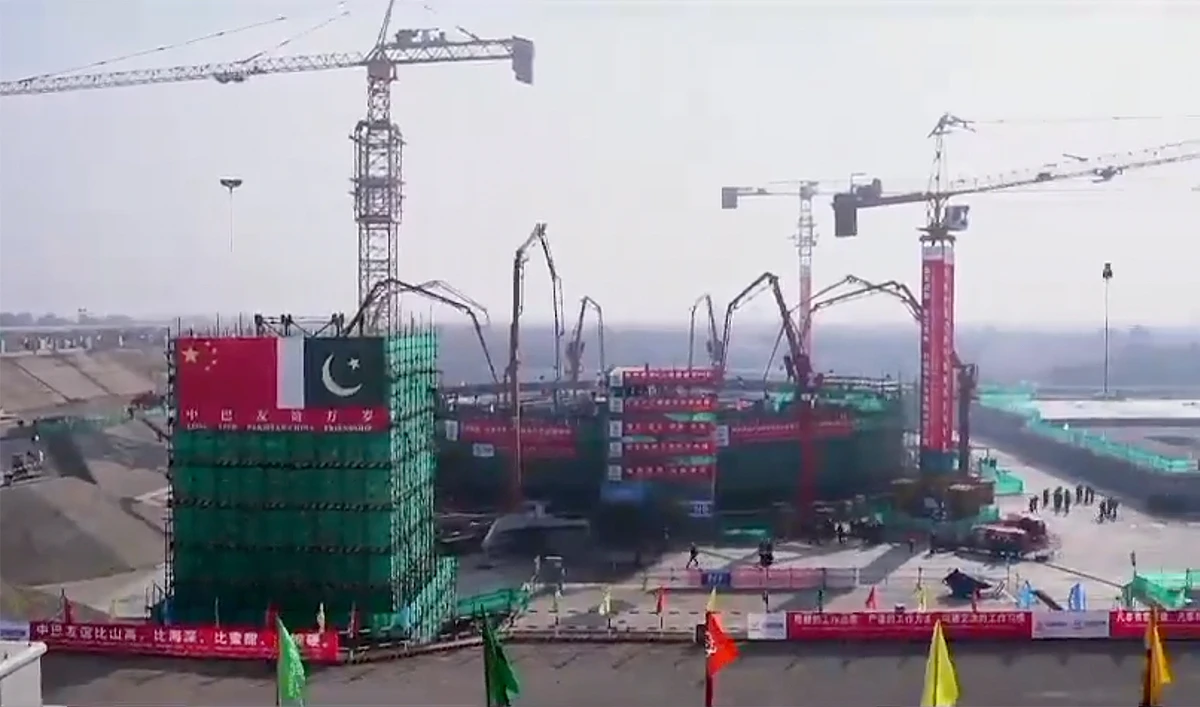
The screengrab taken from a video shared by Pakistan's state broadcaster PTV News shows construction site of Chinese-designed nuclear energy project, Chashma-5, being constructed along the left embankment of the Indus River in Mianwali, Pakistan, on December 31, 2024. (PTV News)
Short Url
Updated 31 December 2024
Follow

Pakistan begins construction of $3.5 billion Chinese-designed nuclear energy project

  • The Chashma-5 nuclear power plant is being constructed along the left embankment of the fast-flowing Indus River in Mianwali
  • Beijing is building roads, bridges, power plants, and railways in Pakistan to link its far west with Gwadar port on Indian Ocean

ISLAMABAD: Pakistan has begun construction of a $3.5 billion Chinese-designed nuclear energy project, which would produce 1,200 megawatts of electricity, Prime Minister Shehbaz Sharif said on Monday.

Pakistan and China are longtime allies. Beijing is building roads, bridges, power plants, and railways under the China-Pakistan Economic Corridor (CPEC), part of President Xi Jinping’s Belt and Road Initiative, to link its far west with the

Chinese-built Gwadar port on the Indian Ocean in Pakistan’s Balochistan.

The nuclear power plant, known as Chashma-5, is being constructed at a site along the left embankment of the fast-flowing Indus River in Mianwali, a district in the eastern Punjab province. The site is already home to four Chinese-supplied nuclear power plants that were built in recent decades.

In a post on X, Sharif said the Chashma-5 nuclear power plant was another “milestone” in strategic cooperation between the two friendly countries.

“Commencement of construction of the most modern and the biggest, C-5 Nuclear Power Plant is another milestone in strategic cooperation between Pakistan and China. The plant will contribute 1200 MW electricity,” Sharif said.

“I congratulate PAEC (Pakistan Atomic Energy Commission) and CNNC on this remarkable achievement.”

The development comes as Pakistan, which has one of the highest electricity tariffs in the region, is making preparations to stop capacity payments to independent power producers (IPPs), and PM Sharif’s cabinet this month approved settlement agreements with eight bagasse-based IPPs, with the aim to reduce electricity prices and save the national exchequer billions of rupees.

High cost of power is one of the key factors that leads to inflation in the South Asian country.

Pakistan has also been holding talks on reprofiling power sector debt owed to China and structural reforms, but progress has been slow. It has also vowed to stop power sector subsidies.
US envoy, military officials attend Pakistan-US counterterrorism exercise

Updated 8 sec ago
Follow

US envoy, military officials attend Pakistan-US counterterrorism exercise

  • Exercise Inspired Gambit-2026 marks 13th round of Pakistan-US counterterrorism training
  • US Chargé d’Affaires Natalie Baker observed the drills with senior American military officials

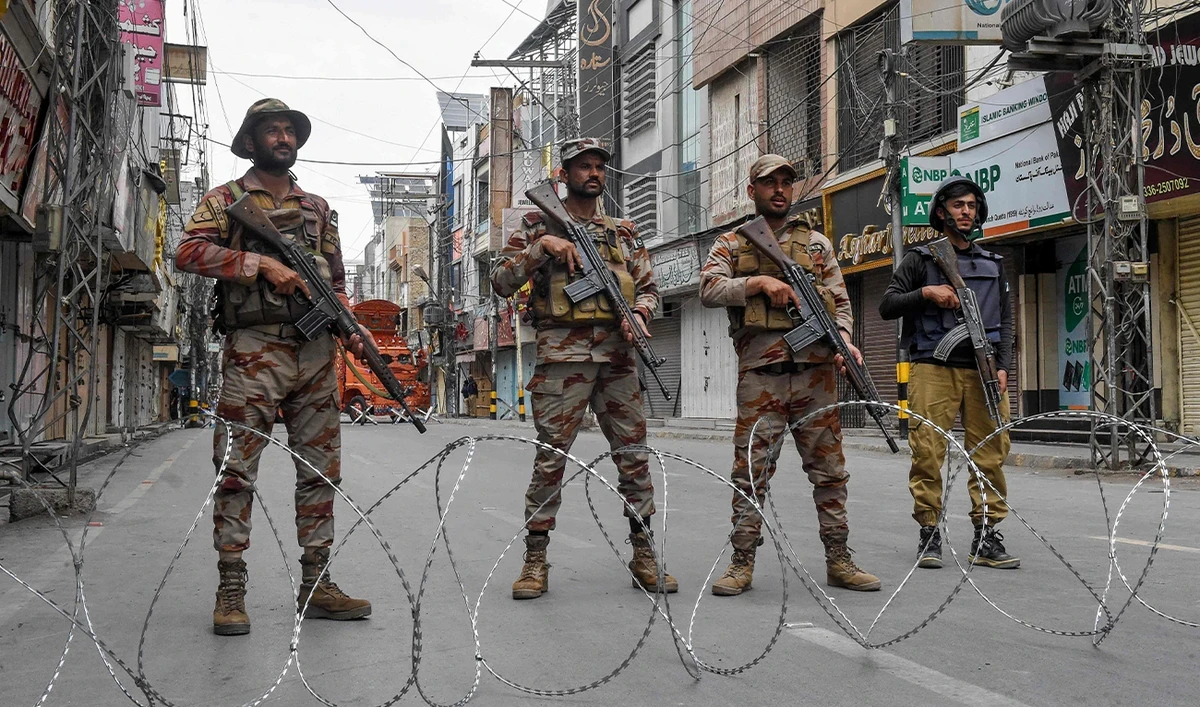
ISLAMABAD: The top US diplomat in Pakistan, accompanied by senior American military officials, on Thursday observed joint counterterrorism drills conducted by Pakistani and US troops aimed at improving how the two forces operate together, Pakistan’s military said.

The drills are part of Exercise Inspired Gambit–2026 that is being held from Jan. 8 to Jan. 16 at the National Counter Terrorism Center in Pabbi, situated in the Punjab province, marking the 13th iteration of the bilateral training series since it began in 1995.

“Distinguished Visitors’ Day ceremony was held on 15 January 2026 at the National Counter Terrorism Center, Pabbi,” the military’s media wing, Inter-Services Public Relations (ISPR), said in a statement. “Her Excellency Ms. Natalie Baker, Chargé d’Affaires of the United States of America to Pakistan, accompanied by senior US military dignitaries, and Commander Rawalpindi Corps graced the occasion.”

“The visitors were briefed on the scope, objectives, and conduct of the exercise,” it added. “A high level of professionalism and competence was demonstrated by participants of both armies, which was appreciated by the visiting dignitaries.”

Pakistan and the United States have maintained close defense and security ties for decades, working together during the Cold War era, especially after the 1979 Soviet invasion of Afghanistan.

The relationship continued following the US-led intervention in Afghanistan after the Sept. 11, 2001, attacks, though cooperation became strained at times due to policy differences.

ISPR said the exercise was meant to enhance bilateral military cooperation through the exchange of counterterrorism experience, refinement of drills and procedures and the development of interoperability.