

Pakistan using dual approach of diplomacy, military action against Afghan-based militants — analysts

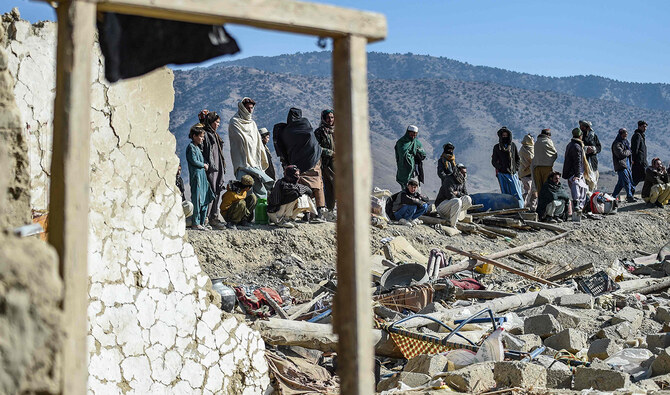
Residents gather near a damaged house two days after air strikes by Pakistan in the Barmal district of eastern Paktika province on December 26, 2024. (AFP)
Short Url
Updated 27 December 2024
Follow

Pakistan using dual approach of diplomacy, military action against Afghan-based militants — analysts

  • PM Sharif says cross-border attacks from against civilians, security forces ‘unacceptable’ for Pakistan
  • An Afghan analyst believes Pakistani airstrikes in his country can create sympathy for groups like TTP

KARACHI: Pakistan is using both political engagement and military action to counter militant groups operating from Afghanistan, analysts said on Friday, after Afghan authorities reported airstrikes conducted by Pakistani forces this week that killed 46 people.
The strikes, which targeted alleged hideouts of the banned Tehreek-e-Taliban Pakistan (TTP), came amid allegations by Pakistani officials of cross-border militant attacks, as extremist violence targeting civilians and security forces has surged more recently.
Afghan authorities claimed the victims included residents from Pakistan’s border regions, who were uprooted during military operations against TTP fighters in recent years, as the United Nations expressed concern over civilian casualties and urged an investigation.
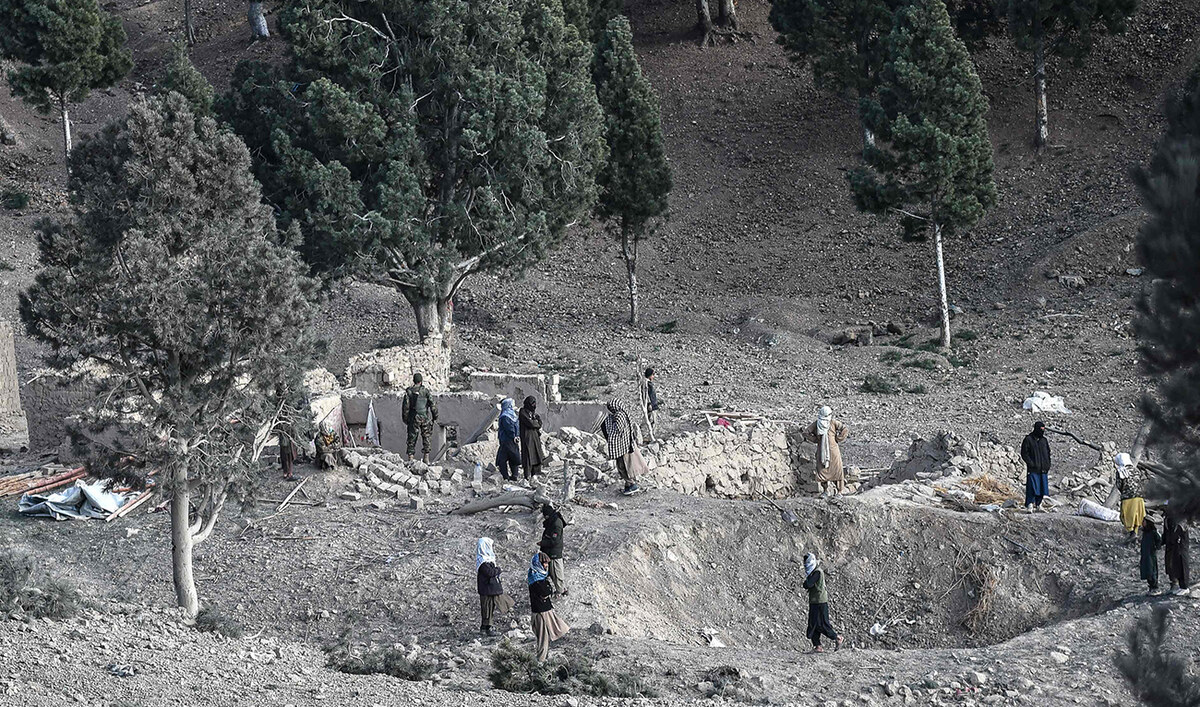


Residents gather near a damaged house two days after air strikes by Pakistan in the Barmal district of eastern Paktika province on December 26, 2024. (AFP)

While Pakistan has not officially confirmed the airstrikes, with both the foreign office and the military’s media wing declining to comment, Prime Minister Shehbaz Sharif said the TTP cross-border attacks constituted a “red line” for his government, asking Afghan authorities to take action against militants using their soil.

The reported airstrikes coincided with a visit to Kabul by Mohammad Sadiq, Pakistan’s special representative for Afghanistan, to discuss trade and regional ties.
“It seems that Pakistan wants to continue to talk to the Taliban while also flexing its military muscle, just as the Taliban did once they engaged in talks with the US,” Husain Haqqani, a former Pakistani ambassador, told Arab News.
He maintained that Pakistan’s military leadership believed its past support for the Afghan Taliban, when the US-led international forces were still operating in Kabul, would shield it from violent attacks, adding these armed groups did not consider any Muslim country “exempt from imposition of their extreme ideology.”
However, Sami Yousufzai, an Afghan political analyst, highlighted the delicate nature of Pakistan-Afghanistan ties, saying such strikes were viewed as a direct affront by Kabul.
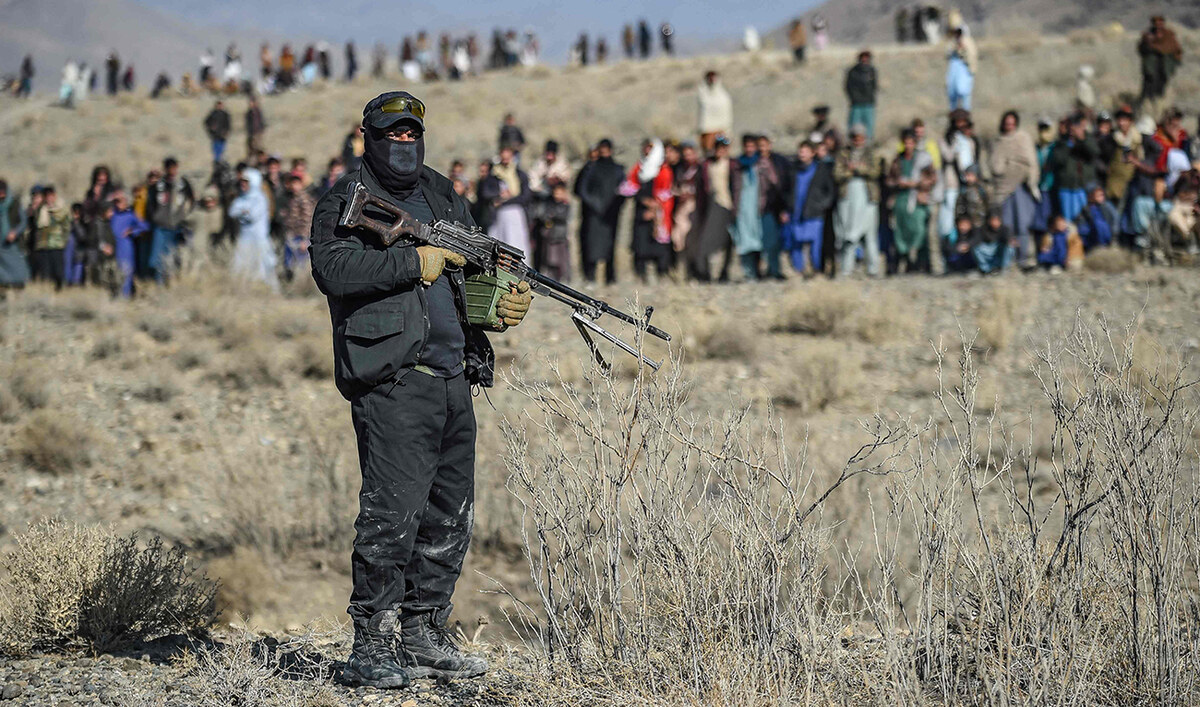


A Taliban security personnel stands guard at the site two days after airstrikes by Pakistan in the Barmal district of eastern Paktika province on December 26, 2024. (AFP)

“Afghanistan is particularly sensitive to invasions or attacks within its borders,” he told Arab News, acknowledging that the airstrikes resulted from growing pressure on Pakistan due to the surge in TTP attacks.
However, he maintained Pakistan had made errors of judgment relating to the timings of the attack, as one of its senior diplomats, Ambassador Sadiq, was in Afghanistan, and the number of civilian casualties.
Yousufzai informed that Afghan authorities had recently taken confidence-building measures at Pakistan’s request by relocating 200 TTP families from border areas to central Afghanistan, adding that the move had been undermined by the airstrikes.
“Afghanistan has little to lose, but as a more stable nation, Pakistan should avoid irresponsible actions,” he continued. “Such attacks will not eliminate the TTP. Instead, it will likely increase their support.”
He maintained the real issue was the TTP presence in Pakistan, adding that its fighters were even residing in districts like Bannu and Dera Ismail Khan, which do not share border with Afghanistan, though they have experienced several deadly attacks.
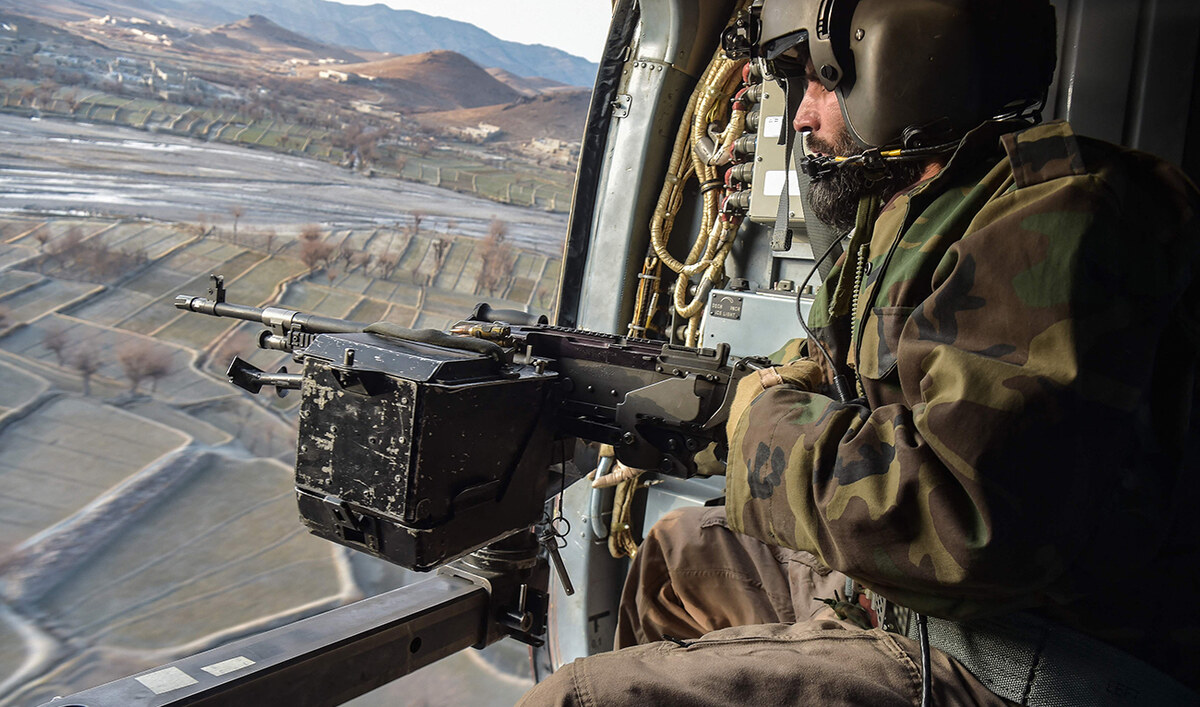


A Taliban security personnel keeps watch from a helicopter two days after air strikes by Pakistan in the Barmal district of eastern Paktika province on December 26, 2024. (AFP)

Mehmood Jan Babar, a Peshawar-based journalist specializing in Afghan and tribal affairs, argued the strikes did not derail diplomacy, as evidenced by continued meetings between Sadiq and Afghan officials, including Taliban Foreign Minister Amir Khan Muttaqi.
Asked about Afghan warning of consequences to Pakistan, he said: “Such speeches and statements are often for public consumption.”
Syed Khalid Muhammad, a security expert in Islamabad, dismissed the claims of civilian casualties, arguing that militants deliberately use civilian populations as shields.
“The key thing to understand about the Pakistani airstrikes on the TTP is that the militants have hidden themselves among the civilian population, much like every terror group globally, which serves a greater purpose for them,” he added. “It allows them to manufacture an alternative narrative to gain sympathy.”
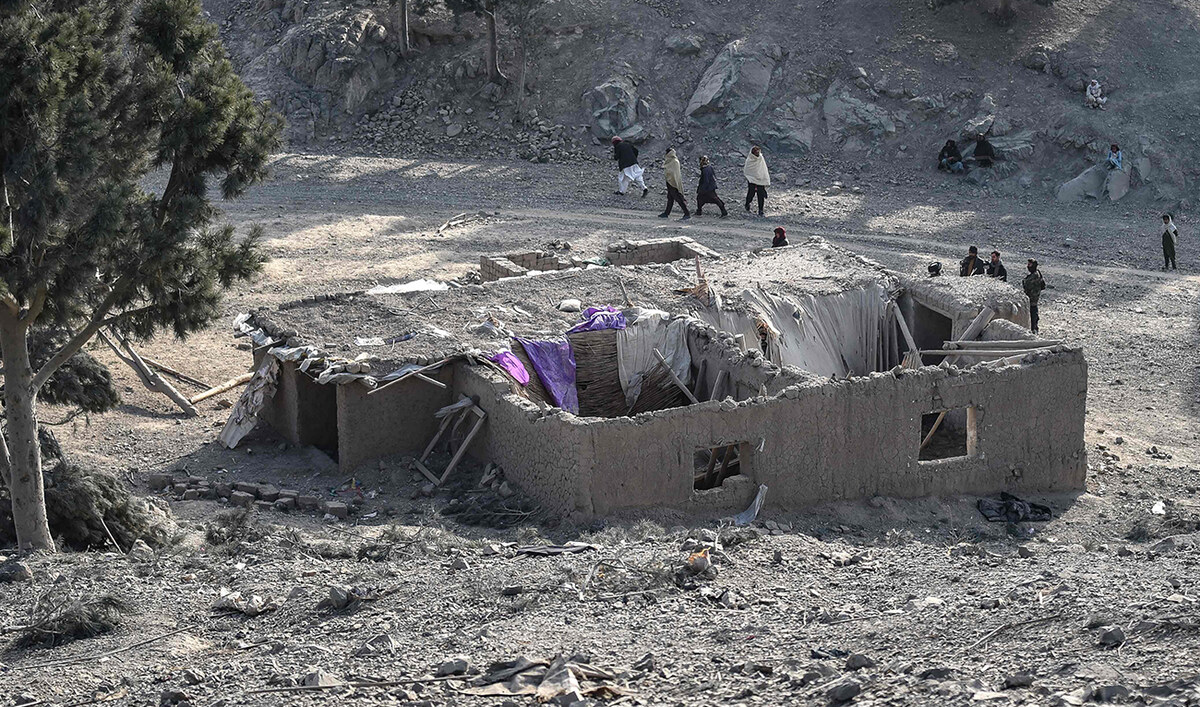


Residents gather near a damaged house two days after air strikes by Pakistan in the Barmal district of eastern Paktika province on December 26, 2024. (AFP)

Meanwhile, Pakistani military’s spokesperson Lt. Gen. Ahmed Sharif Chaudhry said his country had repeatedly pointed out to the Afghan government on state level that the TTP and other militants had been launching cross-border attacks in Pakistan in a news conference earlier today.
“Pakistan will leave no stone unturned in dismantling terrorist networks and safeguarding its citizens against terrorism,” he told the media without confirming the airstrikes.


Pakistan secures $1.2 billion as IMF clears reviews, flags gains on stability and reforms

Updated 9 sec ago
Follow

Pakistan secures $1.2 billion as IMF clears reviews, flags gains on stability and reforms

  • IMF praises Pakistan’s policy implementation despite challenging global environment and climate-driven shocks
  • The Executive Board urges faster energy, SOE and governance reforms for macroeconomic and fiscal sustainability

KARACHI: The International Monetary Fund (IMF) approved Pakistan’s second review under its Extended Fund Facility (EFF) and the first review of its Resilience and Sustainability Facility (RSF), said a statement on Tuesday, unlocking about $1.2 billion in new financing while praising the country’s progress in stabilizing the economy despite recent floods.

The decision taken by the IMF Executive Board allows Islamabad to draw $1 billion under the EFF and $200 million under the RSF, bringing total disbursements under both arrangements to about $3.3 billion. The Fund said Pakistan’s policy implementation had improved financing conditions, strengthened reserves and preserved stability even as the country faced a challenging global environment and climate-driven shocks.

Under the 37-month EFF, approved last year in September, the IMF noted strong fiscal performance, including a primary surplus of 1.3 percent of GDP, a rebound in gross reserves to $14.5 billion by end-FY25 from $9.4 billion a year earlier and progress on rebuilding confidence. It noted a surge in inflation due to flood-related food price spikes but said it was expected to ease.

“Pakistan’s reform implementation under the EFF arrangement has helped preserve macroeconomic stability in the face of several recent shocks,” IMF Deputy Managing Director Nigel Clarke said. “Real GDP growth has accelerated, inflation expectations have remained anchored, and fiscal and external imbalances have continued to moderate.”

Clarke said Islamabad’s commitment to meeting its FY26 primary balance target while also addressing urgent post-flood relief signaled strong fiscal intent. He urged continued tax policy simplification and base broadening to build space for climate resilience, social protection and public investment.

The IMF official maintained a tight monetary stance should be continued to keep inflation within the State Bank Pakistan’s target range, while allowing exchange-rate flexibility and deepening the interbank market.

Additionally, he said financial regulation enforcement and capital market development were essential for a resilient financial sector.

The IMF also flagged energy sector reforms as “critical to safeguarding viability,” noting that timely tariff adjustments had helped curb circular debt but that Pakistan must now focus on reducing electricity production and distribution costs and addressing operational inefficiencies in both the power and gas sectors.

The statement also welcomed the publication of Pakistan’s Governance and Corruption Diagnostic report, a detailed IMF-supported assessment that maps out where government systems are vulnerable to inefficiency or misuse and recommends reforms to improve transparency, accountability and service delivery.

Further priorities include the privatization of state-owned enterprises and strengthening economic data quality.
Clarke said reducing Pakistan’s climate vulnerability was vital for long-term stability, referring to the RSF, a financing tool that provides long-term, low-cost loans to help countries address climate risks.

“The RSF arrangement is supporting efforts to strengthen natural disaster response and financing coordination, improve the use of scarce water resources, raise climate considerations in project selection and budgeting, and improve the information on climate-related risks in financing decisions,” he said.

Pakistan faced a prolonged economic crisis in recent years before it began implementing stringent IMF-recommended reforms, which have driven a gradual improvement in macroeconomic indicators over the past two years.

The country also remains one of the world’s most climate-vulnerable nations despite contributing less than one percent of global greenhouse-gas emissions.

It has endured a series of extreme weather events in recent years, most notably the 2022 super-floods that submerged one-third of the country, displaced millions and caused an estimated $30 billion in losses.

This year’s floods killed over 1,000 people and caused at least $2.9 billion in damage to agriculture and infrastructure, underscoring the scale of climate pressures facing the economy.

Economic experts told Arab News a day earlier that the Fund’s disbursements under the two loan programs would support the cash-strapped nation, which has relied heavily on financing from bilateral partners such as Saudi Arabia, China and the United Arab Emirates, as well as multilateral lenders.

“It obviously will help strengthen the external sector, the balance of payments,” said Samiullah Tariq, group head of research at Pakistan Kuwait Investment Company.

Another analyst, Shankar Talreja, head of research at Karachi-based Topline Securities, said the move was likely to send a positive signal to domestic and international investors about the government’s commitment to its reform agenda.

“This will help strengthen reserves and will eventually help a rating upgrade going forward,” he said.
