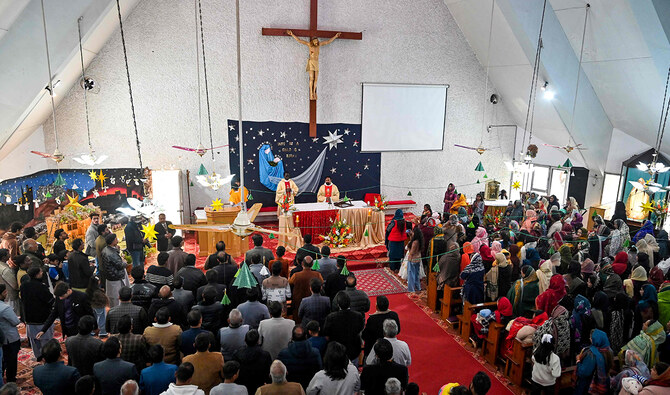

ISLAMABAD: Church leaders and Christian residents of Islamabad on Wednesday called on the Pakistan government to improve the condition of religious minorities as Christmas was celebrated in the federal capital and around the country with prayer services, parties and feasts.
One of the main services in Islamabad was held at the Our Lady of Fatima Church, which was decorated with Christmas ornaments, and had on display a nativity scene, a depiction of the birth of Jesus, often exhibited during the Christmas season around the world. Festivities at the church included a prayer service late on Christmas eve and services in the morning and during the day.
“We want the government to solve the problems of Christians,” Sylvester Joseph, the parish priest at Fatima Church, told Arab News after the morning prayer service. “We are a minority. We have problems with jobs, we have problems with discrimination. We want this to be solved.”
Christianity is the third-largest religion in Pakistan, with results from the 2023 census recording over three million Christians, or 1.3% of the total population in Pakistan. The majority of Christians in Pakistan are members of the Catholic Church or the Church of Pakistan.
Christians face institutionalized discrimination in nearly all walks of life in Pakistan and are often the target of violence by religious hard-liners and militant groups. Christians are also reserved for low-status jobs, such as working in sewers or as cleaners in homes and offices.
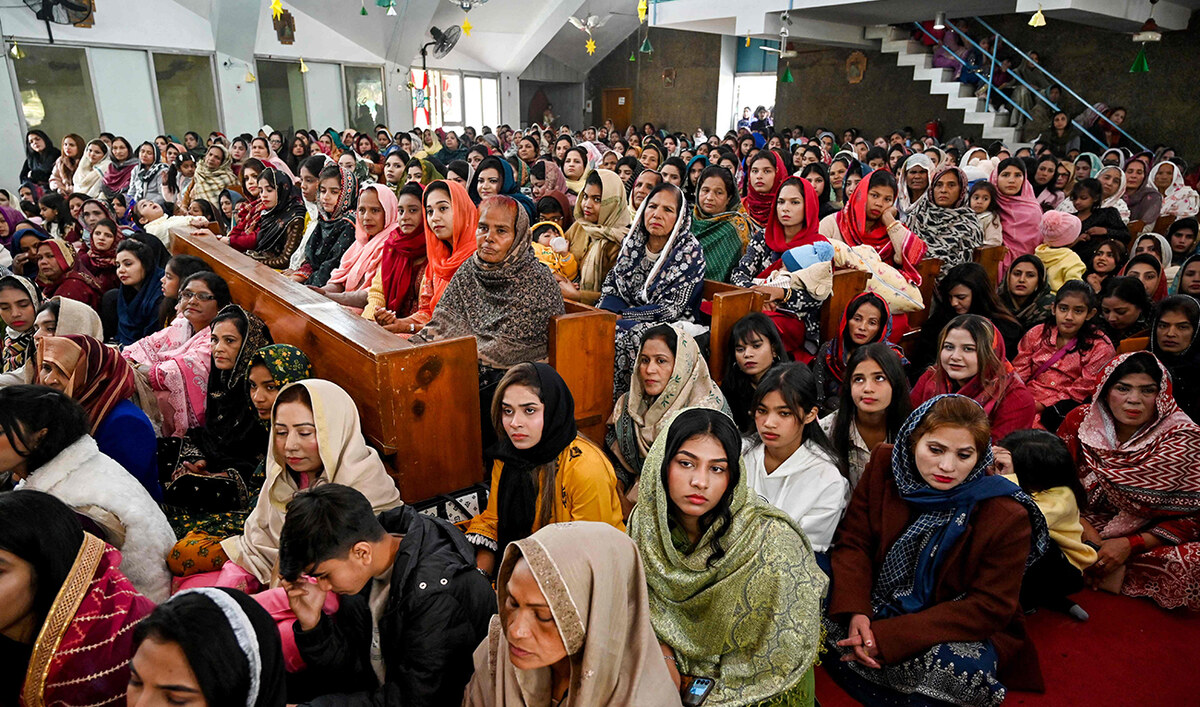
Pakistani Christian community gathers to pray on the occasion of Christmas, at the Our Lady of Fatima Church in Islamabad on December 25, 2024. (AFP)
Historical churches in Pakistan are monitored and have been targeted with bomb attacks on multiple occasions.
“There are many challenges here,” Sarfaraz John, a church elder, told Arab News. “We have only one job which is cleaning. We don’t get jobs according to our education.”
He said the community was also “scared” of violence and mob attacks, referring to an incident in August 2023 when vigilantes attacked the Christian community in the city of Jaranwala after falsely accusing two Christian residents of desecrating the Qur’an.
“We are afraid of what will happen. Our communities are afraid of what will happen,” John added. “There have been incidents like Jaranwala. We are scared.”
In May this year, at least 10 members of a minority Christian community were rescued by police after a Muslim crowd attacked their settlement over a blasphemy accusation in eastern Pakistan.
In 2017, two suicide bombers stormed a packed church in southwestern Pakistan just days before Christmas, killing at least nine people and wounding up to 56. An Easter Day attack in a public park in 2016 killed more than 70 people in the eastern city of Lahore. In 2015, suicide attacks on two churches in Lahore killed at least 16 people, while a pair of suicide bombers blew themselves up outside a 130-year-old Anglican church in the northwestern city of Peshawar after Sunday Mass in 2013, killing at least 78 people in the deadliest attack on Christians in the predominantly Muslim country.
Minister for Law, Justice and Human Rights, Azam Nazeer Tarar, announced this month Pakistan would “soon” establish the National Commission for the Rights of Minorities, who constitute about three percent of Pakistan’s estimated population of 240 million people. In October, the chief minister of Pakistan’s Punjab, Maryam Nawaz Sharif, announced cash cards for minorities in the province, where the most number of the country’s Christians live, and vowed to double the amount for uplifting their places of worship and graveyards.
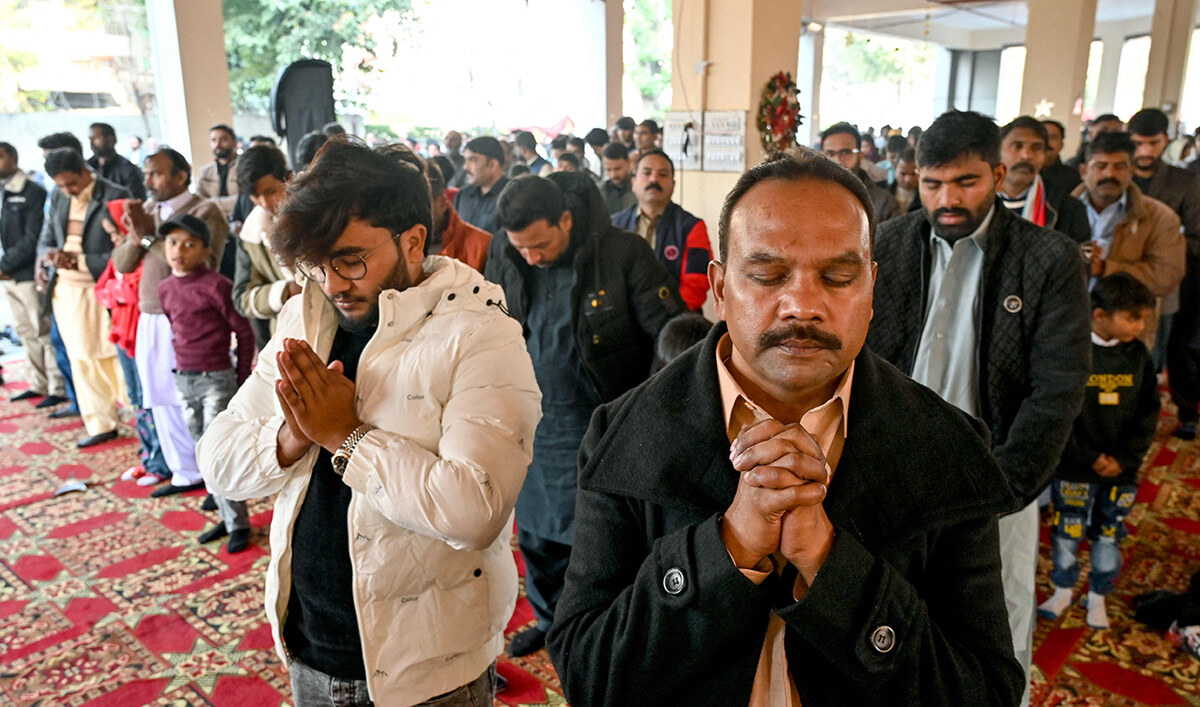
Pakistani Christian community gathers to pray on the occasion of Christmas, at the Our Lady of Fatima Church in Islamabad on December 25, 2024. (AFP)
Some Christians at the Islamabad service also said things had improved for the community in recent years.
“We celebrate Christmas at the government level, it is much better now,” Joseph, the pastor-in-charge, said. “Our Muslim brothers meet us and wish us ‘Merry Christmas’. The situation is improving now.”
John said security arrangements by the government had also improved in recent years.
“The government gives us security. They work with us,” he said. “There are more than 50 troops on duty at the church today. Traffic police, [paramilitary] Rangers, Islamabad police, they all work with us on Christmas.”
Naveed Arif, a banker, said the situation of minorities had “improved a lot with time.”
“Now minorities are given their rights in a proper way, I am a banker myself,” he said. “In festivals like Christmas and Easter, we are given special holidays. We are given proper provisions at other events as well … there have been a lot of changes and improvements.”