

SAMA cuts benchmark interest rate to 5% in line with US Federal Reserve move 

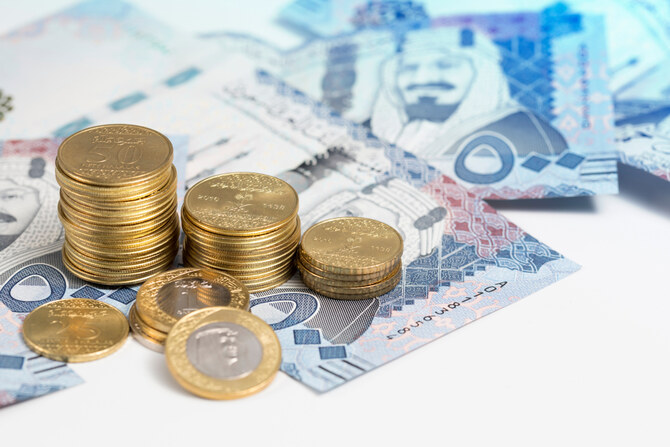
The reduction follows a more aggressive 50-basis-point cut in September and reflects a recalibration of policy as inflationary pressures ease. Shutterstock
Short Url
Updated 19 December 2024
Follow

SAMA cuts benchmark interest rate to 5% in line with US Federal Reserve move 

RIYADH: Saudi Arabia’s central bank lowered its benchmark interest rate to 5 percent, its third cut this year, aligning with the US Federal Reserve’s decision to reduce rates by 25 basis points. 

The institution, also known as SAMA, cut its repurchase agreement rate to 5 percent and the reverse repurchase agreement rate to 4.5 percent, it said in a statement. The move is aimed at maintaining monetary stability amid shifting global economic conditions. 

The move aligns with the US Federal Reserve decision, which similarly cut rates by 25 basis points, bringing its target range to between 4.25 percent and 4.5 percent. 

“This decision is in line with SAMA’s mandate of preserving monetary stability in the context of global developments,” SAMA said. 

The reduction follows a more aggressive 50-basis-point cut in September and reflects a recalibration of policy as inflationary pressures ease. The move is expected to lower borrowing costs, providing relief after two years of elevated rates designed to curb inflation.  

Central banks across the Gulf Cooperation Council, whose currencies are largely pegged to the dollar, mirrored the Fed’s move despite relatively stable inflation levels in the region. 

The UAE cut its overnight deposit facility rate by 25 basis points to 4.4 percent, while Oman trimmed its repo rate by the same margin to 5 percent. Qatar opted for a slightly deeper reduction, lowering its three main rates by 30 basis points. Bahrain reduced its overnight deposit rate by 25 basis points to 5 percent. 

In a separate statement, the Central Bank of Kuwait announced on Wednesday that it had adopted a “gradual and balanced approach” to monetary policy, reducing its discount rate by 25 basis points to 4 percent, effective Sept. 19. 

Commenting on the GCC banks’ move, Mahmoud Khairy, an economist and policy adviser, told Arab News: “This strategy of syncing with the US Fed helps GCC economies manage inflation and support economic growth by reducing borrowing costs.”

He, however, said the strategy depends on the US economic policy landscape. “If the US shifts toward monetary easing, GCC central banks might face challenges in balancing their own economic needs with maintaining currency pegs and investor confidence,” Khairy explained.

He was of the view that GCC countries must align their interest rates with the Fed to sustain investment inflows. However, this poses challenges for nations like Saudi Arabia, where inflationary pressures are driven by housing prices and demand, thus making it difficult to keep inflation low, he added.

Over the past two years, the US Federal Reserve has aggressively raised interest rates to combat inflation, significantly tightening monetary policy to stabilize prices. 

Although inflation in the US has edged closer to the Fed’s 2 percent target, it remains slightly elevated, leaving consumers burdened by high costs.


ACWA Power completes refinancing of Rabigh 3 Independent Water Project

Updated 16 sec ago
Follow

ACWA Power completes refinancing of Rabigh 3 Independent Water Project

RIYADH: Saudi utility giant ACWA Power has completed the refinancing of the Rabigh 3 Independent Water Project, located in the western region of the Kingdom. 

Rabigh 3 is a seawater desalination plant with a capacity of 600,000 cubic meters of potable water per day, using reverse osmosis technology.

In a press statement, the Tadawul-listed company said the refinancing was executed through a capital-markets-led approach, anchored by the issuance of a long-term senior secured project bond. 

The refinancing was anchored by investment firm KKR as the largest lender, with participation from other investors including Barings, Hong Kong Mortgage Corp., and Clifford Capital, as well as Sumitomo Mitsui Trust Bank, and SBI Shinsei Bank. There was also regional support from Riyadh Bank and Abu Dhabi Commercial Bank. 

“The transaction highlights ACWA Power’s continued innovation in infrastructure financing, combining capital-markets instruments with strong project-level credit and global institutional participation,” said Marco Arcelli, the company’s CEO.

He added: “By meeting international rating agencies’ and debt investors’ expectations, ACWA Power has reinforced the bankability of large-scale desalination projects and expanded access to long-term funding for essential infrastructure.” 

Arcelli also said the refinancing supports the company’s ambition to continue providing more than half of Saudi Arabia’s desalinated water capacity. 

The new transaction replaces the project’s previous debt facility with a diversified financing structure that broadens the investor base and enhances long-term funding resilience. 

The statement added that the refinancing underscores ACWA Power’s ability to structure complex financings that meet the requirements of global institutional investors while aligning with international sustainability standards. 

“Rabigh 3 IWP is a cornerstone asset for water security in the Kingdom, and the strong participation from international investors reflects its quality, reliability, and long-term value,” said Abdulhameed Al-Muhaidib, chief financial officer at ACWA Power. 

He added: “This transaction demonstrates ACWA Power’s commitment to responsible finance, sustainable water infrastructure, and long-term environmental stewardship. We’re very proud to issue our first-ever blue bond that attracts new international investors to our Saudi fleet.” 

The refinancing marks ACWA Power’s first alignment with the International Finance Corporation’s Blue Finance Guidelines, reinforcing the plant’s strong operational performance while supporting Saudi Arabia’s Vision 2030 infrastructure goals.