

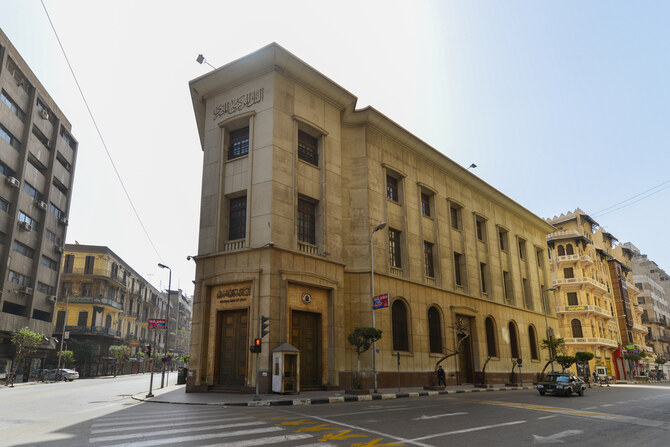

RIYADH: The Central Bank of Egypt sold three-month treasury bills worth 52.75 billion Egyptian pounds ($1.03 billion) in its latest auction on Dec. 8.
According to data from the institution, this amount exceeded the targeted collection of 35 billion pounds by more than 50 percent.
Investors submitted bids totaling 78.56 billion pounds, showcasing heightened interest despite the economic pressures posed by inflation and currency depreciation.
Egypt’s inflation rate eased in October, rising 1.5 percent compared to 2.3 percent in September, driven by lower food prices. Annual inflation dropped to 26.3 percent, down sharply from 38.5 percent a year earlier.
The auction recorded a minimum yield of 30.10 percent and a maximum yield of 34 percent, with the weighted average yield rising to 31.42 percent, up from 31.2 percent in the previous auction.
In addition to the 91-day bills, the Central Bank also auctioned treasury bills with tenors of 182 days, 273 days, and 364 days. For the 182-day bills, a nominal amount of 7.19 billion pounds was accepted out of 86.35 billion pounds in bids, with a weighted average yield of 30.996 percent.
The 273-day bills raised 4.41 billion pounds from 48.83 billion pounds in bids, recording an average yield of 28.76 percent. Meanwhile, the 364-day bills secured 2.18 billion pounds from 42.3 billion pounds in submitted bids, with an average yield of 26.24 percent.
The sharp rise in yields comes as the Egyptian pound continues to weaken, surpassing the 50-pound mark against the US dollar. This depreciation has fueled inflationary pressures, driving up borrowing costs for the government.
The high yields, especially on the short-term bills, reflect both rising inflation expectations and the premium investors demand to hedge against currency risk. Notably, the three-month bills saw robust demand, with 481 bids submitted, of which 435 were accepted, signaling strong investor confidence.
The escalating yields across all tenors underlined the challenges faced by the Egyptian government as it attempts to balance fiscal needs with rising market borrowing costs.
The strong investor turnout in this auction highlighted the continued appetite for Egyptian government debt, driven by attractive returns despite the risks associated with inflation and currency fluctuations.
As the economic landscape remains volatile, the Treasury’s reliance on short-term instruments with high yields reflects its strategy to secure liquidity while managing fiscal and monetary pressures.
Similarly, in September, Egypt’s central bank issued treasury bills worth 50 billion pounds as the country was seeking to manage liquidity and support government financing amid rising inflation.
The move came as part of the CBE’s broader effort to curb inflation and provide investors with short- and medium-term investment options. This also followed a similar issuance on Sept. 26, when the Central Bank of Egypt offered treasury bills worth 50 billion pounds through two auctions.


