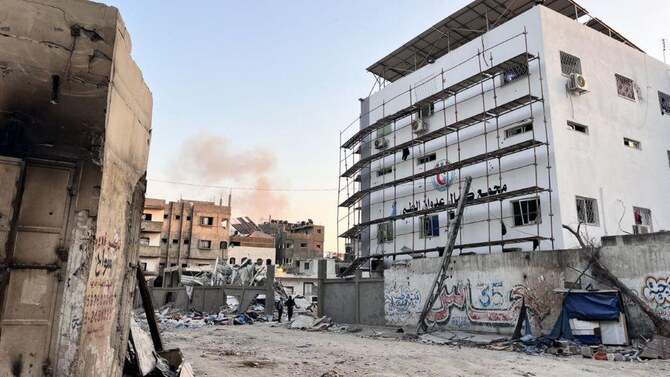
GENEVA: A World Health Organization official said Monday a humanitarian team finally reached one of northern Gaza’s only functioning hospitals at the weekend to deliver fuel, food and medicines, and found “appalling” conditions.
Kamal Adwan Hospital is located in Beit Lahia, a city at the center of an intense Israeli military operation aimed at preventing Hamas from regrouping in northern Gaza.
WHO chief Tedros Adhanom Ghebreyesus said on X that after multiple attempts, the United Nations health agency and partners reached the facility “two days ago, amid hostilities and explosions in the vicinity of the hospital during the mission.”
The team, he said, had “delivered 5,000 liters of fuel, food and medicines, and transferred three patients and six companions to Al-Shifa,” the Palestinian territory’s main hospital.
Kamal Adwan is one of the last operational medical facilities in the north of the war-ravaged territory, with the WHO warning earlier this month that it was operating at a “minimum” level.
The agency said efforts to deliver desperately needed supplies have been repeatedly hampered.
Earlier this month, it said a mission reached the hospital on November 30 after weeks of unsuccessful attempts, bringing aid and an international emergency team, including surgeons and other specialists.
But days later, that team was among large numbers who fled the hospital amid heavy hostilities around the facility.
“This has left the hospital without specialized personnel for surgical and maternal care,” Tedros warned, adding that the attacks have resulted in further damage to the facility and its oxygen and electricity supplies.
“The conditions in the hospital are simply appalling,” he said.
“We urge for the protection of health care and for this hell to stop! Ceasefire!“
The war was sparked by Hamas’s October 7, 2023 attack on Israel that resulted in the deaths of 1,208 people, mostly civilians, according to an AFP tally of Israeli official figures.
Since then, Israel’s retaliatory offensive has killed more than 45,000 people in Gaza, a majority of them civilians, according to figures from the Hamas-run territory’s health ministry that the UN considers reliable.


![]()

Conditions in north Gaza hospital ‘appalling’: WHO chief
Short Url
https://arab.news/4v2fp
Conditions in north Gaza hospital ‘appalling’: WHO chief
- Tedros Adhanom Ghebreyesus: UN health agency and partners reached the facility ‘two days ago, amid hostilities and explosions in the vicinity of the hospital during the mission’
- Ghebreyesus: Team ‘delivered 5,000 liters of fuel, food and medicines, and transferred three patients and six companions to Al-Shifa,’ the Palestinian territory’s main hospital


Latest updates


Recommended


© 2026 SAUDI RESEARCH & PUBLISHING COMPANY, All Rights Reserved And subject to Terms of Use Agreement.