

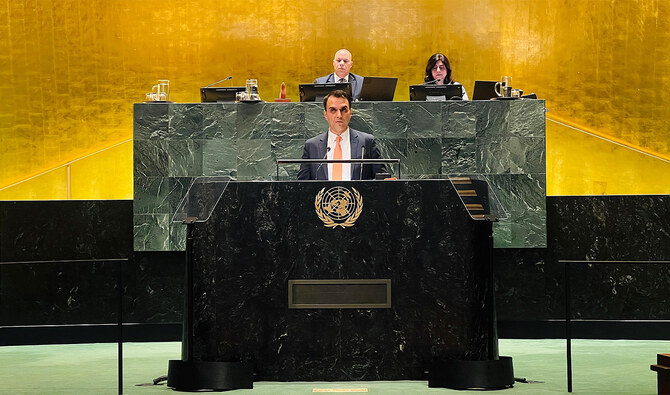

ISLAMABAD: Pakistan’s acting UN envoy Usman Jadoon said this week the Tehreek-e-Taliban Pakistan (TTP) militant group, which Islamabad accuses of operating from safe havens in neighboring Afghanistan, was poised to become Al-Qaeda’s regional and global arm, with a far-reaching “terrorist agenda” that threatened international security.
Islamabad says the TTP uses Afghanistan as a base to launch attacks, accusing the ruling Taliban administration of providing safe havens to the group along their shared border. Pakistan also says Afghans have been found to be involved in multiple recent attacks, amid a militancy spike. The Taliban deny militants are using Afghan soil to launch attacks or that Afghans are involved in militancy in Pakistan. They say Pakistan’s security challenges are a domestic issue.
The TTP is separate from the Afghan Taliban movement but pledges loyalty to the group that now rules Afghanistan after the US-led international forces withdrew in 2021.
“Given its long association with Al Qaeda, the TTP could emerge as Al Qaeda’s arm with a regional and global terrorist agenda,” Jadoon said on Thursday while addressing a UN Security Council meeting.
“Terrorism within and from Afghanistan poses the single most serious threat to the country, to the region and the world … While the Afghan interim government is fighting Daesh, the threat from various other terrorist groups such as Al Qaeda, TTP and others is yet to be addressed.”
Jadoon said the TTP was fast emerging as an “umbrella organization” for other terror groups in the area with the “clear objective of destabilizing Afghanistan’s neighbors.”
“We have evidence of its collaboration with other terrorist groups like the Majeed brigade which is utilizing terrorism to disrupt Pakistan’s economic cooperation with China, especially the China-Pakistan Economic Corridor,” the diplomat added, referring to the suicide squad of the separatist Baloch Liberation Army which has been fighting a decades long insurgency in Pakistan’s southwestern Balochistan province.
Jadoon said with 6,000 fighters, TTP was the largest listed militant group operating close to Pakistan’s borders.
“In countering the TTP cross-border operations, our security and border officials have confiscated some of the modern weapons acquired by the Afghan interim government from stocks left behind by foreign forces,” he said, adding that the TTP also received external support and financing from Pakistan’s adversary India.
Last month, the Pakistan army said it had killed three militants trying to infiltrate its frontier with Afghanistan, calling on Kabul to ensure “effective border management” on its side.
A deportation drive launched last year against Afghans living in Pakistan and border restrictions have also led to a spike in tensions between Pakistan and the Taliban rulers in Afghanistan.


