

Saudi delegation in first round of free trade negotiations between GCC, Japan

1 / 4
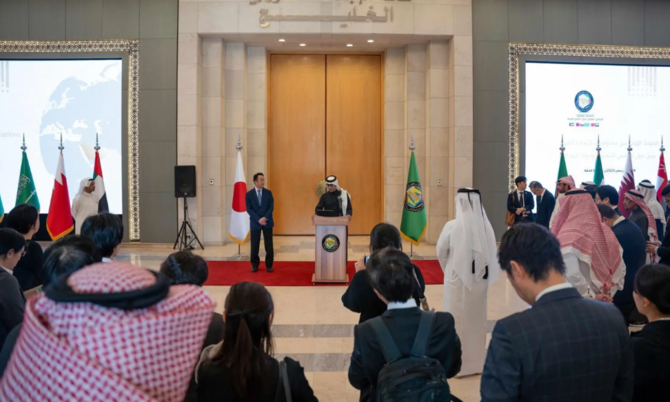
GAFT led the Saudi delegation at the first round of negotiations for a free trade agreement between the GCC and Japan. (SPA)
2 / 4
GAFT led the Saudi delegation at the first round of negotiations for a free trade agreement between the GCC and Japan. (SPA)
3 / 4
GAFT led the Saudi delegation at the first round of negotiations for a free trade agreement between the GCC and Japan. (SPA)
4 / 4
GAFT led the Saudi delegation at the first round of negotiations for a free trade agreement between the GCC and Japan. (SPA)
Short Url
Updated 11 December 2024
Follow

Saudi delegation in first round of free trade negotiations between GCC, Japan

  • Kingdom’s primary exports include mineral and organic chemical products, while Japan predominantly exports vehicles and machinery, along with their respective spare parts
  • GAFT plays an important role in expanding Saudi Arabia’s global presence and ensuring its active participation in international organizations

RIYADH: The General Authority for Foreign Trade led the Saudi delegation at the first round of negotiations for a free trade agreement between the Gulf Cooperation Council and Japan, which took place from Dec. 10-12.

Represented by Fareed bin Saeed Al-Asali, the deputy governor for Agreements and International Organizations and head of the Saudi negotiation team, the Saudi team is overlooking the progress of the negotiations. It consists of nine subcommittees focusing on goods, services, general texts and provisions, e-commerce, intellectual property, government procurement, rules of origin, investment and economic evaluation.

The subcommittees include members from 46 government entities working together to prepare the Kingdom’s negotiating positions for discussions within the World Trade Organization, FTAs, and related initiatives. 

In 2023, trade exchange between Saudi Arabia and Japan amounted to approximately 6 trillion yen ($41 billion). The Kingdom’s primary exports include mineral and organic chemical products, while Japan predominantly exports vehicles and machinery, along with their respective spare parts.

The GAFT plays an important role in expanding Saudi Arabia’s global presence and ensuring its active participation in international organizations in order to achieve common goals.


Saudi mine-clearance project in Yemen destroys 4,235 explosive devices in a day

Updated 22 January 2026
Follow

Saudi mine-clearance project in Yemen destroys 4,235 explosive devices in a day

  • Project Masam aims to rid Yemen of all mines to help ensure the highest standards of safety and security for the Yemeni people

LONDON: Saudi Arabia’s Project Masam cleared 4,235 mines, unexploded ordnance and other explosive devices in a single day from Bab Al-Mandab region in southwestern Yemen, as part of its mission to protect civilians.

Osama Al-Gosaibi, the project’s director general, said it aims to rid Yemen of all mines to help ensure the highest standards of safety and security for the Yemeni people.

On Wednesday, the project’s teams destroyed 33 anti-tank mines, 31 anti-personnel mines, 86 miscellaneous shells, 2,750 assorted rounds, 1,291 breakers and valves used in devices, 12 grenades, two Katyusha rockets, a missile, 15 shell arrows, and 14 other explosive devices.

Masam’s teams are tasked with clearing villages, roads and areas around schools to facilitate the safe movement of civilians and delivery of humanitarian aid.

The project trains local people to become demining engineers, provides them with modern equipment to do the job, and also offers support to Yemenis injured by explosive devices.
