

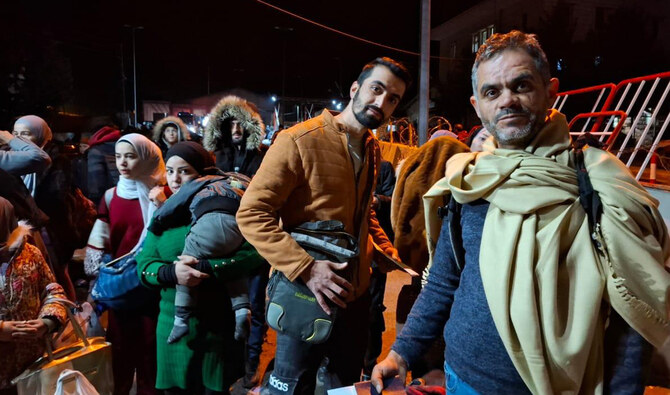

ISLAMABAD: Twelve-hour-long bus rides, multiple check posts, interrogations and bills piling on were how many of nearly 600 Pakistanis evacuated from Syria this week described their fear-filled journey of leaving the war-torn nation by road through neighboring Lebanon.
More than 1,300 Pakistanis have been stranded in Syria since last week when opposition forces seized the capital of Damascus unopposed following a lightning advance that sent President Bashar Assad fleeing to Russia on Sunday.
Pakistan’s mission in Damascus told Arab News on Wednesday 585 Pakistani nationals had been safely evacuated from Syria and were in Beirut. Efforts to transport another batch of 150 people had been hindered, the official said, due to “continuous bombing by Israeli forces.” Soon after the overthrow of Assad on Sunday ended 54 years of rule by his family, Israeli troops moved into the demilitarized zone set up after the 1973 Middle East war, saying the incursion was a temporary measure to ensure border security. On Tuesday, the Israeli military said a wave of air strikes had destroyed the bulk of Syria’s strategic weapons stockpiles.
With major Syrian airports shut, the evacuations came after Prime Minister Shehbaz Sharif urged Lebanese PM Najib Mikati on Monday to “personally” assist in getting Pakistanis, including pilgrims, out of Syria by land routes through the border with Lebanon.
“It took us over 12 hours to reach the Syria-Lebanon border, a distance that should have been just two hours,” Ilyas Naqvi, a Pakistani expatriate from Islamabad who has been living and working in Syria along with his family since 2000, told Arab News in a telephone interview.
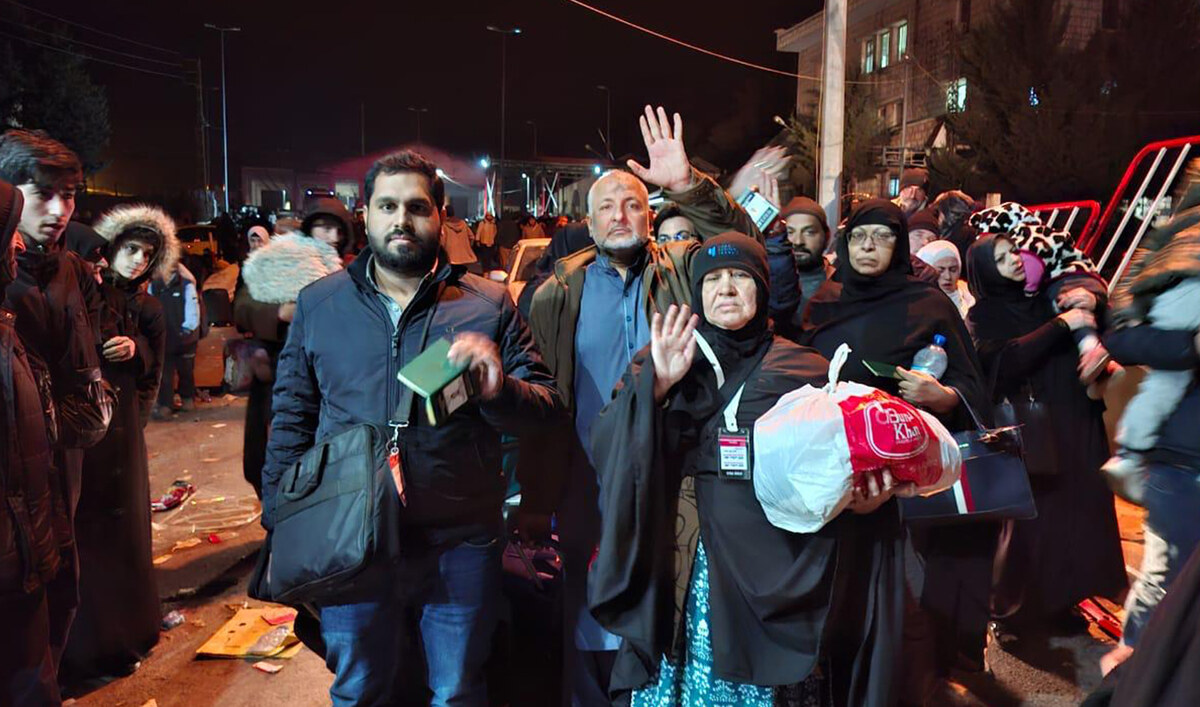
This handout photograph, released by Pakistan’s foreign ministry on December 10, 2024, shows Pakistani nationals crossing the Syria-Lebanon border amid the country’s repatriation of expats after Syria’s opposition forces seized the capital of Damascus last week. (Photo courtesy: MOFA)
“At every checkpoint, we were searched and questioned by different groups, and with each stop we feared for our lives, not knowing if we would make it through.”
Naqvi appealed to the Pakistani government to make arrangements for the immediate return of Pakistanis, saying they were facing “severe financial hardships.”
“I arranged my own transport because it was unsafe to stay in Syria,” he explained. “A coaster that normally costs $10 per person to the Lebanon border charged $200 per head for my family of four, leaving us with very limited funds left.”
Abeel Hassan, who hails from Pakistan’s northwestern Parachinar city and had traveled to Sayyidah Zaynab town in Syria for a religious pilgrimage, also described an arduous journey to the border.
“We heard continuous gunfire along the way, which kept all of us in constant fear,” Hassan said.
However, he praised the Pakistani embassies in Syria and Lebanon for ensuring a safe evacuation and swiftly arranging visas at the Lebanon border.
“Our safe travel wouldn’t have been possible without the embassy officials who accompanied us and negotiated with the armed Syrians at various checkpoints to ensure our safe passage,” Hassan added.
The journey to the Lebanon border took his family six hours, he said, and they received visas at the border without having to pay a fee due to the assistance of the Pakistani mission in Lebanon.
Zawar Hussain from Pakistan’s Hafizabad city, who had also traveled to Syria on a religious pilgrimage, said all pilgrims had paid in advance for the journey due to which they had brought limited funds on the journey. The ordeal in Syria left them in financial difficulty, making it hard even to afford food in Beirut.
“Due to the emergency situation, everything is highly overpriced here,” Hussain told Arab News. “We paid $80 for food for five people just yesterday [Tuesday].”
While wealthy pilgrims have already returned home by buying their own plane tickers onwards from Beirut, the majority lacked such funds, he added:
“We request the government to arrange charter or commercial flights for us, as we do not have the funds to purchase air tickets, which cost over $1,100.”
Ali Hassan, another pilgrim from Pakistan’s eastern city of Sargodha, said hotels at Sayyidah Zaynab — home to the Sayyida Zaynab Mosque which is believed to house the grave of Zaynab bint Ali, the granddaughter of the Islamic prophet Muhammad (pbuh) — had doubled their charges following the regime change, leaving pilgrims financially drained.
“Now, we don’t have enough money to buy water bottles for our family of five, as a bottle of water here in Beirut costs one dollar,” Hassan said.
Pakistan’s Ambassador to Lebanon Salman Athar said despite the small size of the Beirut mission, the embassy was doing “everything possible” to assist Pakistani nationals.
“We have arranged visas for them without any fee and provided the best hotels and food,” Athar told Arab News, adding that the mission was in continuous contact with evacuees and the Lebanese government.
“The foreign ministry is also working with the government to arrange a chartered flight from Beirut to bring them home,” he added, “and once it is finalized, they will be repatriated.”


