

Around 350 Pakistanis evacuated from Syria, foreign office says

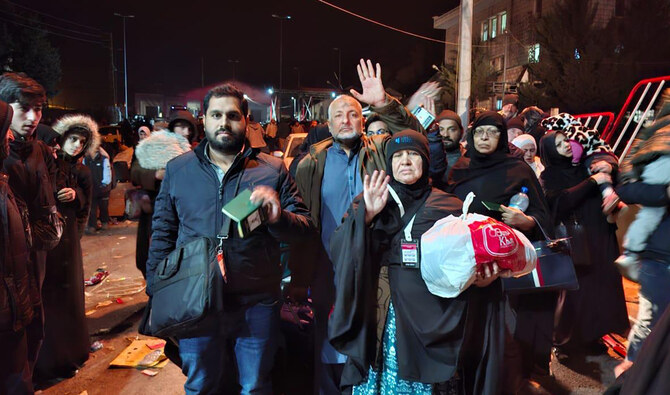
This handout photograph, released by Pakistan’s foreign ministry on December 10, 2024, shows Pakistani nationals crossing the Syria-Lebanon border amid the country’s repatriation of expats after Syria’s opposition forces seized the capital of Damascus last week. (Photo courtesy: MOFA)
Short Url
Updated 10 December 2024
Follow

Around 350 Pakistanis evacuated from Syria, foreign office says

  • Over 1,300 Pakistanis were stranded in Syria last week when Syrian opposition forces seized the capital of Damascus
  • PM Sharif on Monday sought his Lebanese counterpart Najib Mikati’s “personal intervention” to evacuate Pakistani expats

ISLAMABAD: The foreign office said on Tuesday around 350 Pakistan nationals stranded in Syria, including 245 pilgrims, had crossed the Syria-Lebanon border, hours after Prime Minister Shehbaz Sharif announced that the repatriation of expats was a “top priority” for his government. 
More than 1,300 Pakistanis had been stranded in Syria since last week when opposition forces seized the capital of Damascus unopposed following a lightning advance that sent President Bashar Assad fleeing to Russia on Sunday.
While Pakistan’s foreign office initially said the Pakistanis, which included pilgrims, would be evacuated once the Damascus airport reopened, PM Sharif on Monday sought his Lebanese counterpart Najib Mikati’s “personal intervention” to evacuate the expats.
“Around 350 Pakistani nationals including 245 Pakistani Zaireen [pilgrims] stranded in Syria have crossed the Syria-Lebanon border,” the foreign office said in a statement on Tuesday evening.


This handout photograph, released by Pakistan’s foreign ministry on December 10, 2024, shows Pakistani nationals crossing the Syria-Lebanon border amid the country’s repatriation of expats after Syria’s opposition forces seized the capital of Damascus last week. (Photo courtesy: MOFA)

“Under the directions of Prime Minister Muhammad Shehbaz Sharif and Deputy Prime Minister/Foreign Minister Senator Mohammad Ishaq Dar the Embassy of Pakistan, Damascus facilitated the repatriation process.”
Deputy head of mission Umar Hayat accompanied the Pakistani nationals to the border where the deputy head of mission in Beirut, Nawab Adil, received them in Lebanon.
Pakistan’s embassy earlier said Syria’s airports and borders with Jordan and Oman were currently closed, posing a “major challenge” to the repatriation effort. The embassy said it would accommodate Pakistani nationals at a school run by the mission in the meantime, so they could have a secure place to stay while repatriation flights were arranged.
Syria’s new interim leader announced on Tuesday he was taking charge of the country as caretaker prime minister with the backing of the former opposition forces who toppled President Assad three days ago.
In a brief address on state television, Mohammed Al-Bashir, a figure little known across most of Syria who previously ran an administration in a pocket of the northwest controlled by opposition forces, said he would lead the interim authority until March 1.


Challenges for millions pushed back to Afghanistan from Iran, Pakistan

Updated 14 sec ago
Follow

Challenges for millions pushed back to Afghanistan from Iran, Pakistan

  • Over five million Afghans returned home since September 2023 as Iran, Pakistan ramp up deportations
  • Those who returned face challenges in form of unemployment, lack of housing, shortage of electricity and water

KABUL: After decades hosting Afghans fleeing crises at home, Pakistan and Iran have ramped up deportations and forced millions back across the border to a country struggling to provide for them.

Whether arriving at the frontier surrounded by family or alone, Afghan returnees must establish a new life in a nation beset by poverty and environmental woes.

AFP takes a look at the people arriving in Afghanistan and the challenges they face.

FIVE MILLION

More than five million Afghans have returned home from Iran and Pakistan since September 2023, according to the International Organization for Migration (IOM).

The figure equates to 10 percent of the country’s population, according to the agency’s deputy head in Afghanistan, Mutya Izora Maskun.

Three million returnees crossed the borders just last year, some of whom have spent decades living abroad.

Such a huge influx of people would be hard for any country to manage, Maskun said.

INADEQUATE HOUSING 

Months after arriving in Afghanistan, 80 percent of people had no permanent home, according to an IOM survey of 1,339 migrants who returned between September 2023 and December 2024.

Instead, they had to live in temporary housing made from materials such as stone or mud.

More recently, the UN refugee agency (UNHCR) spoke to Afghans who arrived back between January and August last year about their living arrangements.

Three-quarters of tenants said they could not afford their rent, while the majority of families were sharing rooms with up to four people, according to the survey of 1,658 returnees.

DESPERATE SEARCH FOR WORK 

Just 11 percent of adults pushed back from Pakistan and Iran were fully employed, the IOM survey found.

For those who returned in the first few months of last year, the average monthly income was between $22 and $147, according to the UNHCR.

WATER, ELECTRICITY SHORTAGES

More than half the returnee households lack a stable electricity supply, according to the IOM.
The agency said that households headed by women faced “significantly higher vulnerabilities,” with around half of them struggling to access safe drinking water.

SPEEDING UP LAND DISTRIBUTION

More than 3,000 plots of land have been distributed to returnees nationwide, Hamdullah Fitrat, the Afghan government’s deputy spokesman, said in mid-January.

The process “was accelerated,” he said while recounting a special meeting with supreme leader Hibatullah Akhundzada.

On their arrival in Afghanistan, returnees usually receive help with transport, a SIM card and a small amount of money.