

Diversity, creativity steal the spotlight at Noor Riyadh festival

1 / 4
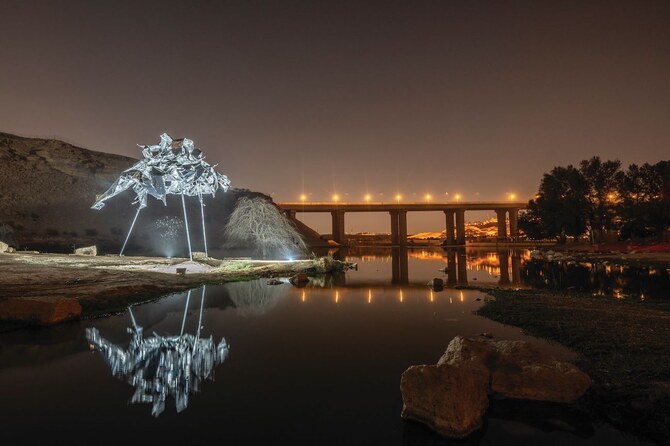
Noor Riyadh serves as a platform for cultural exchange, aligning with Riyadh Art’s goal of nurturing local talent and boosting the capital’s cultural economy. (Supplied)
2 / 4
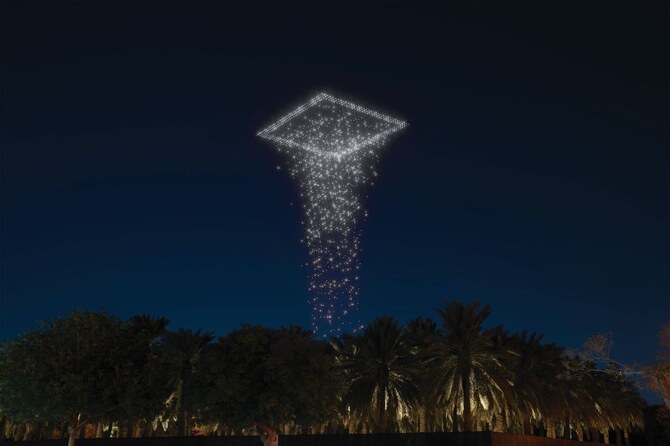
Noor Riyadh serves as a platform for cultural exchange, aligning with Riyadh Art’s goal of nurturing local talent and boosting the capital’s cultural economy. (Supplied)
3 / 4
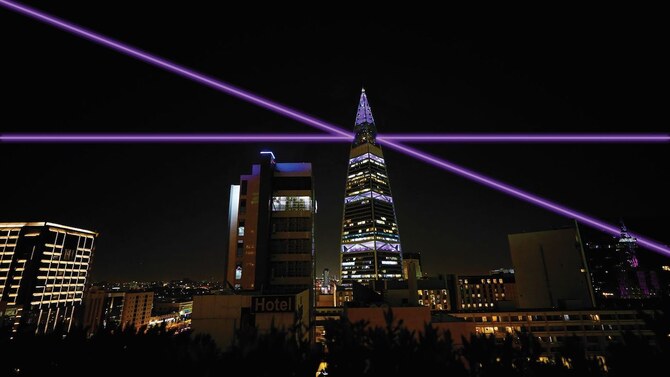
Noor Riyadh serves as a platform for cultural exchange, aligning with Riyadh Art’s goal of nurturing local talent and boosting the capital’s cultural economy. (Supplied)
4 / 4
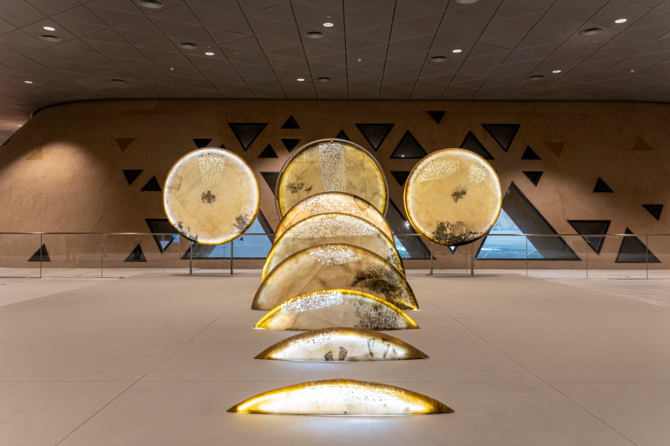
Noor Riyadh serves as a platform for cultural exchange, aligning with Riyadh Art’s goal of nurturing local talent and boosting the capital’s cultural economy. (Supplied)
Short Url
Updated 08 December 2024
Follow

Diversity, creativity steal the spotlight at Noor Riyadh festival

  • Arab media professionals highlight how artistic movement fuels innovation in the Kingdom

RIYADH: Arab media professionals attending the Noor Riyadh festival have highlighted the significant artistic activity in Saudi Arabia, noting that the movement drives creativity and innovation in the Kingdom’s contemporary arts scene.

Noor Riyadh serves as a platform for cultural exchange, aligning with Riyadh Art’s goal of nurturing local talent and boosting the capital’s cultural economy.

The festival, held under the theme “Light Years Apart” until Dec. 14, features artworks by over 60 artists across three hubs: King Abdulaziz Historical Center, Wadi Hanifa, and JAX District.

Some 43 international artists from countries including Australia, France, Germany, Hungary, Italy, Japan, Montenegro, the Netherlands, Poland, Russia, Slovenia, South Korea, Spain, Turkiye, the UK, the UAE, and the US are showcasing their work, in addition to 18 Saudi artists.

Sara Al-Abri, a journalist at Oman’s newspaper Al Roya, told Arab News that the festival stood out for its diverse artworks, with the use of modern technologies like digital lighting and interactive art creating a unique experience.

She said: “What particularly caught my attention was the innovative integration of art and technology, adding depth and beauty to the venue.”

She added that the event also embodied Saudi Vision 2030, which promotes culture and the arts.

“I noticed a growing interest in contemporary and digital arts in Saudi Arabia, alongside traditional arts,” she said.

Mohammed Alafthan, TRT World correspondent in the GCC (Gulf Cooperation Council), said contemporary arts in the Kingdom were making enormous strides and almost racing against time to keep up with global advancements, adding: “Saudi society, in all its segments, has a deep appreciation for creativity and visual arts.


Mohammed Alafthan. (Supplied)

“The integration of the Kingdom’s ancient civilization with contemporary arts added a magical touch to the Noor Riyadh Festival.”

Ahmed Al-Fadalah, a writer for Bahrain’s newspaper Al Ayam, said: “The event was truly stunning. I was impressed by the diversity of the artistic forms displayed, reflecting the immense creativity of Saudi artists.”


Ahmed Al-Fadalah. (Supplied)

Al-Fadalah highlighted the high quality of the displayed works, and added: “(This) indicates noticeable development in the local art scene.

“An event like Noor Riyadh demonstrates Saudi Arabia’s commitment to driving creativity and innovation in contemporary arts.”


Experimental farm in Al-Lith looks into future of Saudi Arabian agriculture

Updated 02 February 2026
Follow

Experimental farm in Al-Lith looks into future of Saudi Arabian agriculture

  • Research initiative reflects strategic transformation

JEDDAH: An experimental farm in Saudi Arabia’s Al-Lith Governorate is one of the research initiatives reflecting the strategic transformation taking place in the Kingdom’s agricultural sector.

The farm uses highly efficient, sustainable production models that combine scientific research with commercial application, contributing to strengthening the country’s food security system and the sustainability of water resources.

Located in the Ghumaiqa Center on an area of about 10 hectares, the cutting-edge farm is a testing platform for modern agricultural technologies that tackle the challenge of water scarcity.

The farm includes developed open fields and modern greenhouses, supported by smart irrigation encompassing drip and sprinkler irrigation alongside surface and subsurface technologies.

All the systems operate via smart controls that enable the monitoring of water consumption and ensure improved efficiency, thereby achieving a balance between agricultural production and water conservation.

The farm also uses treated and diluted low-salinity seawater.

It aims to diversify agricultural water sources, reduce reliance on freshwater, and open new horizons for agriculture in coastal and semi-arid environments.

A view of the experimental farm in Al-Lith. (SPA)

The project represents a promising investment opportunity in the field of smart agriculture, enabling the development of commercially scalable production models, particularly for high-value vegetables and fruits, while reducing operational costs associated with water and energy, enhancing the economic feasibility of future agricultural projects.

In addition, the project contributes to transferring and localizing agricultural expertise, supporting local food supply chains, and creating an attractive environment for agricultural investment.

This aligns with Sustainable Development Goals and enhances the efficiency of the private sector in adopting innovative agricultural solutions.

Yahya bin Abdulrahman Al-Mahabi, the director of the Ministry of Environment, Water and Agriculture office in Al-Lith Governorate, told the Saudi Press Agency that the project represented the future of agriculture in the Kingdom.

He explained that the vision was based on investing in technology, enhancing the return on water per unit, and integrating scientific research with investment opportunities.

Al-Mahabi spoke of the experimental farm as a modern, scalable and replicable model applicable in several regions of the Kingdom, particularly in coastal environments.

Al-Mahabi highlighted the Ministry of Environment, Water and Agriculture’s commitment to supporting distinctive projects that contributed to achieving food security while developing rural areas and enhancing agricultural production efficiency, in line with the objectives of the Kingdom’s Vision 2030.