

Saudi Arabia’s non-oil sector posts 4.3% growth in Q3: GASTAT 

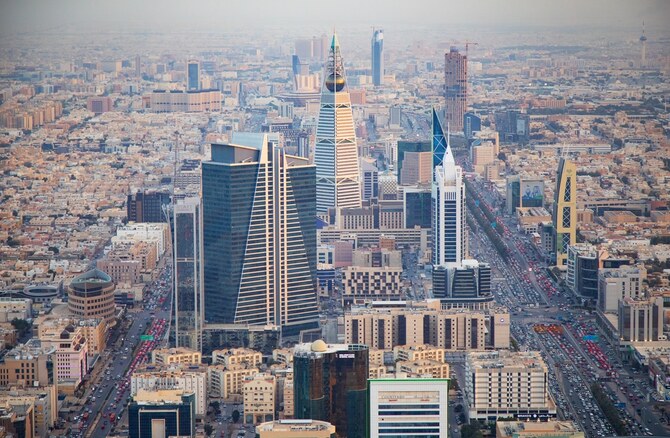
According to the General Authority for Statistics, wholesale and retail trade, along with restaurant and hotel activities, grew by 5.8 percent in the third quarter compared to the same period in 2023. Shutterstock
Short Url
Updated 09 December 2024
Follow

Saudi Arabia’s non-oil sector posts 4.3% growth in Q3: GASTAT 

  • Saudi Arabia’s real gross domestic product grew by 2.8 percent year on year in the third quarter
  • At current prices, the Kingdom’s GDP reached SR1.00 trillion ($270 billion) in Q3

RIYADH: Saudi Arabia’s non-oil activities expanded by 4.3 percent year on year in the third quarter of 2024, fueled by growth in the wholesale and retail trade, and restaurant and hotel sectors, official data showed. 

According to the General Authority for Statistics, wholesale and retail trade, along with restaurant and hotel activities, grew by 5.8 percent in the third quarter compared to the same period in 2023. 

Additionally, activities in the financial, insurance, and business services sectors recorded a 5.7 percent increase year on year during the same period. 

Bolstering the non-oil sector is essential for Saudi Arabia as it pursues economic diversification in line with the objectives of Vision 2030. 

Last month, speaking at the World Investment Conference, Saudi Arabia’s Minister of Economy and Planning Faisal Al-Ibrahim noted that non-oil activities now contribute 52 percent to the Kingdom’s gross domestic product. 

The latest GASTAT report also highlighted that construction activities rose by 4.6 percent in the third quarter, while the transport, storage, and communication sector expanded by 4.5 percent during the same period. 

In quarter-on-quarter terms, non-oil activities grew by 0.7 percent in the third quarter. 

The report added that Saudi Arabia’s real gross domestic product grew by 2.8 percent year on year in the third quarter. Quarter-on-quarter, the GDP rose by 0.7 percent. 

At current prices, the Kingdom’s GDP reached SR1.00 trillion ($270 billion) during the period, according to GASTAT. 

“Crude oil and natural gas activities achieved the highest contribution to the GDP at 22.8 percent, followed by government activities at 16.1 percent, and wholesale and retail trade, restaurants, and hotels activities with a contribution of 10.1 percent,” said GASTAT.  

Government activities saw a 3.1 percent year-on-year growth in the third quarter, though they contracted by 0.3 percent compared to the previous quarter. 

Saudi Arabia’s oil activities grew modestly, rising 0.5 percent year-on-year in the third quarter and 1.2 percent compared to the previous quarter. 

Meanwhile, government final consumption expenditure increased by 6.2 percent year on year but declined by 1.8 percent quarter-on-quarter. 

Gross fixed capital formation — a measure of investment in the economy — rose by 4.5 percent year on year in the third quarter and 0.9 percent compared to the previous quarter.

Saudi Arabia’s economic diversification initiatives under Vision 2030 are increasingly reflected in the robust performance of non-oil sectors, positioning the Kingdom for sustainable long-term growth. 

Imports rose by 7.3 percent year-on-year in the third quarter and by 3.8 percent quarter on quarter. Exports increased by 3 percent compared to the same period in 2023 but fell by 5.7 percent from the second quarter.


Maersk unit to buy 37.5% stake in Jeddah port’s South Container Terminal

Updated 30 sec ago
Follow

Maersk unit to buy 37.5% stake in Jeddah port’s South Container Terminal

JEDDAH: Jeddah Islamic Port is set to strengthen its role as a trade gateway after APM Terminals agreed to acquire a 37.5 percent stake in the South Container Terminal, enhancing links with Maersk’s global network.

Under the agreement, DP World will retain a 62.5 percent majority shareholding and continue to lead the operations at the facility.

APM Terminals, a wholly owned subsidiary of A.P. Moller–Maersk, is taking the stake as part of the Kingdom’s broader push to expand logistics capacity and position itself as a trade hub, according to the Saudi Ports Authority, also known as Mawani.

The authority said the investment supports the objectives of the National Transport and Logistics Strategy, which aims to enhance port efficiency, increase private-sector participation and boost non-oil exports as Saudi Arabia diversifies its economy.

The acquisition aligns closely with Saudi Arabia’s Vision 2030, which prioritizes economic diversification and the transformation of the Kingdom into a global logistics hub linking Asia, Europe, and Africa. 

In a statement, Keith Svendsen, CEO of APM Terminals, stated: “Jeddah Islamic Port is a vital gateway to the Kingdom of Saudi Arabia and a key hub in our customers’ supply chains. We are pleased to invest in the Southern Container Terminal and to deepen our presence in Saudi Arabia through this strategic step.” 

He added: “Jeddah is one of the region’s most important trade corridors. This investment secures long-term access to quality infrastructure and strengthens our ability to support customers with reliable, scalable capacity in the Kingdom.” 

Mawani said the partnership is expected to integrate the port more closely into Maersk’s shipping network, potentially increasing container volumes, vessel calls and maritime connectivity with regional and international ports while enabling faster and more flexible trade flows. 

The authority added that the deal is expected to strengthen Maersk’s strategic footprint at Jeddah Islamic Port by driving higher vessel calls and container volumes while attracting additional services from Maersk and its partners, further reinforcing the port’s role as a leading trade hub on the Red Sea. 

Yuvraj Narayan, group CEO of DP World, said Saudi Arabia is a strategic market for DP World, and Jeddah Islamic Port has been central to the company’s growth in the Kingdom for more than two decades.

He added: “Since securing the concession in 2019, we have transformed the Southern Container Terminal into a modern, high-capacity gateway, further strengthening Jeddah’s position as a leading Red Sea hub in support of Saudi Arabia’s Vision 2030. This partnership reflects the confidence global industry leaders place in DP World’s capabilities and the world-class terminal we have developed in Jeddah Islamic Port.” 

Khaled Ramadan, chairman of the International Center for Strategic Studies in Cairo and an economic expert, told Arab News that the acquisition will positively impact Saudi Arabia’s maritime trade by boosting container volumes, enhancing operational efficiency, and lowering logistics costs for importers and exporters.

“It strengthens port competitiveness, positioning Jeddah as a preferred hub competing effectively with regional ports like Jebel Ali through integrated global shipping services,” he said.

Ramadan added that it deepens the Kingdom’s integration into global supply chains, supporting Vision 2030 goals by attracting foreign direct investment, improving supply chain resilience, and facilitating non-oil trade growth in an increasingly interconnected world economy.

The South Container Terminal comprises five advanced container berths with a handling capacity of 4.1 million twenty-foot equivalent units. 

Jeddah Islamic Port is the largest on the Red Sea coast and plays a central role in advancing the Kingdom’s maritime leadership, leveraging its strategic location and 62 multipurpose berths to maintain a pivotal position in regional and global trade.
