

Pakistan’s PIA to resume flights to Europe from Jan. 10 after four-year ban 

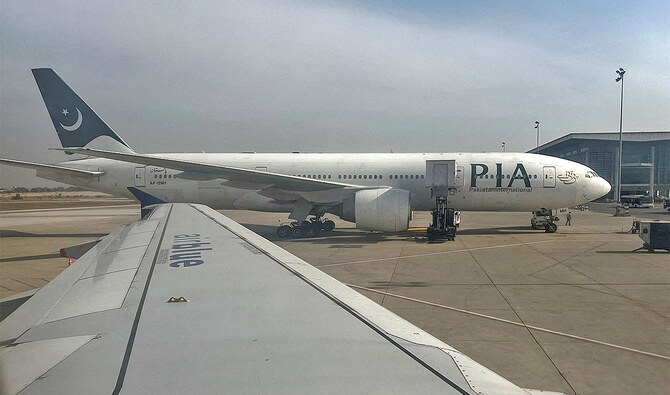
Pakistan International Airlines (PIA) passenger plane sits on tarmac, as seen through a plane window, at the Islamabad International Airport, Islamabad, Pakistan October 27, 2024. (REUTERS/File)
Short Url
Updated 07 December 2024
Follow

Pakistan’s PIA to resume flights to Europe from Jan. 10 after four-year ban 

  • PIA’s authorization was suspended in June 2020 over concerns of not complying with international aviation standards
  • Pakistan’s national flag carrier to resume Europe operations with Islamabad-Paris flight, will operate two flights per week

KARACHI: The state-owned Pakistan International Airlines (PIA) will resume its flights to Europe for the first time in four-and-a-half years on Jan. 10, 2025, an airline spokesperson confirmed on Saturday, after the EU aviation regulator lifted a ban on the national flag carrier. 

PIA’s authorization to operate in the EU was suspended in June 2020 over concerns about the ability of Pakistani authorities and its Civil Aviation Authority to ensure compliance with international aviation standards.

The suspension came days after Pakistan launched an investigation into the validity of pilots’ licenses issued in the country following a PIA plane crash that killed 97 people.

“On Jan. 10, 2025, PIA’s flight will depart from Islamabad for Paris,” the airline’s spokesperson said in a statement. “In the initial phase, two flights will be operated per week, which will be gradually increased.”

It said the flights will be operated on Fridays and Sundays, adding that the Jan. 10 flight will depart Islamabad at 11:30 am and arrive in Paris at 4:00 pm. 

The flight from Paris, meanwhile, will depart at 6:00 p.m. and arrive in Islamabad at 5:00 am. 

“The schedule is such that passengers will have breakfast in Pakistan and lunch in Paris,” the spokesperson said. 

Last Friday, Pakistan’s Prime Minister Shehbaz Sharif said the lifting of the ban would strengthen the national flag carrier’s reputation and bring financial benefits to the airline.

The ban was costing PIA nearly 40 billion Pakistani rupees ($144 million) in revenue annually, according to government records presented in parliament.

PIA and the government had been pressing the European Aviation Safety Agency (EASA) to lift the ban even provisionally. The government’s attempt to privatize the airline fell flat when it received only a single offer this year, that too well below its asking price.

In a statement, the PIA also vowed to abide by the EASA regulations as it welcomed the lifting of the ban.


Minister says Pakistan plans up to four new deep-sea ports with focus on environment

Updated 31 December 2025
Follow

Minister says Pakistan plans up to four new deep-sea ports with focus on environment

  • The government says it wants to build green energy and digital systems into new ports
  • The move aims to ease pressure on existing ports amid efforts to boost regional trade

KARACHI: Pakistan plans to build three to four new deep-sea ports to support long-term growth in trade and logistics, placing environmental protection at the center of port development policy, Federal Minister for Maritime Affairs Junaid Anwar Chaudhry said on Wednesday.

The plan aims to ease congestion at existing ports and prepare for future demand as Pakistan seeks to expand its role in regional trade routes, according to a statement issued after a meeting chaired by Chaudhry.

“Planning deep-sea ports requires a balance between economic growth and environmental protection,” Chaudhry said, according to the statement issued after the meeting. “The development of the maritime sector over the next hundred years is a national priority.”

The ministry said the government was working on a commercial framework to reduce pressure on major ports, warning that alternative arrangements must be put in place before existing facilities reach full capacity.

Chaudhry said mangroves and coastal ecosystems would be protected as part of the port policy, while new facilities would incorporate green energy solutions and modern digital systems to improve efficiency and sustainability.

He added new ports would play a key role in promoting regional trade and logistics, as Pakistan seeks to modernize its maritime infrastructure and position itself as a hub for shipping and transit.