DHAKA, Bangladesh: A special tribunal in Bangladesh on Thursday banned the publication of any speeches by former Prime Minister Sheikh Hasina, who is in exile in India after being ousted in August following mass protests.
The decision came a day after Hasina made her first public speech in a virtual address to supporters of her Awami League party in New York. In the speech, she accused Bangladesh’s interim leader, Nobel peace laureate Muhammad Yunus, of perpetrating genocide and failing to protect minorities, especially Hindus, since her ouster.
The Dhaka-based International Crimes Tribunal made the decision in response to a request by government prosecutors for a ban on any speeches by Hasina on mainstream or social media, prosecutor Golam Monawar Hossain Tamim said.
Hasina fled to India after being ousted in a mass uprising in July and August in which hundreds of protesters were killed and thousands were injured. She faces many court cases over the deaths, including some on charges of crimes against humanity. The tribunal has already issued arrest warrants for Hasina and her close aides, and the government has sought help from the international police organization Interpol for her arrest.
Prosecutors said in their request to the tribunal that some speeches and phone calls by Hasina had been disseminated on electronic media and could interfere in the investigation of the charges against her by influencing or frightening witnesses.
“If speeches like these are published and broadcast, we won’t be able to bring witnesses to the tribunal during trials,” Tamim said.
He said the tribunal also ordered authorities to remove leaked speeches and phone conversations from media platforms.
Hasina established the tribunal during her 15-year rule. It was used to try people accused of war crimes during Bangladesh’s war of independence with Pakistan in 1971. Politicians belonging mainly to the Jamaat-e-Islami party were executed after being found guilty by the tribunal.
On Wednesday, Hasina told her supporters in New York that there had been plans to assassinate her and her sister Sheikh Rehana just like their father, Sheikh Mujibur Rahman, an independence leader who was assassinated in 1975 along with most of his family. Only Hasina and her younger sister survived because they were visiting Germany at that time.
She said armed protesters had been instructed to head to her residence in Dhaka and she was forced to flee to India so that security guards would not have to fire at the approaching crowd.
“If the security guards opened fire, many lives would have been lost,” she said. “I was forced to leave. I told them not to open fire, no matter what happened.”
Media reports said more such public speeches are planned by Hasina to address her supporters in the coming weeks.
Hasina has good relations with Indian Prime Minister Narendra Modi. Tensions between India and Muslim-majority Bangladesh have grown since her departure over incidents such as the jailing of a prominent Hindu leader in Bangladesh and attacks on a diplomatic office in India by Hindus.
Yunus has been meeting with political and religious leaders urging them to stay united. On Wednesday, he held a dialogue with most political parties except Hasina’s Awami League party and the Jatiya Party which are facing severe challenges under the Yunus-led administration.
On Thursday, Yunus met with religious leaders and said there was no division among Bangladeshis when it comes to national issues.
Bangladesh has been facing crucial challenges since Hasina’s ouster in August amid mob justice, rising commodity prices, errant street protests and an unstable economy. The security situation remains a major concern. About 700 inmates including many criminals and radical extremists still remain at large after jailbreaks during the political chaos in August.


![]()
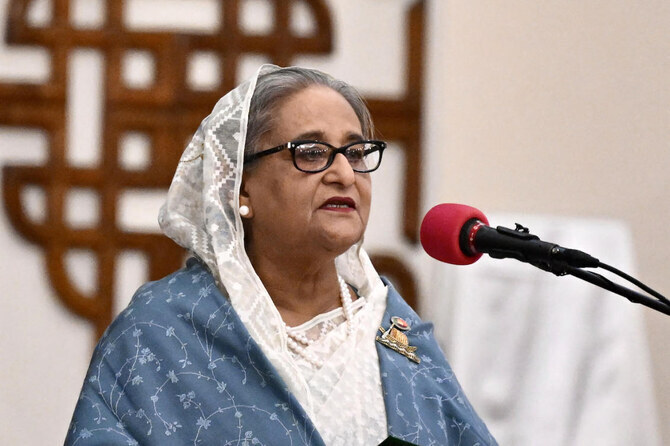
Bangladesh court bans publication of speeches by ousted PM Hasina
Short Url
https://arab.news/4avpj
Bangladesh court bans publication of speeches by ousted PM Hasina
- Decision comes after Hasina made her first public speech in virtual address to supporters
- Hasina fled to India after mass uprising in July and August in which hundreds were killed
Latest updates


© 2026 SAUDI RESEARCH & PUBLISHING COMPANY, All Rights Reserved And subject to Terms of Use Agreement.