At least 120,000 Saudis benefited from social training programs in 2024, says vice minister

1 / 3
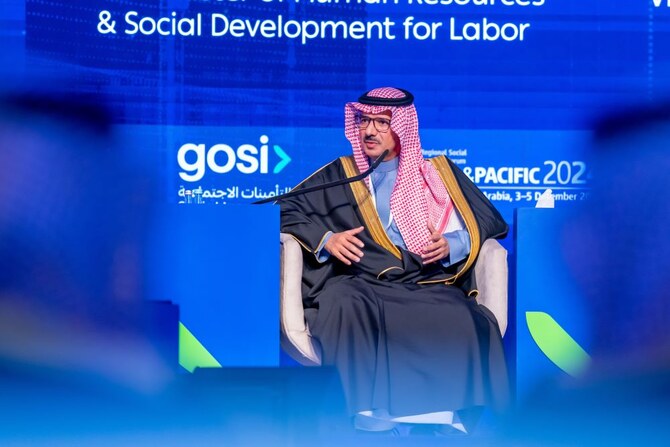
Abdullah Abuthnain affirmed that the ministry supports low-income groups through integration and empowerment, at the Regional Social Security Forum for the Asia and the Pacific in Riyadh. (Supplied/GOSI)
2 / 3
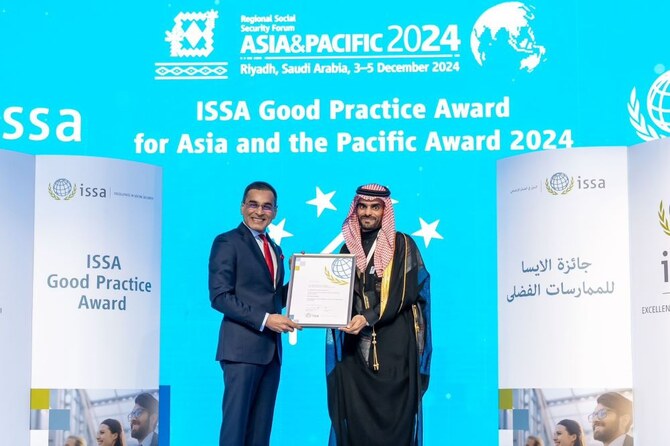
Dr. Mohamed Azman, President of ISSA, left, delivers a certificate in social security to Saud AlJuhani, Assistant Governor for Insurance Affairs at GOSI, at the Regional Social Security Forum for the Asia and the Pacific in Riyadh. (Supplied/GOSI)
3 / 3
Local and international experts called for leveraging successful experiences in social security fund investments, during the second day of the Regional Social Security Forum for Asia and the Pacific in Riyadh. (Supplied/GOSI)
Short Url
Updated 05 December 2024
Follow

At least 120,000 Saudis benefited from social training programs in 2024, says vice minister

  • Abdullah Abuthnain: We introduced new reforms such as launching the professional accreditation program to verify the capabilities of expatriate workers in all categories
  • Ministry of Human Resources and Social Development aims to upskill and reskill more than 320,000 workers in seven sectors in cooperation with the human capacity development program

RIYADH: At least 120,000 people this year have benefited from government training programs and skill development initiatives aimed at achieving financial independence, a Saudi vice minister told Arab News.

Abdullah Abuthnain, vice minister of human resources and social development for labor at the Ministry of Human Resources and Social Development, spoke to Arab News about some of the ministry’s recent initiatives that were discussed at the Regional Social Security Forum for Asia and the Pacific, organized by the General Organization for Social Insurance, or GOSI, in Riyadh.

“We introduced new reforms such as launching the professional accreditation program to verify the capabilities of expatriate workers in all categories. In partnership with employers, we launched the national training campaign, Waad, to provide about 3 million training opportunities,” he said.

The ministry aims to upskill and reskill more than 320,000 workers in seven sectors in cooperation with the human capacity development program, Abuthnain added.

It has also established 12 councils to improve the skills of the Saudi workforce, he said.

One notable initiative was the launching of the “Qiwa” platform, which provides more than 130 basic services to regulate the market, Abuthnain said.

The ministry has encouraged the digitization of contracts and has set regulations to support new forms of work, such as adopting freelance work, flexible work and remote work, he added.

The Ministry of Human Resources and Social Development aims to support low-income groups in society by promoting their integration and empowerment.

To achieve this, the ministry established “empowerment clinics,” which serve as community centers connecting government entities with the private and non-profit sectors to meet the diverse needs of individuals and families receiving social security.

A session at the forum, “Practical Approaches to Excellence in Social Security Administration,” demonstrated the importance of enhancing efficient and effective social security laws.

The session also addressed several key topics, including ways to improve productivity, protect workers and ensure unemployment insurance coverage.

The forum provides an exclusive framework for professionals to exchange experiences, strategies and best practices, to enhance administrative efficiency and supporting innovation methods, said Ammar Nagadi, vice minister of economy and planning.

Participants agreed on the need to develop effective training and professional programs to support the unemployed in returning to the labor market, along with improving compensation disbursement mechanisms.

They discussed investing social security funds in long-term investment projects that ensure substantial returns and enhance the financial sustainability of social security systems, with a focus on transformation and innovation in this field.

In the plenary session titled “Transformation and Innovation — Key Success Factors,” speakers emphasized digital transformation and innovation in addressing the growing challenges facing social security systems.

GOSI also received 10 international certificates of excellence in the field of social security best practices, presented by Dr. Mohamed Azman, president of the International Social Security Association, during the forum.

The certificates recognized the authority’s success in the digital transformation of insurance protection and detecting insurance fraud.


‘Cake not hate’ campaign becomes ‘Dates not hate’ in Madinah

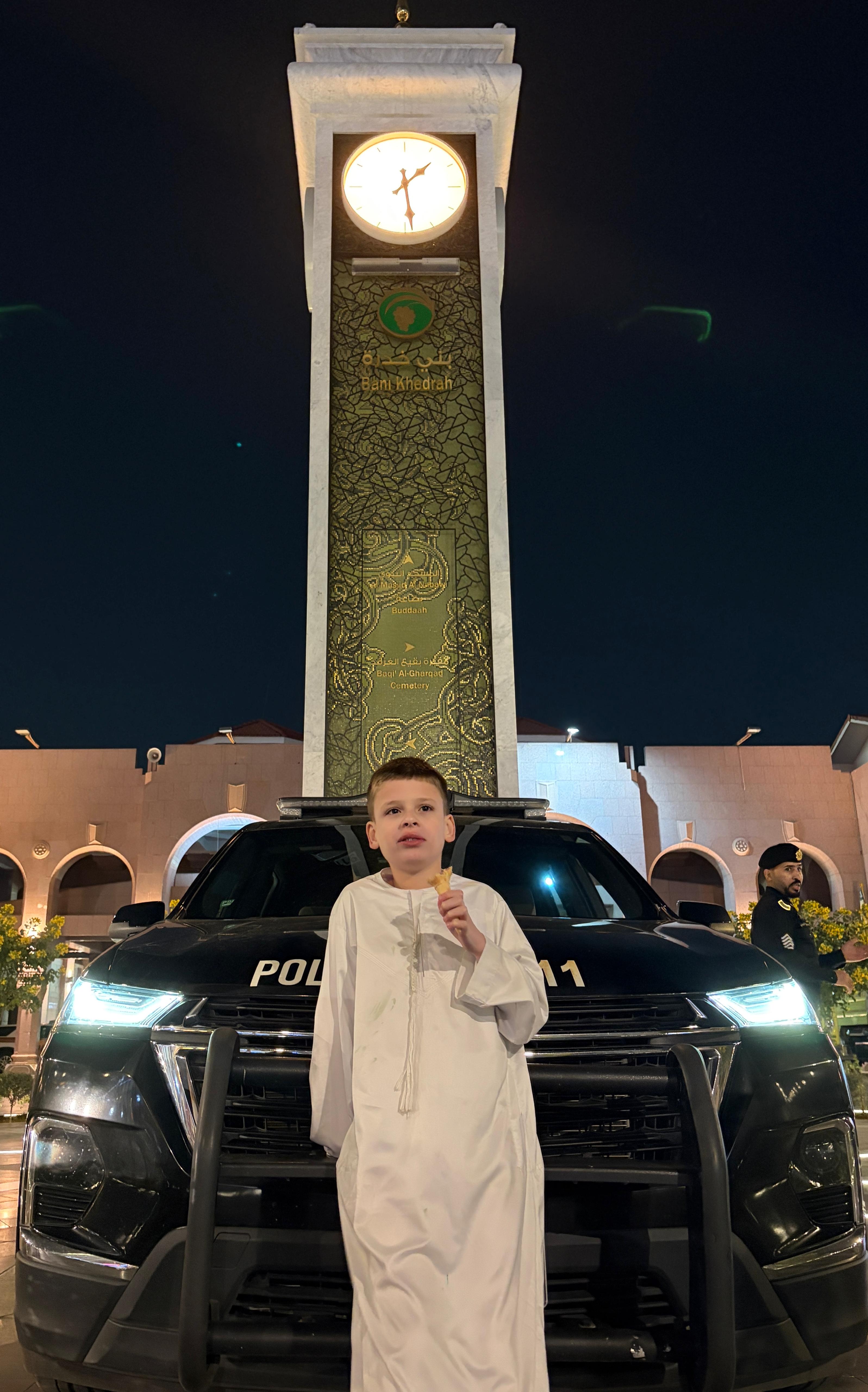
“The Joshie-Man” and his father Dan Harris in the courtyard of the Prophet’s Mosque in Madinah. (Supplied)
Updated 02 February 2026
Follow

‘Cake not hate’ campaign becomes ‘Dates not hate’ in Madinah

  • Dan said he was very impressed by Saudi hospitality and that his family was warmly welcomed
  • He said being in Madinah exposed him to the true diversity of Islam

LONDON: A British autistic and non-verbal boy who has been visiting UK mosques and distributing cakes to promote solidarity amid an increase in far-right support in the country has taken his message of love to Madinah.

Joshua Harris, or “The Joshie-Man” as the 12-year-old is known to his social media fans, has handed out hundreds of his baked goods to worshipers at mosques in major British cities over the last few months.

The “Cake not hate” campaign came about after an Islamophobic attack on a mosque in his home city of Peterborough in October 2025.

Harris and his father visited Masjid Darassalaam, the mosque that was targeted, with cakes that the boy had baked and distributed them to the congregation soon after the attack. Since then, Harris has visited dozens of mosques in the UK.

On a recent trip to the Middle East, he and his father visited Madinah. In a local twist that pays tribute to the holy city’s famous date varieties including ajwa and ambar, Harris handed out dates to people in the courtyard of the Prophet’s Mosque. The “Cake not hate” campaign became “Dates not hate” for Saudi Arabia.

“He was greeted really, really warmly. There were some really touching moments where people were kissing his hands and his head. It was really lovely,” his father, Dan Harris, said.

Dan, the founder of global charity Neurodiversity in Business, said being in Madinah exposed him to the true diversity of Islam.

“We met people from all around the world. It was amazing. It’s like the United Nations there, you get people from different countries and it just goes to show you that the Muslim community, or the Ummah more generally, is not a homogeneous group,” he said.

“We saw people from Tajikistan and Uzbekistan and it was really interesting for us.”

Dan said his visit to Madinah, considered the second holiest city in Islam after Makkah for Muslims, was “profound and life-changing.”

He added: “I would say it’s my favourite city in the world due to the peace and tranquillity I felt there.”

Dan added that he was very impressed by Saudi hospitality: “Everywhere we went, people were taking down my number and insisting that we come for dinner, insisting they pick us up from the location. They were extremely attentive to Joshie as well, making sure his needs were met. We felt a great sense of welcome, something Saudi Arabia is known for.”