WASHINGTON: President Joe Biden’s national security adviser warned Wednesday that the United States could quickly run out of munitions in a war with China as he called for more sustained defense production.
Jake Sullivan appealed to the incoming administration of Donald Trump to sustain the ramp-up of the domestic defense industry spurred by the war in Ukraine.
“God forbid we end up in a full-scale war with the PRC,” Sullivan said, referring to the People’s Republic of China.
“But any war with a country like the PRC, a military like the PRC, is going to involve the exhaustion of munition stockpiles very rapidly,” he said at the Center for Strategic and International Studies.
“A big part of the answer to a healthy defense industrial base over time is the ability to regenerate, to surge, to build during a conflict — not just to build before, or to prepare for a conflict,” he said.
Sullivan called for Congress and the Trump administration to keep working on a Biden proposal to create a revolving fund of munitions.
The fund, which was proposed at $500 million a year, would let the Pentagon procure critical munitions even as they run out due to wars such as Ukraine.
Sullivan acknowledged there would be debate in the next administration on the size of the defense budget but said it was critical to keep up efforts to boost a military-industrial base which atrophied after the end of the Cold War when then United States saw no close competitor.
“First and most fundamentally, we’ve got to keep ramping up and accelerating production and procurement of the things that we need most,” he said.
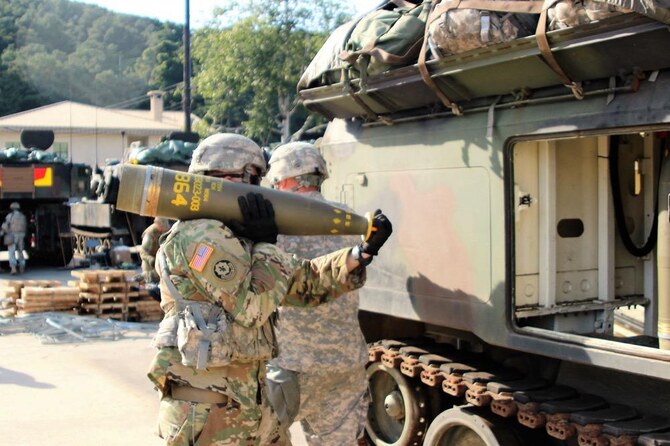
He pointed to efforts to build 155-millimeter artillery rounds for Ukraine.
He said that the United States will produce 55,000 such rounds per month by the time the Biden administration leaves office next month, a 400 percent increase from before, with a goal of reaching 100,000 per month by early 2026.
Sullivan also pointed to the need to counter cooperation among US adversaries — China, Russia, North Korea and Iran.
Trump’s team has made clear it is unenthusiastic about the billions of dollars in US weapons for Ukraine and has spoken of forcing a quick settlement with Russia.
Trump’s advisers, notably Vice President-elect J.D. Vance, have said that US resources would be better spent countering China.


![]()

Biden aide says US would run out of munition in China war
Short Url
https://arab.news/cbs6j
Biden aide says US would run out of munition in China war
Latest updates


© 2026 SAUDI RESEARCH & PUBLISHING COMPANY, All Rights Reserved And subject to Terms of Use Agreement.