

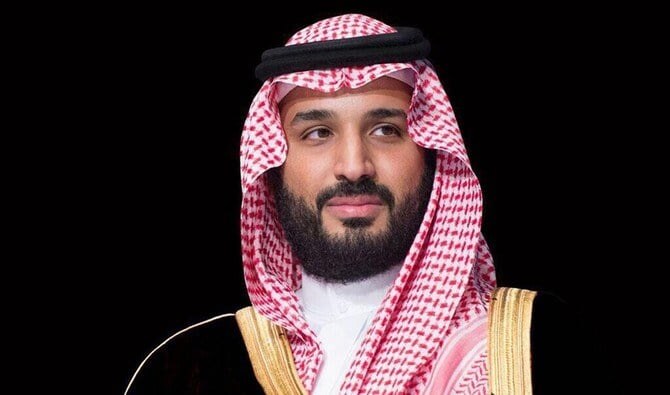

RIYADH: Saudi Crown Prince Mohammed bin Salman has launched the National Red Sea Sustainability Strategy, an initiative aimed at safeguarding the marine environment, supporting local communities, and advancing the Kingdom’s transition to a blue economy.
The strategy is part of Saudi Vision 2030 and ties into national priorities for research, development, and innovation, particularly in environmental sustainability, the Saudi Press Agency reported.
“The Kingdom of Saudi Arabia continues to unleash its enormous economic, geographical and cultural potential, and its pioneering efforts in sustainability and environmental conservation,” said the Crown Prince, who also serves as prime minister and chairman of the Council of Economic and Development Affairs.
He added: “Through this strategy, the Kingdom positions the blue economy as a fundamental pillar of its diversified economy and aspires for the Red Sea region to become a global reference for leading blue economy activities, and for the Kingdom to become a global leader in the field of research, development and innovation in blue economy.”
Covering 186,000 sq. km and featuring 1,800 km of coastline, the area is home to diverse marine ecosystems, including the world’s fourth-largest barrier reef system and 6.2 percent of global coral reefs.
The strategy outlines measures to protect these resources while developing industries such as ecotourism, fisheries, renewable energy, and water desalination.
By 2030, the plan seeks to expand marine and coastal protected areas from 3 percent to 30 percent, increase the share of renewable energy in the energy mix to 50 percent, and create new jobs in the blue economy. It also aims to protect investments in coastal tourism, which are expected to contribute to the national economy.
The strategy focuses on five main objectives: environmental sustainability, economic development, social development, safety and security, and governance. It includes 48 initiatives designed to balance economic activity with environmental preservation and address climate challenges, the SPA added.
The Crown Prince emphasized the Kingdom’s commitment to a sustainable future for the Red Sea, adding, “We look forward to everyone’s cooperation in protecting our Red Sea coast and the nature and communities that depend on it.”
The initiative reflects Saudi Arabia’s broader efforts to integrate environmental sustainability into its economic agenda while developing its marine-based industries.
Red Sea Project aligns with Saudi sustainability goals: CEO
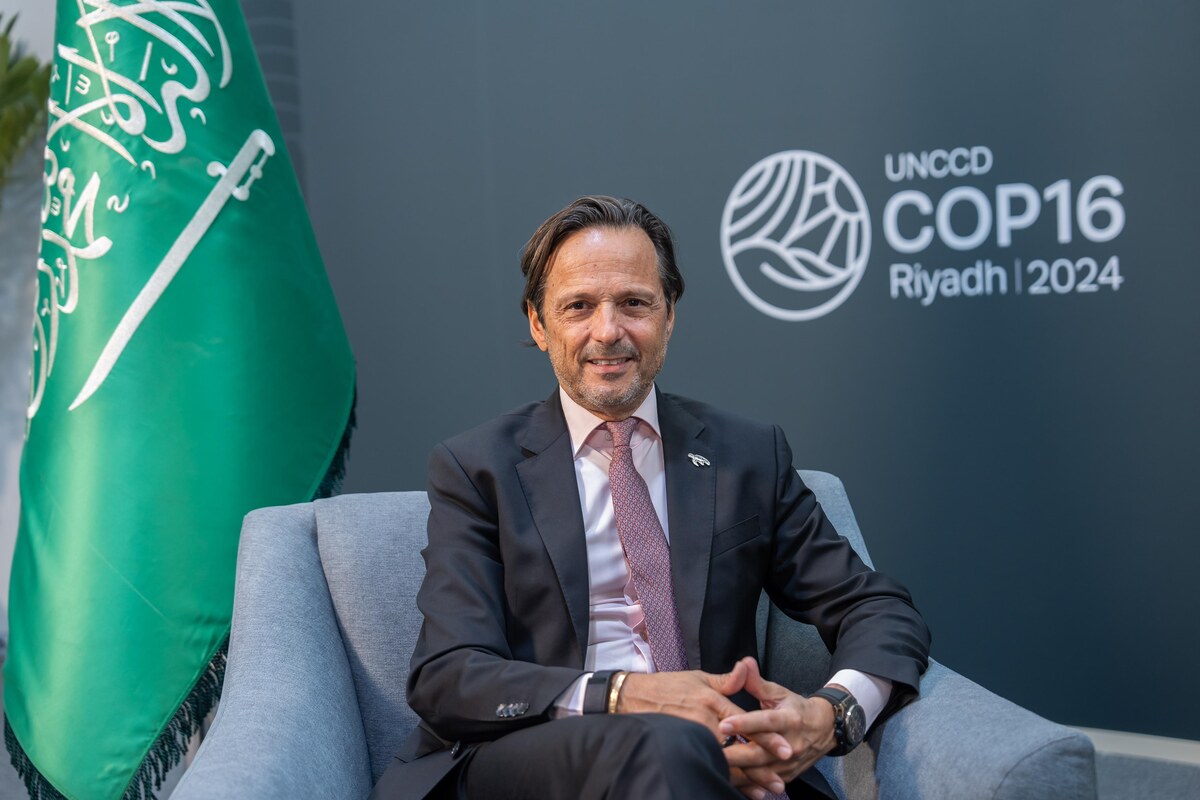
John Pagano, CEO of Red Sea Global. AN photo by Huda Bashatah
Speaking in an interview with Arab News, John Pagano, CEO of Red Sea Global, emphasized that this strategy reinforces efforts already underway at the Red Sea Project, marking a significant milestone in cross-sector collaboration along the Saudi Red Sea zone.
“The strategy supports what we’ve been doing now for quite a number of years in terms of habitat, habitat creation, growing mangroves, planting mangroves, growing coral,” Pagano said.
He added: “We’ve already made significant announcements in the years leading up to the NRSSS being announced, by working with the likes of ACWA Power and EDF to produce a 100 percent renewable energy installation for the Red Sea.”
He underscored how the company’s renewable energy initiatives align with minimizing its carbon footprint, one of the key pillars of the NRSSS.
“We’re happy that the NRSSS has been announced because it ultimately brings, you know, cross-sector, cross-stakeholder engagement, where everybody along the Red Sea is going to work together to realize the full potential of the Red Sea, the Saudi Red Sea zone, and really bring a thriving blue economy to Saudi Arabia,” Pagano said.
He also highlighted the global shift in consumer preferences, particularly within the travel and tourism industry.
Pagano emphasized how people are increasingly aware of the environmental impact of their choices and are seeking more sustainable travel options.
“I think it should be no surprise that the world is changing. People and consumer habits are changing. A recent survey by Booking.com showed that something like 86 percent of respondents want to travel more sustainably,” Pagano said.
He added: “Focusing on eco-tourism is really, you know, feeding into a very rich and growing market.”
Pagano added that the project’s vision aligns with Saudi Arabia’s Vision 2030 to create a diversified economy and a thriving tourism industry. He outlined several other initiatives that demonstrate Red Sea Global’s alignment with the NRSSS.
“We align with all five pillars across. Renewable energy is a key pillar. We’re doing that already. Habitat creation. We’re doing that through growing mangroves, through planting mangroves, through growing corals, seagrasses, etc.,” he said.
Pagano highlighted the ecological importance of mangroves and coral reefs, stating, “We’ve committed to plant 50 million mangrove trees. Now, mangroves are an amazing plant for a number of reasons.”
“They protect against sea level rise and erosion. They sequester carbon at three to 10 times more carbon than the equivalent area of trees on land,” according to the CEO.
“We’re building resilience. We’re fragmenting corals to make them grow faster. We created a coral regeneration lab which recreates the spawning events that occur once or twice a year. We can now have that occur multiple times throughout the year,” Pagano said.
He also emphasized the economic impact of the Red Sea Project on Saudi Arabia, stating, “I think there are great economic effects of eco-tourism and what we’re doing on the Red Sea. We’re going to contribute, at full capacity, SR33 billion into the Saudi economy. Each and every year, we’re going to create 120,000 jobs.”
Pagano concluded the interview by extending an invitation to the world: “Come visit the Red Sea. It’s real, it’s happening, and it’s setting a new global standard for regenerative tourism.”


