
RIYADH: In a city where rapid development has outpaced infrastructure, the Riyadh Metro is setting a new benchmark for urban transport in the Kingdom. The $23 billion mega-project, one of the largest metro systems built in a single phase, has six lines, 176 kilometers of track and 85 stations.
Engineering against the odds
Riyadh’s complex geological and urban landscapes posed unique challenges during construction. Beneath the city’s surface is dense limestone and breccia, which required the use of special tunnel boring machines, or TBMs, designed to navigate these demanding conditions.

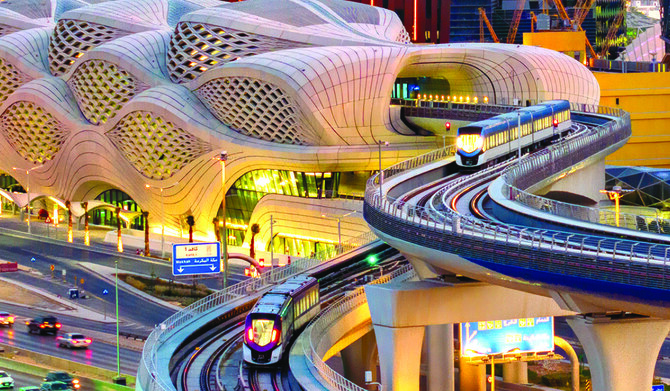
The metro’s stations are a balance between form and function. (SPA)
“The geological conditions demanded not only technical sophistication but also real-time adaptability to ensure both speed and accuracy,” Roger Cruickshank, senior director at AtkinsRealis, which led the design of Lines 4, 5, and 6, said in an interview with Arab News.
The metro’s 11 underground and 17 at-grade stations were strategically placed to enhance connectivity across the city. Additionally, the integration of underground, at-grade, and elevated tracks required careful consideration of Riyadh’s existing road networks.
FASTFACT
Riyadh Metro’s 11 underground and 17 at-grade stations were strategically placed to enhance connectivity across the city.
“Restructuring road networks and ensuring smooth transitions between modes of transit were integral to minimizing disruption,” Cruickshank said.
Automation at the core
A defining feature of the Riyadh Metro is its Level 4 automation, eliminating the need for onboard operators. Centralized control centers manage operations through advanced algorithms and real-time data, ensuring seamless functionality.
Supporting this system are geotechnical monitoring tools, including fiber optic sensors and automated data acquisition systems, which continuously assess infrastructure health.

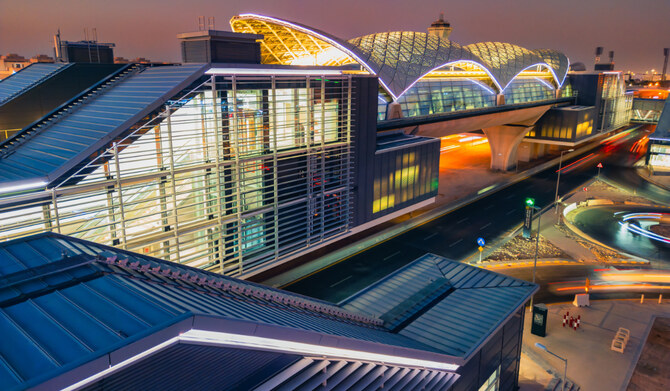
The metro connects key urban centers, reducing car dependency in a city notorious for traffic congestion. (SPA)
“These technologies provide real-time insights, allowing us to predict maintenance needs and address them before they escalate,” Cruickshank said.
The trains themselves are equipped with advanced safety features, such as early warning and remote diagnostic systems, enhancing passenger safety and operational reliability.
Predictive analytics further optimize system efficiency, extending the lifespan of critical components while minimizing downtime.
Functionality meets design
The metro’s stations are a balance between form and function. While designed to optimize passenger flow and connectivity, they also reflect Riyadh’s cultural identity through architectural motifs inspired by local heritage.

Roger Cruickshank, AtkinsRealis senior director
“The design integrates contemporary materials with traditional influences, making the infrastructure both practical and a visual complement to the city,” Cruickshank said.
The metro connects key urban centers, reducing car dependency in a city notorious for traffic congestion. The focus on accessibility ensures that the system serves Riyadh’s growing population effectively.
Sustainability
The Riyadh Metro aligns with Saudi Arabia’s Vision 2030 by prioritizing sustainability; by promoting public transport, it is projected to significantly cut carbon emissions.
The design integrates contempor- ary materials with traditional influences, making the infrastruc- ture both practical and a visual complement to the city.
Roger Cruickshank, AtkinsRealis senior director
The system also incorporates energy-efficient technologies, such as regenerative braking and automated lighting, to minimize its environmental footprint.
“Noise and vibration mitigation strategies were essential to ensure the system operated harmoniously within the urban environment,” Cruickshank added. These measures, combined with the integration of green building standards, highlight the project’s commitment to environmental stewardship.
The lessons from the project are already informing future initiatives in Saudi Arabia and beyond. “This project demonstrates how collaboration, advanced technology, and strategic planning can produce infrastructure that is both technically brilliant and sustainable,” Cruickshank said.
The Riyadh Metro provides a case study for cities worldwide grappling with urbanization and mobility challenges. By combining engineering excellence, technological innovation, and cultural sensitivity, authorities have created a transit network that not only meets today’s needs but anticipates the demands of tomorrow as well.