



CAIRO: Nestled in a hidden alley off a bustling thoroughfare in the heart of the Egyptian capital sits an unassuming little manicure shop concealing a historic legacy.
Today, Madame Lucie’s small establishment is dwarfed by the sleek facades of modern cafes, fashion boutiques and fast food chains that have all but snuffed out Cairo’s old grandeur.
But decades ago, the shop’s seats were occupied by the likes of Nobel laureate Naguib Mahfouz, international singing sensation Dalida and cinematic heartthrob Omar Sharif, all of whom sought the now 88-year-old manicurist’s expert hand.
For over six decades, Layla Abdel Hakim Mekhtegian — more commonly known by her sobriquet Madame Lucie — has presided over her little shop, standing guard over its rich history.
For those who step inside the shop, which claims to be the country’s oldest manicurist, it is a step back in time to Cairo’s cosmopolitan heyday of the 1950s and 60s.
“Everything here is as it was 64 years ago,” the French-educated woman of Armenian descent told AFP.
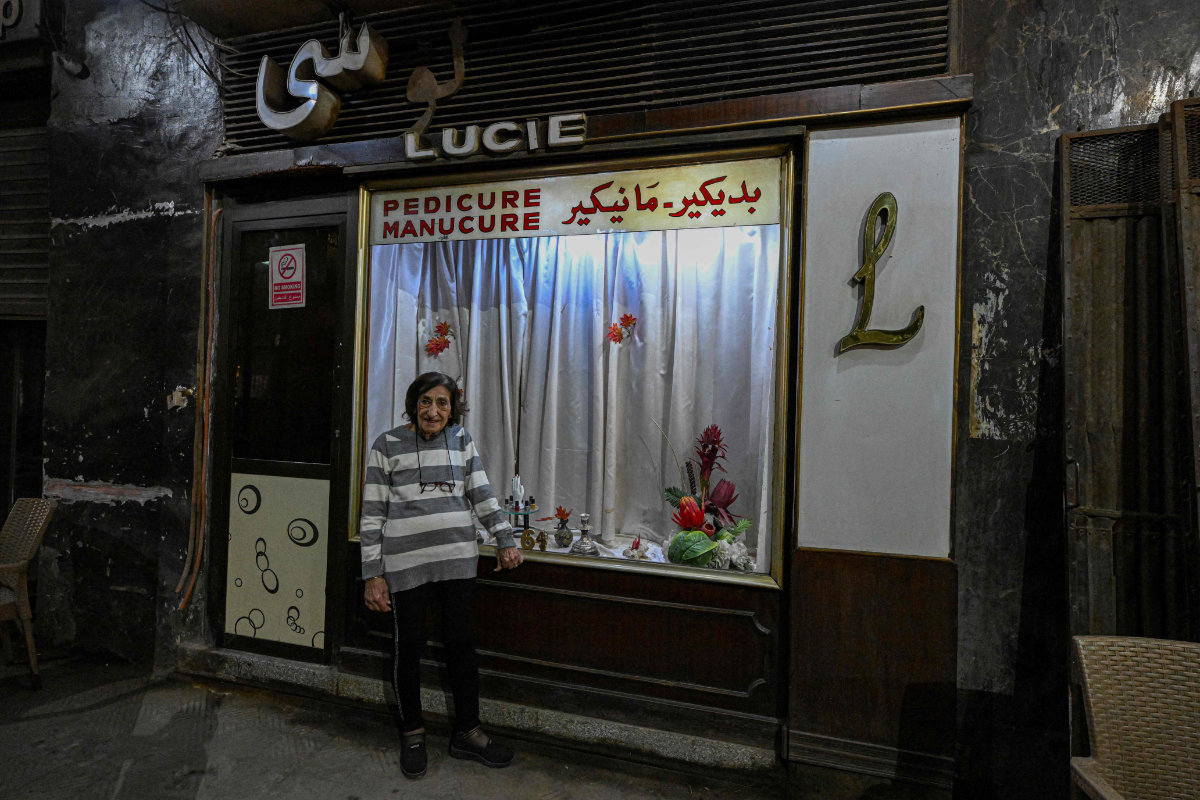
Madam Lucie, an 88-year-old manicurist expert, poses for a picture at her manicure shop in downtown Cairo on November 18, 2024. (AFP)
Established in December 1960, the salon exudes old-world charm.
Outside, the name Lucie greets customers in old fluorescent signage in both Arabic and French.
Inside, antique manicure tables sit in front of sepia-toned photographs of the illustrious patrons of bygone times.
“Customers tell us, ‘Don’t change a thing’,” she said.
The list of Madame Lucie’s clientele reads like a roll call of Egypt’s cultural pantheon.
“Mahfouz would come in for a trim while fans waited outside to have his autograph,” Madame Lucie recalls with a nostalgic smile.
“Dalida? Always punctual.”
“Her fans used to come here when they heard that she visits the salon,” she continues.
“And Omar Sharif,” she adds softly, “did not talk much, but he was so charming.”
Madame Lucie is part of a generation of Armenian entrepreneurs who shaped much of downtown Cairo’s commercial life in the mid-20th century.
She and her enduring salon are among just a handful of businesses that survived former president Gamal Abdel Nasser’s nationalization drive of the 1960s.
Prior to that, Egypt’s Armenian community had peaked at 45,000 in the 1950s, playing a vibrant role in the country’s cultural and economic landscape.
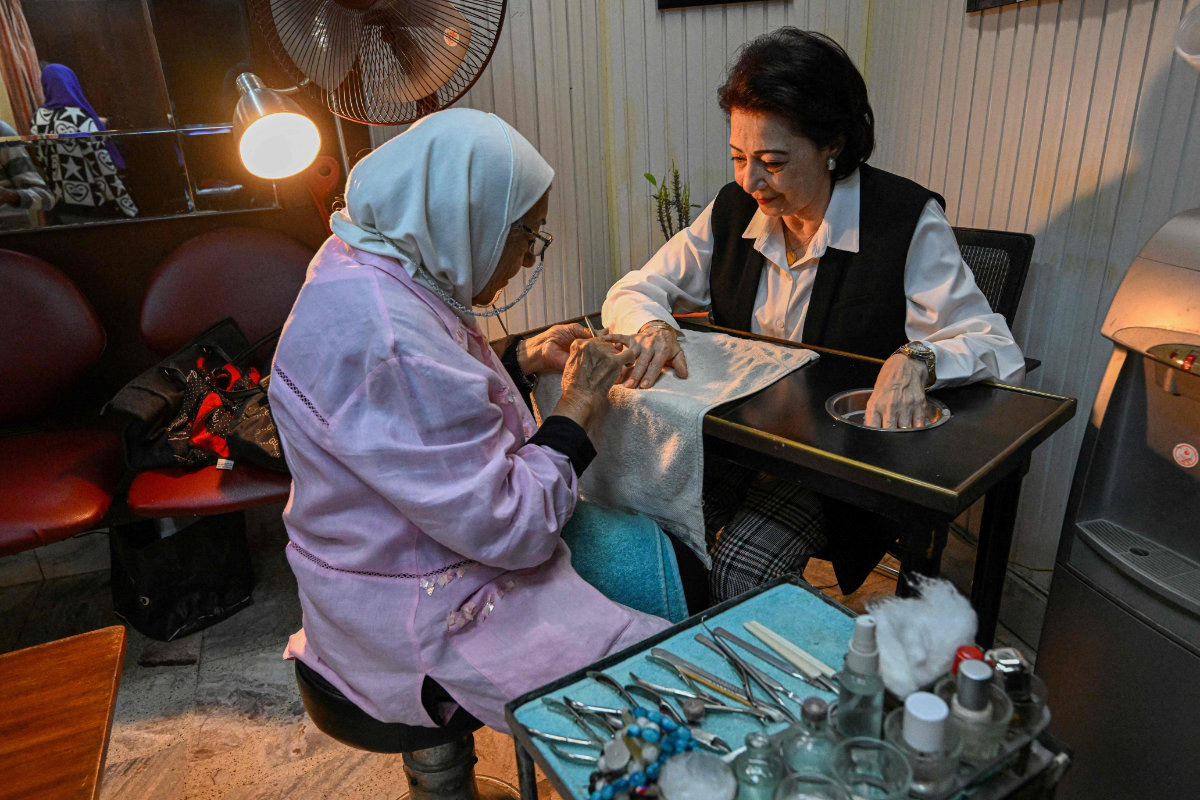
A client receives a manicure at Madam Lucie's manicure shop in downtown Cairo on November 18, 2024. (AFP)
Lucie acquired her craft at the age of 14 under the guidance of Marie, her mentor at Bata, the now-defunct, once-renowned department store in Cairo.
Together with her husband Jimmy and with the help of a Jewish investor, she transformed a printing house in downtown Cairo into her salon.
She has held fast to traditional nail treatments, shunning the more modern trends offered by many nail spas nowadays.
But her work goes beyond aesthetics, and many of her clients come for relief from painful conditions like calluses, ingrown nails and dead skin buildup.
She has in turn preserved not just the shop’s historic stature but also a loyal customer base for nearly as long.
“It is more of a treatment than a cosmetic thing,” said Effat Adel, a housewife in her fifties who has been visiting the salon for 37 years.
Sabry Ghoneim, an 89-year-old veteran journalist who has been a loyal customer for over four decades, said: “This place gives me peace of mind.”
Despite suggestions to expand, Lucie refuses.
“Why would I? This place is home,” she said.
“Every year, I update the sign outside to show how long we’ve been here. This December, it’ll say 65 years.”


