

‘Incredible experience’: Pakistani artisans urge stronger cultural ties at Saudi exhibition

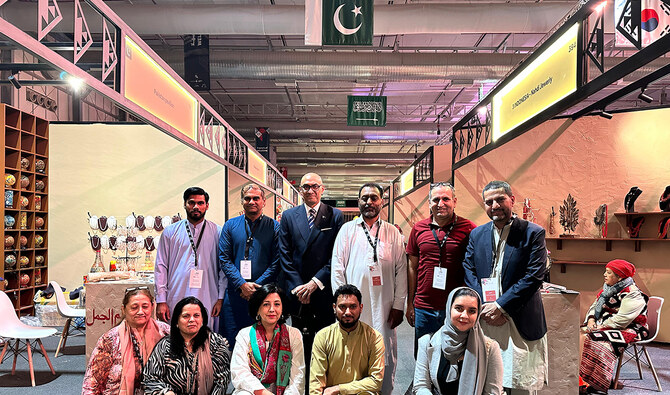
In this handout photograph, released by Pakistan’s Foreign Office on November 29, 2024, Pakistan’s Ambassador to Saudi Arabia, Ahmed Farooq, gestures for a group photo with Pakistani artisans participating in Saudi International Handicrafts Week, Banan, in Riyadh. (Photo courtesy: MOFA)
Short Url
Updated 30 November 2024
Follow

‘Incredible experience’: Pakistani artisans urge stronger cultural ties at Saudi exhibition

  • The handicrafts week in Riyadh featured over 500 artisans who displayed a blend of traditions and skills
  • Pakistani participants say they were delighted to see Saudi women entrepreneurs in huge numbers

KARACHI: Pakistani artisans participating in Saudi Arabia’s International Handicrafts Week, Banan, on Friday called for deepening cultural ties between the two nations, emphasizing the role of art and crafts in fostering mutual understanding.
The exhibition, held in Riyadh from Nov. 23 to Nov. 29, featured over 500 artisans from 25 countries, showcasing a vibrant blend of traditions and skills.
The event, organized by the Heritage Commission of the Saudi Ministry of Culture, highlighted the role of crafts in promoting cross-cultural dialogue.
Several Pakistani artisans were facilitated by their embassy to participate in Banan and represent their country’s rich culture.
“It is important to explore the ties between Pakistan and Saudi Arabia through a cultural lens, which has started to happen,” Danish Jabbar Khan, CEO of Kaarvan Crafts Foundation and a participant at the event, told Arab News over the phone.
“The cultural exchange is the way forward for two countries to understand each other," he continued. "It’s simpler and long-lasting. People-to-people exchange is very important that such platforms allow.”
Khan’s foundation works with rural communities, particularly women, to preserve traditional crafts such as truck art, blue pottery and woodwork.
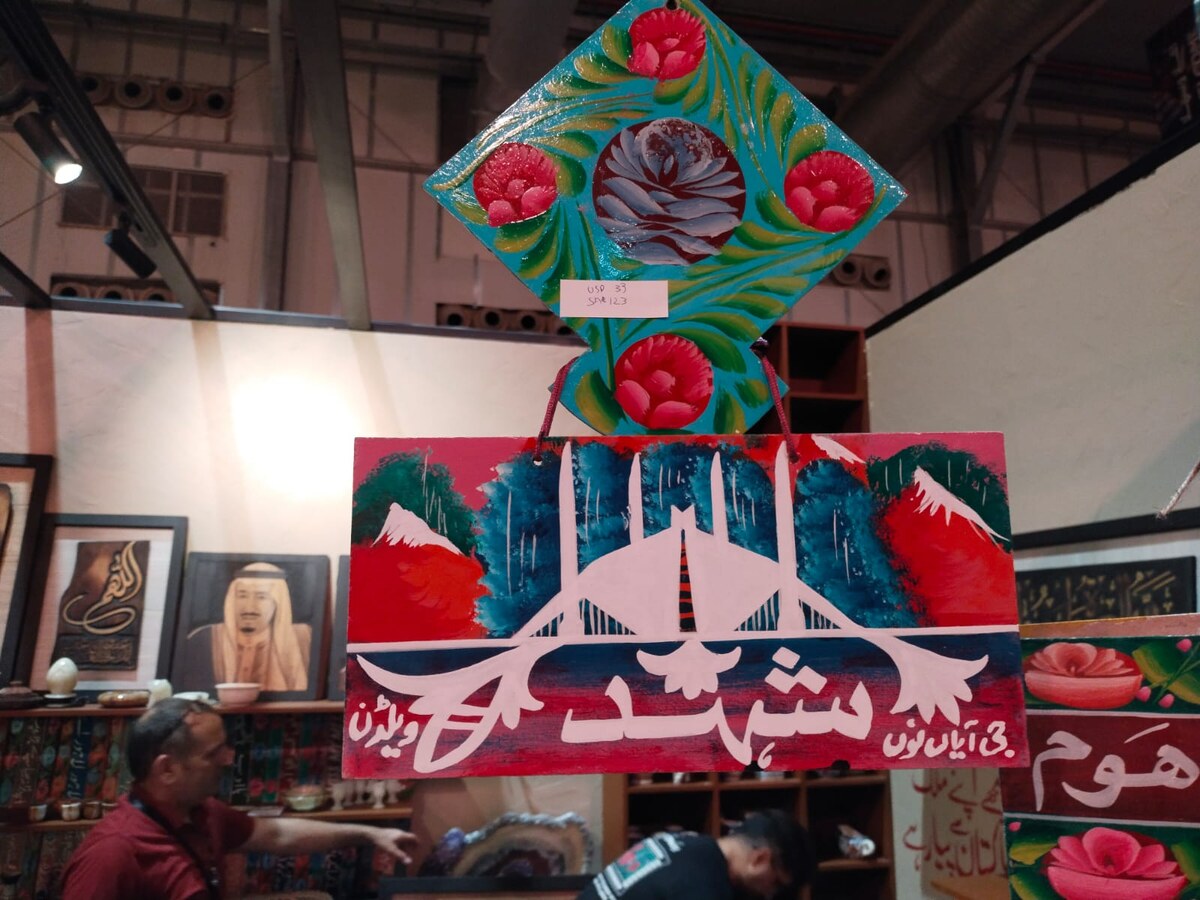


This handout photograph, shared by Pakistani artist Ejaz ul Allah Mughal on November 29, 2024, shows a general view of his stall featuring tuck art at the Pakistan pavilion during the Saudi International Handicrafts Week, Banan, in Riyadh. (Supplied/Ejaz ul Allah Mughal)

“The experience [of participating in the exhibition] was phenomenal,” he said. “The culture here is so open in terms of its scale, work, and inclusion. I am delighted to see Saudi women entrepreneurs in huge numbers.”
A highlight of the exhibition was truck artist Ejaz ul Allah Mughal, who created custom pieces for attendees.
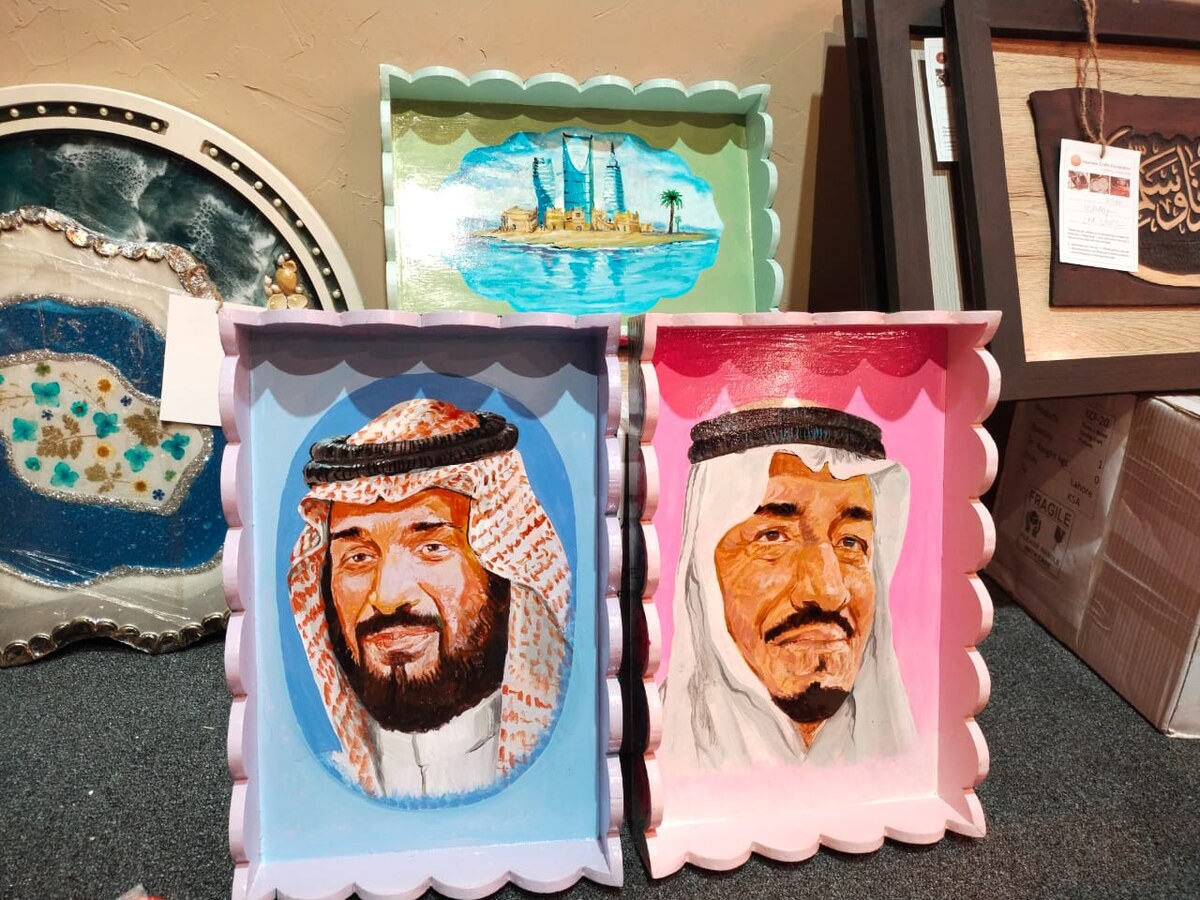


This handout photograph, shared by Pakistani artist Ejaz ul Allah Mughal on November 29, 2024, shows his work, featuring portraits of King Salman of Saudi Arabia and Crown Prince Mohammed bin Salman, at his stall featuring tuck art at the Pakistan pavilion during the Saudi International Handicrafts Week, Banan, in Riyadh. (Supplied/Ejaz ul Allah Mughal)

“I am happy that I represented Pakistan,” Mughal said, adding: “Though language was a barrier, art knows no boundaries. People here really appreciated my craft. Truck art is famous worldwide, so people know about it.”
Mariya Suhail, who uses a diverse range of Pakistan’s gemstones in jewelry, also took her craft to Banan. She set up Pakistan’s first gemstone cutting and processing facility in Lahore over a decade ago, though she later launched her own label, Orah Jewels.
Suhail's work blends Pakistan’s diverse gemstones into jewelry and home décor.
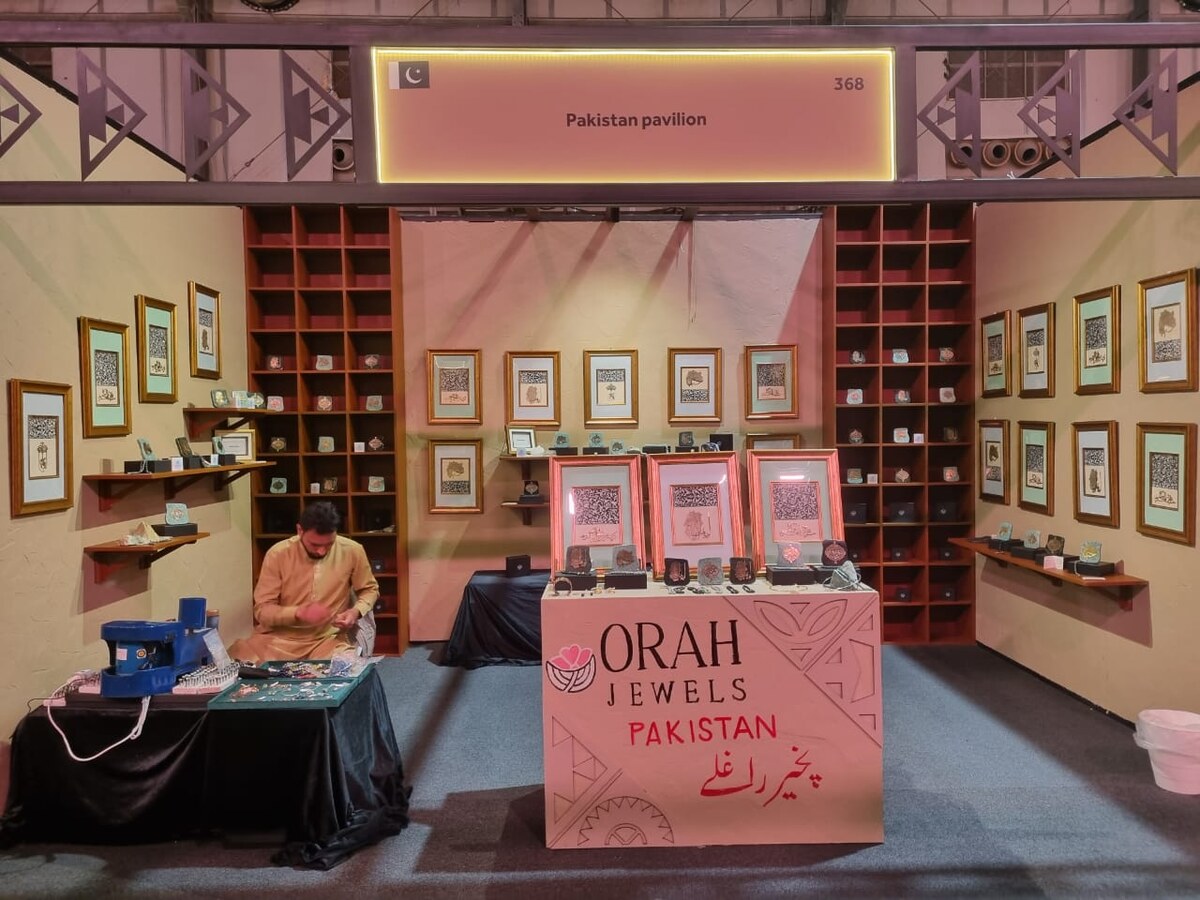


This handout photograph, shared by Pakistani artist Mariya Sohail on November 29, 2024, shows her stall at the Pakistan pavilion during the Saudi International Handicrafts Week, Banan, in Riyadh. (Supplied/Mariya Sohail)

“People here picked up gemstones from Pakistan and loved it," she told Arab News. "There is a lot of demand for Pakistani products here. People of Riyadh also have a very positive outlook towards Pakistan.”
She maintained that despite the language barrier, there was a lot of learning, networking and exposure.
“Cultural exchange is very important," she added. "I wish we can have more such events and opportunities to present this very beautiful image of Pakistan. It's been an incredible experience here.”
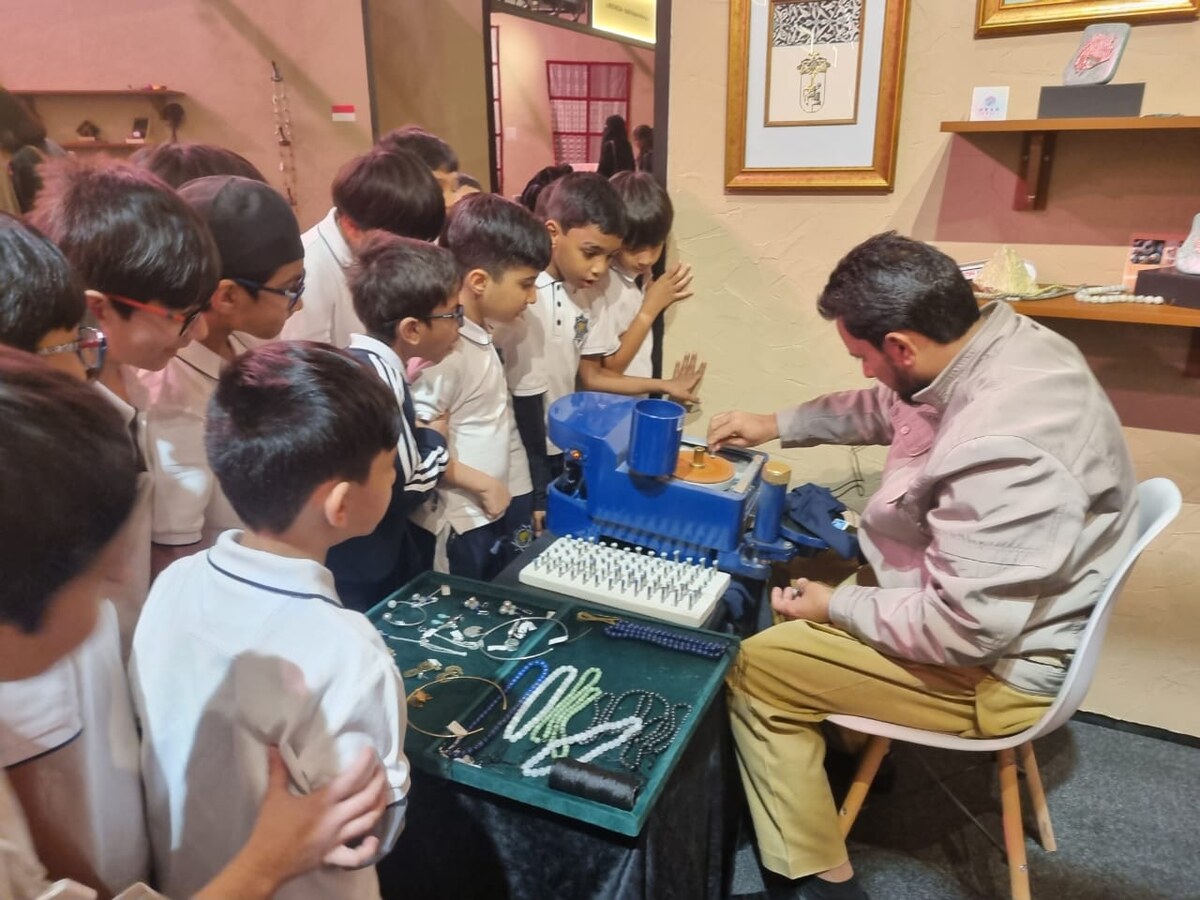


This handout photograph, shared by Pakistani artist Mariya Sohail on November 29, 2024, shows visiting children at her stall at the Pakistan pavilion during the Saudi International Handicrafts Week, Banan, in Riyadh. (Supplied/Mariya Sohail)

The Embassy of Pakistan in Riyadh also commended the artisans’ participation, calling the Pakistani pavilion a testament to the country's rich cultural heritage and the unparalleled quality of its craftsmanship.
"From intricate handmade designs to traditional artistry passed down through generations, the showcased crafts highlighted the deep-rooted legacy of Pakistan's artisan community,” it said in a statement.


Mini op-ed: Why emotional wellbeing is not only an individual concern in Arab societies

Updated 57 min 13 sec ago
Follow

Mini op-ed: Why emotional wellbeing is not only an individual concern in Arab societies

ABU DHABI: Across much of the world, emotional wellbeing is now being discussed in similar ways with familiar language: self-care, boundaries, resilience.

These terms have helped people speak more openly about stress and mental health, often for the first time. That matters. But the language also carries an assumption, one that is not always questioned. It suggests that healing begins, and largely takes place, within the individual.

In many Arab societies, that idea does not fully apply. The self is rarely experienced in isolation. Identity forms early through family life, shared responsibility, and social roles that extend beyond personal choice.

Sophie Gregoire Trudeau and Nancy Zabaneh. (Supplied) 

Emotions are often managed in relation to others, not apart from them. This difference has practical consequences, particularly as pressure and uncertainty.

Wellbeing is not just something that happens on a mat or during a six-day retreat, it shows itself in daily life, in our relationships, in how we respond under pressure, and in the choices we make when no one is watching.

That observation runs counter to a global trend that treats emotional health as a private task.

Western approaches have introduced useful tools, including emotional vocabulary, self-reflection, and psychological insight. But when these ideas travel without adaptation, they can overlook the social structures that shape behavior in societies where family and community play a central role.

Healing often begins with the individual in the West. In the East, the sense of self is more closely tied to family, community, and spirituality. Both are powerful — wellbeing lives where self-awareness meets belonging.

In the Gulf, fast economic growth, changing work patterns, and constant digital connection have altered how people live and relate to one another. Traditional support systems still play an important role, but they are under pressure.

At the same time, imported wellness language can feel out of place when it prioritizes inward focus over shared responsibility.

In this region, community and compassion belong together and remain a source of balance and meaning. Emotional awareness, in this setting, is less about self-improvement and more about how people treat one another, whether at home, at work, or during moments of stress.

The UAE has begun to reflect this broader view at a policy level. The National Strategy for Wellbeing 2031 frames emotional and mental health as a part of social wellbeing, not simply personal coping.

That emphasis is reinforced by the government’s designation of 2026 as the Year of Family, which places family relationships at the center of social stability and long-term wellbeing.

Together, these initiatives point to the vital role of families, schools, and workplaces, while leaving open the question of how collective responsibility and individual needs should be balanced in practice.

If there is one message, it is that wellbeing begins with connection to ourselves, to each other, and to what we value most.

As emotional awareness becomes a global language, its meaning will continue to shift. The task ahead may not be choosing between individual insight and collective care, but recognizing where each works, where it falls short, and how the two can exist alongside one another.

Nancy Zabaneh is a Dubai-based wellbeing educator and trauma-informed facilitator of Palestinian origin who has lived and worked in the UAE for more than 25 years. Sophie Gregoire Trudeau is a Canadian author and mental health advocate and has a decade of experience in the public eye as Canada’s former first lady. They are writing ahead of the Kayan Wellness Festival in Abu Dhabi.