

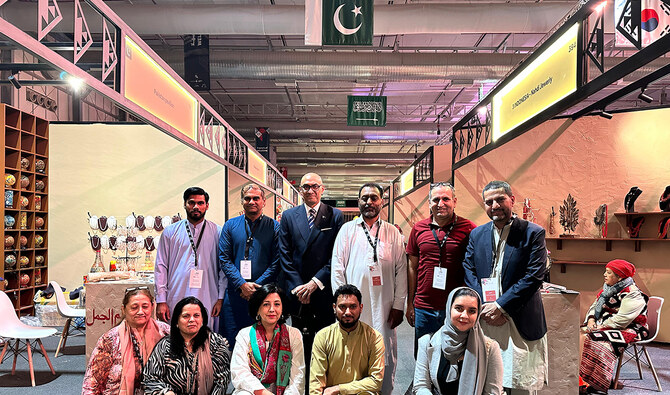

KARACHI: Pakistani artisans participating in Saudi Arabia’s International Handicrafts Week, Banan, on Friday called for deepening cultural ties between the two nations, emphasizing the role of art and crafts in fostering mutual understanding.
The exhibition, held in Riyadh from Nov. 23 to Nov. 29, featured over 500 artisans from 25 countries, showcasing a vibrant blend of traditions and skills.
The event, organized by the Heritage Commission of the Saudi Ministry of Culture, highlighted the role of crafts in promoting cross-cultural dialogue.
Several Pakistani artisans were facilitated by their embassy to participate in Banan and represent their country’s rich culture.
“It is important to explore the ties between Pakistan and Saudi Arabia through a cultural lens, which has started to happen,” Danish Jabbar Khan, CEO of Kaarvan Crafts Foundation and a participant at the event, told Arab News over the phone.
“The cultural exchange is the way forward for two countries to understand each other," he continued. "It’s simpler and long-lasting. People-to-people exchange is very important that such platforms allow.”
Khan’s foundation works with rural communities, particularly women, to preserve traditional crafts such as truck art, blue pottery and woodwork.
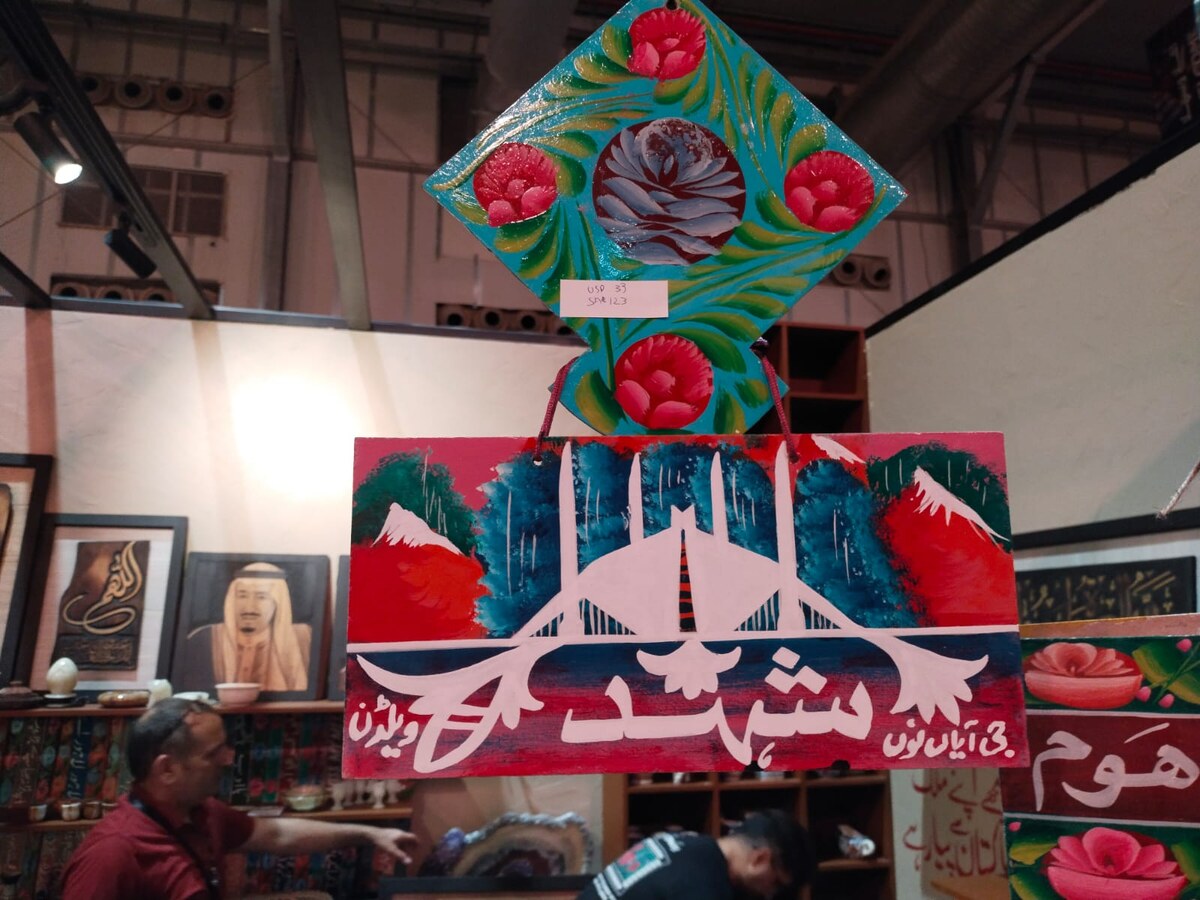
This handout photograph, shared by Pakistani artist Ejaz ul Allah Mughal on November 29, 2024, shows a general view of his stall featuring tuck art at the Pakistan pavilion during the Saudi International Handicrafts Week, Banan, in Riyadh. (Supplied/Ejaz ul Allah Mughal)
“The experience [of participating in the exhibition] was phenomenal,” he said. “The culture here is so open in terms of its scale, work, and inclusion. I am delighted to see Saudi women entrepreneurs in huge numbers.”
A highlight of the exhibition was truck artist Ejaz ul Allah Mughal, who created custom pieces for attendees.
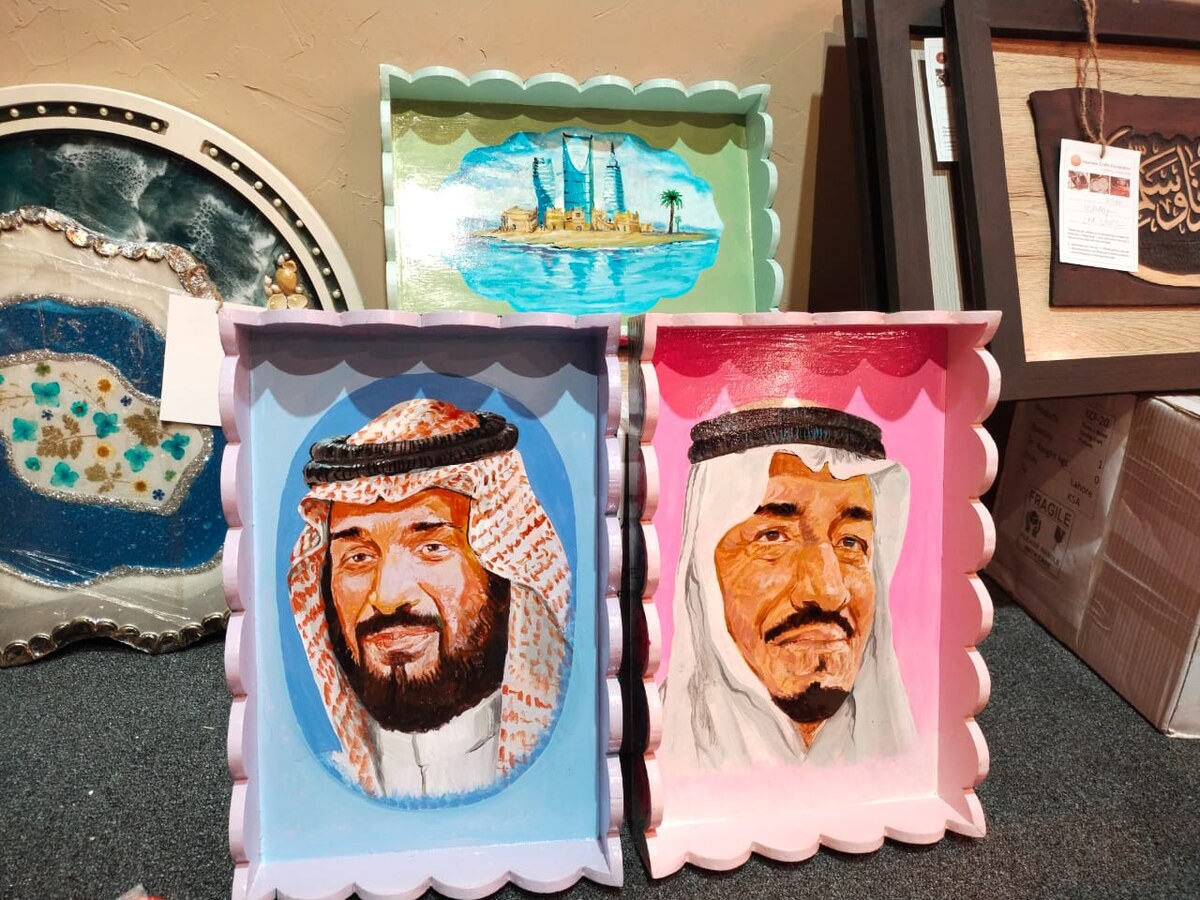
This handout photograph, shared by Pakistani artist Ejaz ul Allah Mughal on November 29, 2024, shows his work, featuring portraits of King Salman of Saudi Arabia and Crown Prince Mohammed bin Salman, at his stall featuring tuck art at the Pakistan pavilion during the Saudi International Handicrafts Week, Banan, in Riyadh. (Supplied/Ejaz ul Allah Mughal)
“I am happy that I represented Pakistan,” Mughal said, adding: “Though language was a barrier, art knows no boundaries. People here really appreciated my craft. Truck art is famous worldwide, so people know about it.”
Mariya Suhail, who uses a diverse range of Pakistan’s gemstones in jewelry, also took her craft to Banan. She set up Pakistan’s first gemstone cutting and processing facility in Lahore over a decade ago, though she later launched her own label, Orah Jewels.
Suhail's work blends Pakistan’s diverse gemstones into jewelry and home décor.
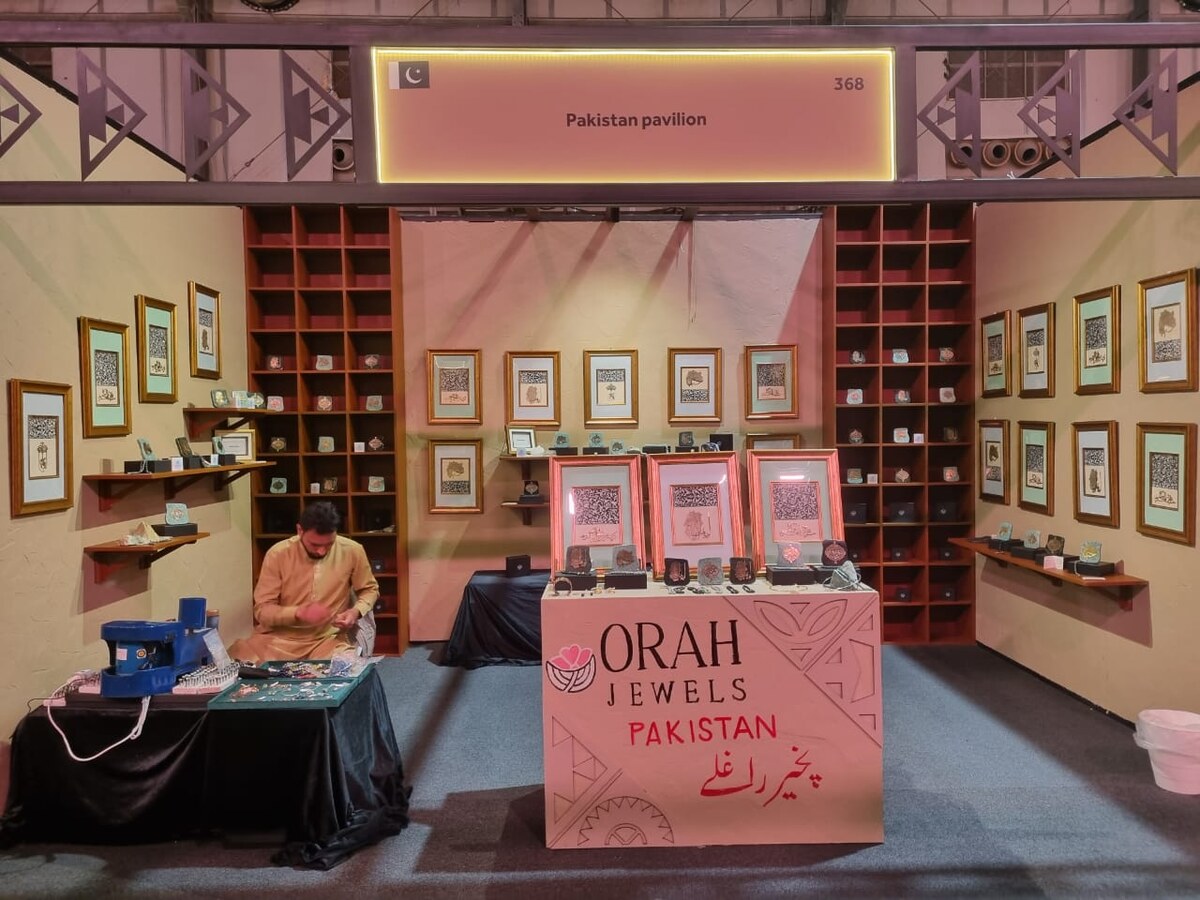
This handout photograph, shared by Pakistani artist Mariya Sohail on November 29, 2024, shows her stall at the Pakistan pavilion during the Saudi International Handicrafts Week, Banan, in Riyadh. (Supplied/Mariya Sohail)
“People here picked up gemstones from Pakistan and loved it," she told Arab News. "There is a lot of demand for Pakistani products here. People of Riyadh also have a very positive outlook towards Pakistan.”
She maintained that despite the language barrier, there was a lot of learning, networking and exposure.
“Cultural exchange is very important," she added. "I wish we can have more such events and opportunities to present this very beautiful image of Pakistan. It's been an incredible experience here.”
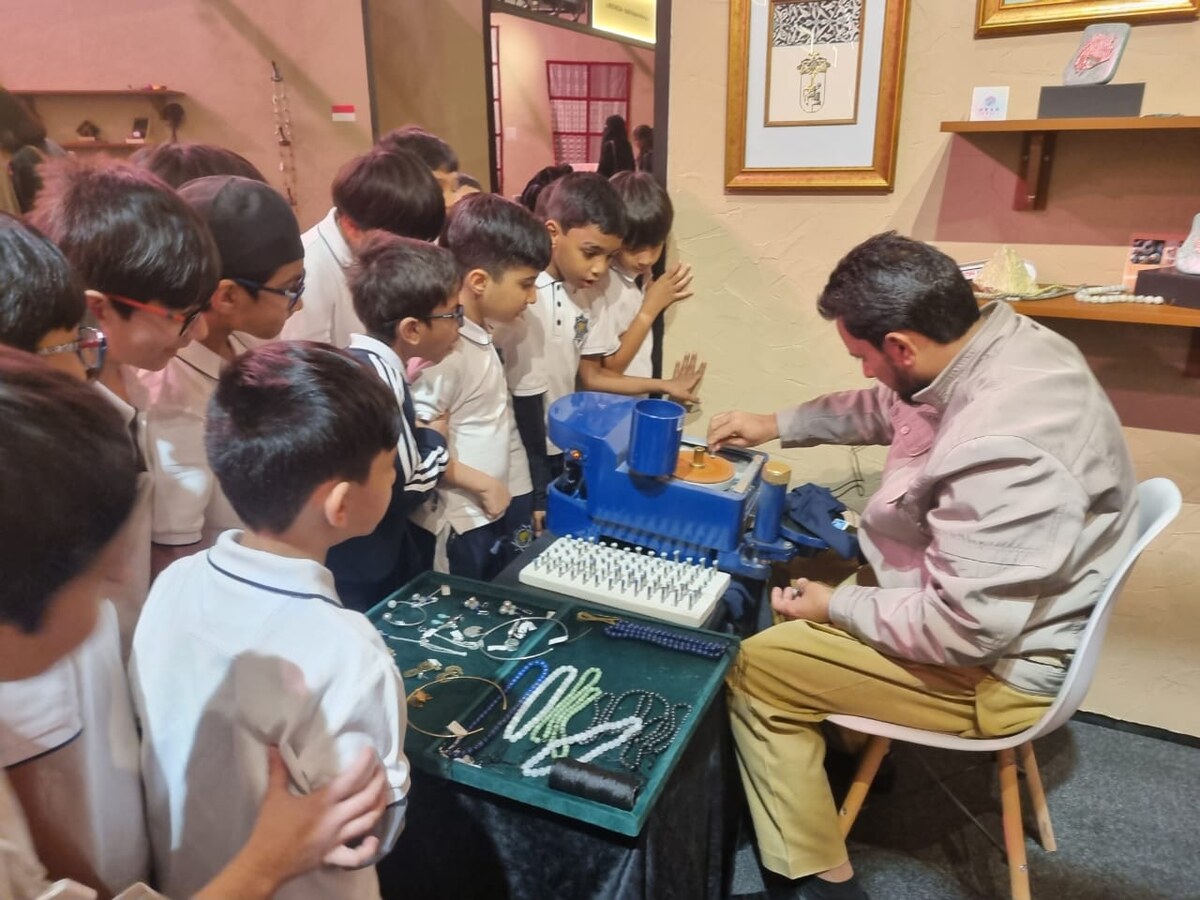
This handout photograph, shared by Pakistani artist Mariya Sohail on November 29, 2024, shows visiting children at her stall at the Pakistan pavilion during the Saudi International Handicrafts Week, Banan, in Riyadh. (Supplied/Mariya Sohail)
The Embassy of Pakistan in Riyadh also commended the artisans’ participation, calling the Pakistani pavilion a testament to the country's rich cultural heritage and the unparalleled quality of its craftsmanship.
"From intricate handmade designs to traditional artistry passed down through generations, the showcased crafts highlighted the deep-rooted legacy of Pakistan's artisan community,” it said in a statement.


