DAKAR, Senegal: French President Emmanuel Macron on Thursday for the first time recognized the killing of West African soldiers by the French Army in 1944 as a massacre in a letter addressed to the Senegalese authorities.
Macron’s move, on the eve of the 80th anniversary of the World War II killings in Thiaroye — a fishing village on the outskirts of the Senegalese capital of Dakar — comes as France’s influence is declining in the region, with Paris losing its sway in the former French colonies in West Africa.
Between 35 and 400 West African soldiers who fought for the French Army in the Battle of France in 1940 were killed on Dec. 1, 1944 by French soldiers after what the French described as a mutiny over unpaid wages.
The West Africans were members of the unit called Tirailleurs Senegalais, a corps of colonial infantry in the French Army. According to historians, there were disputes over unpaid wages in the days before the massacre but on that Dec. 1, French troops rounded up the West African soldiers, mostly unarmed, and shot and killed them.
Senegalese President Bassirou Diomaye Faye said he received the letter, which was seen by The Associated Pres.
Speaking to reporters late on Thursday, Faye said Macron’s step should “open the door” so that the “whole truth about this painful event of Thiaroye” can finally come out.
“We have long sought closure on this story and we believe that, this time, France’s commitment will be full, frank and collaborative,” he added.
“France must recognize that on that day, the confrontation between soldiers and riflemen who demanded their full legitimate wages be paid, triggered a chain of events that resulted in a massacre,” read Macron’s letter.
“It is also important to establish, as far as possible, the causes and facts that led to this tragedy,” Macron added. “I have asked my services to inform me of the progress of the work of the Committee for the Restoration of the Facts, which your government has decided to set up, under the direction of Professor Mamadou Diouf, whose eminence and qualities are recognized by all.”
The letter comes weeks after the Senegalese legislative elections, in which the ruling party PASTEF secured a definite majority. The win granted newly elected President Faye a clear mandate to carry out ambitious reforms promised during the campaign, which include more economic independence from foreign companies, including French ones, which are heavily invested in the country.
France still has around 350 troops in its former colony, mainly in a supportive role. Asked about the presence of French forces, Faye alluded that it would not be something the Senegalese would want.
“Historically, France enslaved, colonized and stayed here,” he said. “Obviously, I think that when you reverse the roles a little, you will have a hard time conceiving that another army, China, Russia, Senegal, or any other country could have a military base in France.”


For the first time, Macron calls 1944 killings of West African troops by French army a massacre


https://arab.news/rux2w
For the first time, Macron calls 1944 killings of West African troops by French army a massacre

- Up to 400 West African soldiers who fought for the French Army in the Battle of France in 1940 were massacred on Dec. 1, 1944 by French soldiers over a dispute on unpaid wages
- Macron recognized the criminal act in a letter to Senegal's President Faye, at a time when France’s influence is declining in the region, with Paris losing its sway in the former French colonies in West Africa


China’s top diplomat to visit Somalia on Africa tour
- Stop in Mogadishu provides diplomatic boost after Israel formally recognized breakaway Somaliland
- Tour focusses on Beijing's strategic trade access across eastern and southern Africa
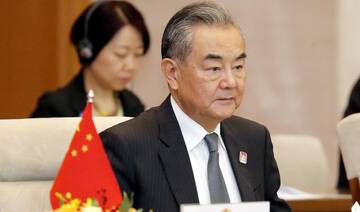
BEIJING: China’s top diplomat began his annual New Year tour of Africa on Wednesday, focusing on strategic trade access across eastern and southern Africa as Beijing seeks to secure key shipping routes and resource supply lines.
Foreign Minister Wang Yi will travel to Ethiopia, Africa’s fastest-growing large economy; Somalia, a Horn of Africa state offering access to key global shipping lanes; Tanzania, a logistics hub linking minerals-rich central Africa to the Indian Ocean; and Lesotho, a small southern African economy squeezed by US trade measures. His trip this year runs until January 12.
Beijing aims to highlight countries it views as model partners of President Xi Jinping’s flagship “Belt and Road” infrastructure program and to expand export markets, particularly in young, increasingly affluent economies such as Ethiopia, where the IMF forecasts growth of 7.2 percent this year.
China, the world’s largest bilateral lender, faces growing competition from the European Union to finance African infrastructure, as countries hit by pandemic-era debt strains now seek investment over loans.
“The real litmus test for 2026 isn’t just the arrival of Chinese investment, but the ‘Africanization’ of that investment. As Wang Yi visits hubs like Ethiopia and Tanzania, the conversation must move beyond just building roads to building factories,” said Judith Mwai, policy analyst at Development Reimagined, an Africa-focussed consultancy.
“For African leaders, this tour is an opportunity to demand that China’s ‘small yet beautiful’ projects specifically target our industrial gaps, turning African raw materials into finished products on African soil, rather than just facilitating their exit,” she added.
On his start-of-year trip in 2025, Wang visited Namibia, the Republic of Congo, Chad and Nigeria.
His visit to Somalia will be the first by a Chinese foreign minister since the 1980s and is expected to provide Mogadishu with a diplomatic boost after Israel became the first country to formally recognize the breakaway Republic of Somaliland, a northern region that declared itself independent in 1991.
Beijing, which reiterated its support for Somalia after the Israeli announcement in December, is keen to reinforce its influence around the Gulf of Aden, the entrance to the Red Sea and a vital corridor for Chinese trade transiting the Suez Canal to Europe.
Further south, Tanzania is central to Beijing’s plan to secure access to Africa’s vast copper deposits. Chinese firms are refurbishing the Tazara Railway that runs through the country into Zambia. Li Qiang made a landmark trip to Zambia in November, the first visit by a Chinese premier in 28 years.
The railway is widely seen as a counterweight to the US and European Union-backed Lobito Corridor, which connects Zambia to Atlantic ports via Angola and the Democratic Republic of the Congo.
By visiting the southern African kingdom of Lesotho, Wang aims to highlight Beijing’s push to position itself as a champion of free trade. Last year, China offered tariff-free market access to its $19 trillion economy for the world’s poorest nations, fulfilling a pledge by Chinese President Xi Jinping at the 2024 China-Africa Cooperation summit in Beijing.
Lesotho, one of the world’s poorest nations with a gross domestic product of just over $2 billion, was among the countries hardest hit by US President Donald Trump’s sweeping tariffs last year, facing duties of up to 50 percent on its exports to the United States.