



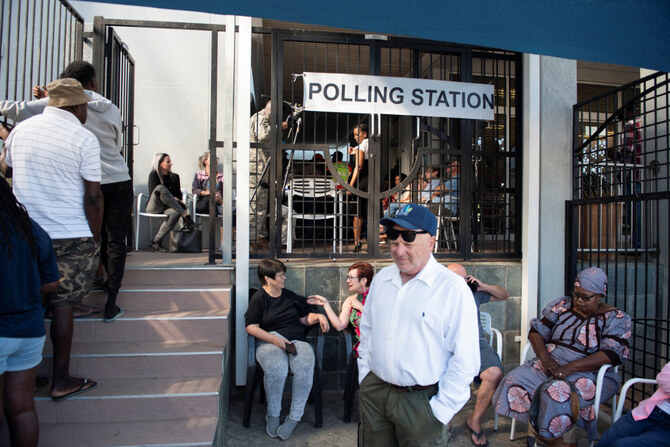
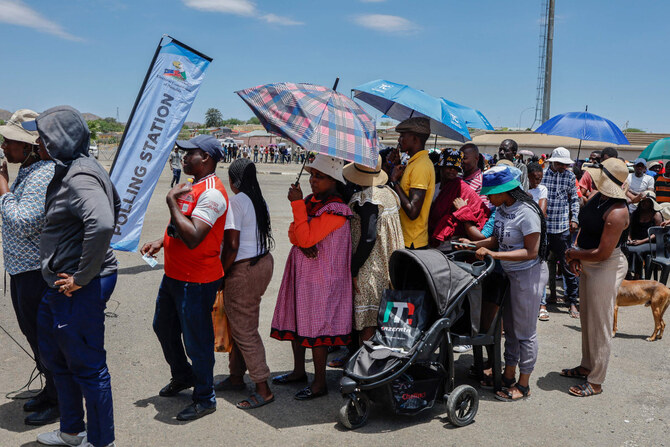

WHINDHOEK: Logistical issues on Wednesday left thousands of Namibians waiting in queues to vote in pivotal presidential and legislative elections, some for up to 12 hours, with polling stations staying open hours later than planned.
The vote could usher in the desert nation’s first woman leader even as her party, the ruling South West Africa People’s Organization (SWAPO) faces the strongest challenge yet to its 34-year grip on power.
Some voters told AFP they queued all day, blaming technical problems that included issues with voter identification tablets and insufficient ballot papers.
“It’s absolutely disappointing,” said Reagan Cooper, a 43-year-old farmer among the hundred or so voters outside the town hall polling station in the capital Windhoek.
“The voters have turned out, but the electoral commission has failed us,” Cooper told AFP.
In the face of criticism from all the political parties, including SWAPO, the Electoral Commission of Namibia extended voting hours for “no specified time,” according to Windhoek region ECN head Rakondjerua Kavari.
Voting was halted for an hour at the Windhoek town hall site due to a lack of ballots, with applause welcoming the delivery of more waking sleepy, seated voters around 11:30 pm.
The last voter there cast his ballot more than four hours after the scheduled closing time — 9:00 p.m. (1900 GMT) — and vote counting then began almost immediately.
According to Namibia’s electoral law, those in queues before polls are scheduled to close should be allowed to vote.
Petrus Shaama, chief officer of the ECN, said it was obligated to ensure voters could cast a ballot.
But the main opposition party, the Independent Patriots for Change (IPC), blamed the ECN for the long lines and cried foul play.
“We have reason to believe that the ECN is deliberately suppressing voters and deliberately trying to frustrate voters from casting their vote,” said Christine Aochamus of the IPC.
Armed with folding chairs and umbrellas to cope with the slow-moving lines and blazing sun, many Namibians spent half the day waiting to vote.
At one polling station inside the University of Science and Technology in Windhoek, hundreds of people were still in line at 9:00 p.m. despite some having arrived at 6:00 am, an hour before polls opened.
Polling site managers told AFP that problems with tablets used to check voters’ identities using fingerprints included untimely updates, overheating and dead batteries.
SWAPO’s candidate and current vice president, Netumbo Nandi-Ndaitwah, was one of the first to vote and called on Namibians “to come out in their numbers.”
An estimated 1.5 million people in the sparsely populated nation were registered to vote.
SWAPO has governed since leading mineral-rich Namibia to independence from South Africa in 1990 but complaints about unemployment and enduring inequalities could force Nandi-Ndaitwah into an unprecedented second round.
IPC leader Panduleni Itula, a former dentist and lawyer, said Wednesday he was optimistic he could “unseat the revolutionary movement.”
Itula, 67, took 29 percent of votes in the 2019 elections, losing to SWAPO leader Hage Geingob with 56 percent. It was a remarkable performance considering Geingob, who died in February, had won almost 87 percent five years before that.
Namibia is a major uranium and diamond exporter but not many of its nearly three million people have benefitted from that wealth.
“There’s a lot of mining activity that goes on in the country, but it doesn’t really translate into improved infrastructure, job opportunities,” said independent political analyst Marisa Lourenco, based in Johannesburg.
“That’s where a lot of the frustration is coming from, (especially) the youth,” she said.
Unemployment among 15- to 34-year-olds is estimated at 46 percent, according to the latest figures from 2018, almost triple the national average.
First-time voter and environmental health student Sophia Varela, 24, told AFP she was “hoping for change” and “jobs for the youth.”
For the first time in Namibia’s recent history, analysts say a second voting round is a somewhat realistic option.
That would take place within 60 days of the announcement of the first round of results due by Saturday.
“The outcome will be tight,” said self-employed Hendry Amupanda, 32, who queued since 9:00 p.m. the night before to cast his ballot.
“I want the country to get better and people to get jobs,” said Amupanda, wearing slippers and equipped with a chair, blanket and snacks.
Marvyn Pescha, a self-employed consultant, said his father was part of SWAPO’s liberation struggle and he was not going to abandon the party.
“But I want SWAPO to be challenged for better policies. Some opportunistic leaders have tarnished the reputation of the party, they misuse it for self-enrichment,” the 50-year-old said.
While lauded for leading Namibia to independence, SWAPO is nervous about its standing after other liberation-era movements in the region have lost favor with young voters.
In the past six months, South Africa’s African National Congress lost its parliamentary majority and the Botswana Democratic Party was ousted after almost six decades in power.


