WASHINGTON: President Joe Biden’s administration is urging Ukraine to quickly increase the size of its military by drafting more troops and revamping its mobilization laws to allow for the conscription of troops as young as 18.
A senior Biden administration official, who spoke on the condition of anonymity to discuss the private consultations, said Wednesday that the outgoing Democratic administration wants Ukraine to lower the mobilization age to 18 from the current age of 25 to help expand the pool of fighting-age men available to help a badly outnumbered Ukraine in its nearly three-year-old war with Russia.
The official said “the pure math” of Ukraine’s situation now is that it needs more troops in the fight.
The White House has pushed more than $56 billion in security assistance to Ukraine since the start of Russia’s February 2022 invasion and expects to send billions more to Kyiv before Biden leaves office in less than months.
But with time running out, the Biden White House is also sharpening its viewpoint that Ukraine has the weaponry it needs and now must dramatically increase its troop levels if it’s going to stay in the fight with Russia.
The official said the Ukrainians believe they need about 160,000 additional troops, but the US administration believes they probably will need more than that.
More than 1 million Ukrainians are now in uniform, including National Guard and other units.
Ukrainian President Volodymyr Zelensky has also been hearing concerns from allies in other Western capitals that Ukraine has a troop level problem and not an arms problem, according to European officials who requested anonymity to discuss the sensitive diplomatic conversations.
The European allies have also stressed that the lack of depth means that it may soon become untenable for Ukraine to continue to operate in Russia’s Kursk border region that Ukraine seized this year. The situation in Kursk has become further complicated by the arrival of thousands of North Korean troops who have come to help Moscow try to claw back the land.
The stepped-up push on Ukraine to strengthen its fighting ranks also comes as Ukraine braces for President-elect Donald Trump to take office on Jan. 20. The Republican said he would bring about a swift end to the war and has raised uncertainty about whether his administration would continue the vital US military support for Ukraine.
“There are no easy answers to Ukraine’s serious manpower shortage, but lowering the draft age would help,” said Bradley Bowman, senior director of the Center on Military and Political Power at the Foundation for the Defense of Democracies. “These are obviously difficult decisions for a government and society that has already endured so much due to Russia’s invasion.”
Ukraine has taken steps to broaden the pool of draft-eligible men, but the efforts have only scratched the surface against a much larger Russian military.
In April, Ukraine’s parliament passed a series of laws, including lowering its draft-eligible age for men from 27 to 25, aimed at broadening the universe of men who could be called on to join the grinding war.
Those laws also did away with some draft exemptions and created an online registry for recruits. They were expected to add about 50,000 troops, far short of what Zelensky said at the time was needed.
Zelensky has consistently stated that he has no plans to lower the mobilization age. A senior Ukrainian official, who was not authorized to comment publicly and spoke on condition of anonymity, said Ukraine does not have enough equipment to match the scale of its ongoing mobilization efforts.
The official said Ukrainian officials see the push to the lower the draft age as part of an effort by some Western partners to deflect attention from their own delays in providing equipment or belated decisions. The official cited as an example the delay in giving Ukraine permission to use longer-range weapons to strike deep into Russian territory.
The Ukrainians do not see lowering the draft age to recruit more soldiers as a substitute for countering Russia’s advantage in equipment and weaponry, the official said.
Conscription has been a sensitive matter in Ukraine throughout the war. Russia’s own problems with adequate troop levels and planning early in the war prevented Moscow from taking full advantage of its edge. But the tide has shifted and the US says the Ukrainian shortage can no longer be overlooked.
Some Ukrainians have expressed worry that further lowering the minimum conscription age and taking more young adults out of the workforce could backfire by further harming the war-ravaged economy.
The senior Biden administration official added that the administration believes that Ukraine can also optimize its current force by more aggressively dealing with soldiers who desert or go absent without leave.


![]()

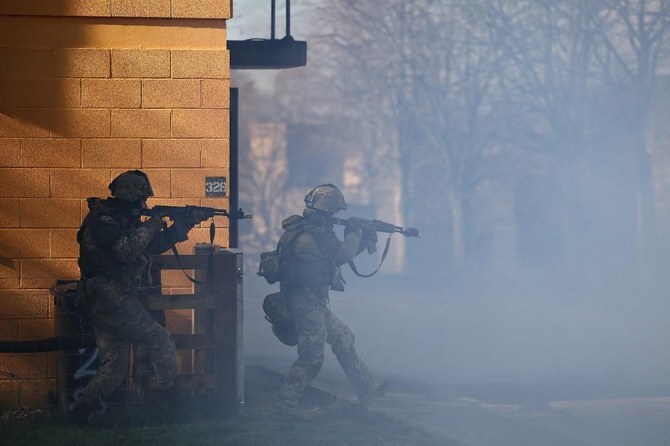
White House pressing Ukraine to draft 18-year-olds so they have enough troops to battle Russia
Short Url
https://arab.news/rhs9e
White House pressing Ukraine to draft 18-year-olds so they have enough troops to battle Russia
- The official said “the pure math” of Ukraine’s situation now is that it needs more troops in the fight
- The Ukrainians believe they need about 160,000 additional troops, but the US administration believes they probably will need more than that


Latest updates


© 2026 SAUDI RESEARCH & PUBLISHING COMPANY, All Rights Reserved And subject to Terms of Use Agreement.