RIYADH: Saudi Arabia is set to deepen its strategic partnership with Pakistan through talks on refinery upgrades and a greenfield project for petroleum products, according to an official.
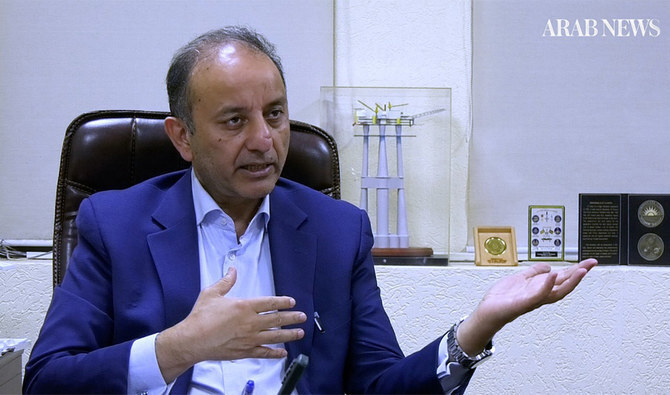
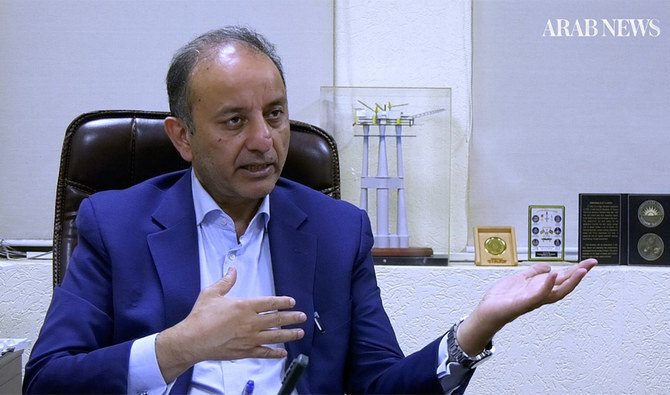
Speaking to Arab News on the sidelines of the World Investment Conference held in Riyadh, Musadik Malik, senator and minister of state for petroleum of Pakistan, noted that the collaboration extends beyond energy projects and includes an agreement to connect power grids between the two nations.
“We are working very closely with the Kingdom to figure out how, what are the future energy needs, particularly in the area of renewables, and jointly, we’re going to identify and scope the opportunity, and jointly we’re going to build a program to fulfill those needs,” Malik said.
He continued: “We have two different projects which are right now under, to say, research.
One is the upgradation of quantifier refineries, and the other is a large greenfield refinery which would not only produce petroleum products but also hydrocarbons. These are under research and negotiation, so these are not finalized.”
Malik highlighted that the partnership goes beyond just securing investments or transferring advanced technology. Instead, it involves a joint effort to carefully analyze Pakistan’s future energy needs and map out potential scenarios for how these demands might evolve over time.
This forward-looking approach ensures that both nations are not just reacting to immediate energy challenges but are proactively planning for the long term.
By working together to address these evolving requirements, Saudi Arabia and Pakistan aim to guarantee Pakistan’s energy security, creating a sustainable and reliable framework that supports the country’s growth and development.
Saudi Arabia and Pakistan are making significant strides in strengthening private-sector collaborations, with multiple agreements already yielding tangible results.
Malik highlighted the proactive approach both nations are taking to foster business-to-business partnerships.
“Our prime minister believes that the government should not be in the business of doing business but should facilitate it,” he said, emphasizing the central theme of the collaboration.
“A very large part of the concept we are jointly building on is the private sector of the Kingdom working with the private sector of Pakistan.”
The minister added that around $2.8 billion worth of memorandums of understanding have been signed between the two countries in October.
“Out of these 28 to 30 MOUs, seven or eight have already been converted into contracts and executed within just three to four months,” Malik said.
He continued, explaining the momentum of the partnership: “We have transacted significant deals, and contracts are in motion. Yesterday (Nov. 25), during a roadshow with the Kingdom’s private sector, we secured a non-disclosure agreement that could pave the way for a $1.8 billion investment.”
Malik emphasized the multifaceted nature of Saudi Arabia’s involvement in Pakistan, describing it as a “360-degree view” encompassing both public and private sectors.
“We are not only receiving investments and technology but also collaborating on long-term strategies to meet Pakistan’s growing energy demands,” he said. “The Kingdom’s Public Investment Fund and subsidiaries are actively identifying opportunities for mutual growth.”
Pakistan is tackling the challenge of energy demand fluctuations, a longstanding issue where consumption peaks in summer and drops to a third during winter.
This cyclicality forces the country to make capacity payments to investors, covering equity returns and debt servicing even when energy is underutilized, Malik explained.
To address this inefficiency, Pakistan signed an MoU with Saudi Arabia to connect their power grids.
“This grid connection will allow energy produced in the Kingdom and Pakistan to be transacted seamlessly,” Malik said. “When we connect with Saudi Arabia, it effectively means connecting with the GCC as well.”
The initiative also aligns with regional energy strategies, as Pakistan seeks similar arrangements with Central Asian states.
“In Central Asia, energy demand is high in winter and negligible in summer. With this connectivity, deficits will no longer remain deficits, and surpluses will clear in real-time,” he added, highlighting plans for a unified energy market facilitated by a shared grid.
Malik concluded the interview by praising Saudi Arabia’s unwavering support for Pakistan, describing the Kingdom as a true and steadfast ally.
“In good times and bad, we have always found the Kingdom by our side. This is the hallmark of true friendship,” he said.