



KHAPLU, Gilgit-Baltistan: Large crowds have been gathering daily in the northern mountain town of Gilgit for a 10-day polo tournament being held to mark Gilgit-Baltistan’s Independence Day, the military’s media wing and government officials said on Thursday, the last day of the event.
GB is administered by Pakistan as an administrative territory and consists of the northern portion of the larger Kashmir region, which has been the subject of a dispute between India and Pakistan since 1947. The impoverished, remote and rugged mountainous territory borders Afghanistan and China and is the gateway of the $65 billion China-Pakistan Economic Corridor (CPEC) infrastructure plan.
The Gilgit-Baltistan Independence Day is celebrated on Nov. 1 every year to mark the region’s independence in 1947 from Dogra Raj, the erstwhile rulers of the now disputed Jammu and Kashmir region.
“The big event of Jashan Azadi Polo Tournament was held at Wahab Shaheed Polo Ground in Gilgit, a remote area of the northern region under the management of Pak Army,” the military’s media wing said in a statement, saying Force Command Northern Areas, Maj. Gen. Syed Imtiaz Hussain Gillani, was the chief guest at the closing ceremony of the event in which 17 teams participated.
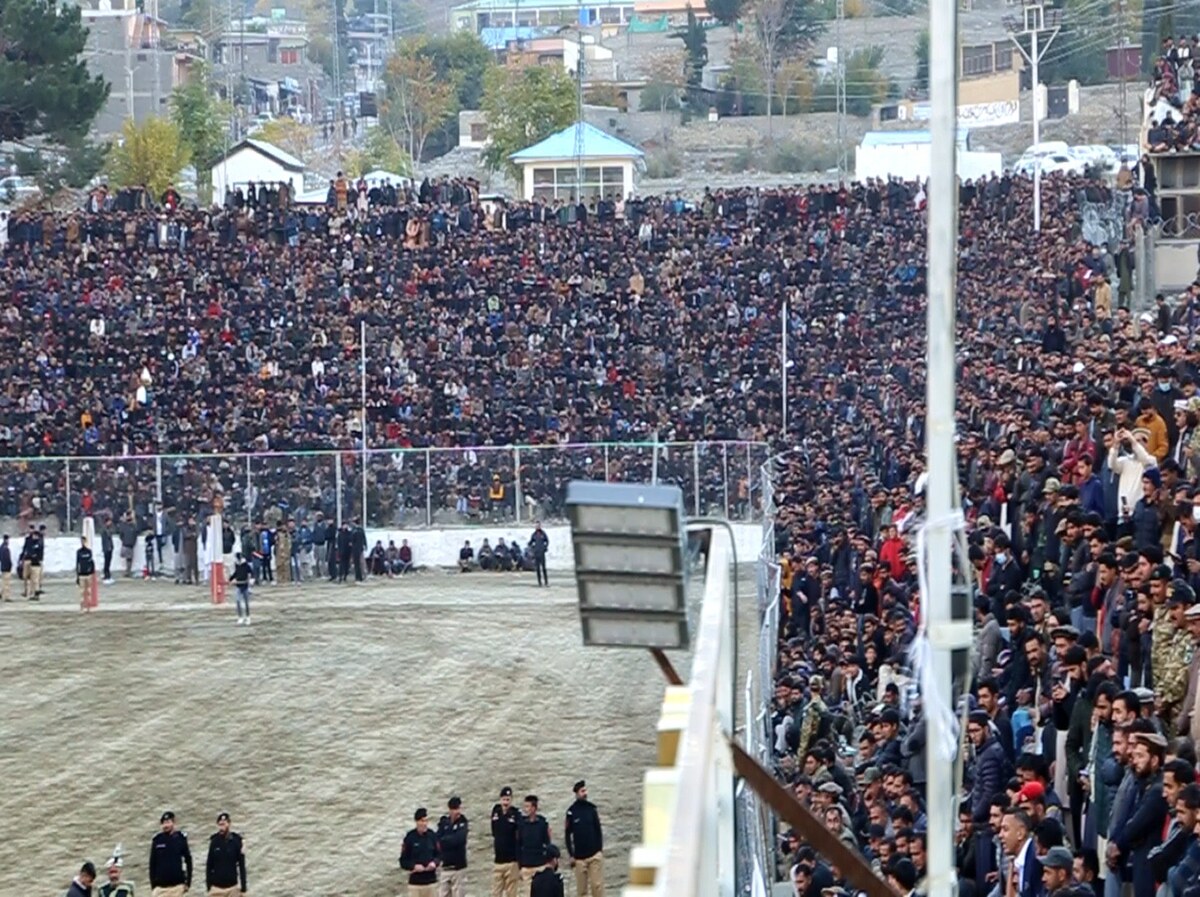
A Pakistani tribal polo team member chases the ball as the crowd watches the match during a polo game in Skardu, in Pakistan's northeastern Gilgit-Baltistan region on November 21, 2024. (Photo courtesy: ISPR)
“The final match was won by Chilas in civil and NLI teams in departmental categories respectively,” the statement added.
Gilgit-Baltistan is also known for the annual polo festival at Shandur, an area between the northern Pakistani towns of Gilgit and Chitral, and at over 12,000 feet (3,700 meters) the world’s highest polo ground.
Polo in GB is played without rules and at a blistering pace, suggesting more of a clash of cavalry than a sport. Locals believe polo was born in their land and Gilgit is home to the famous polo inscription: “Let other people play at other things, the King of Games is still the Game of Kings.”
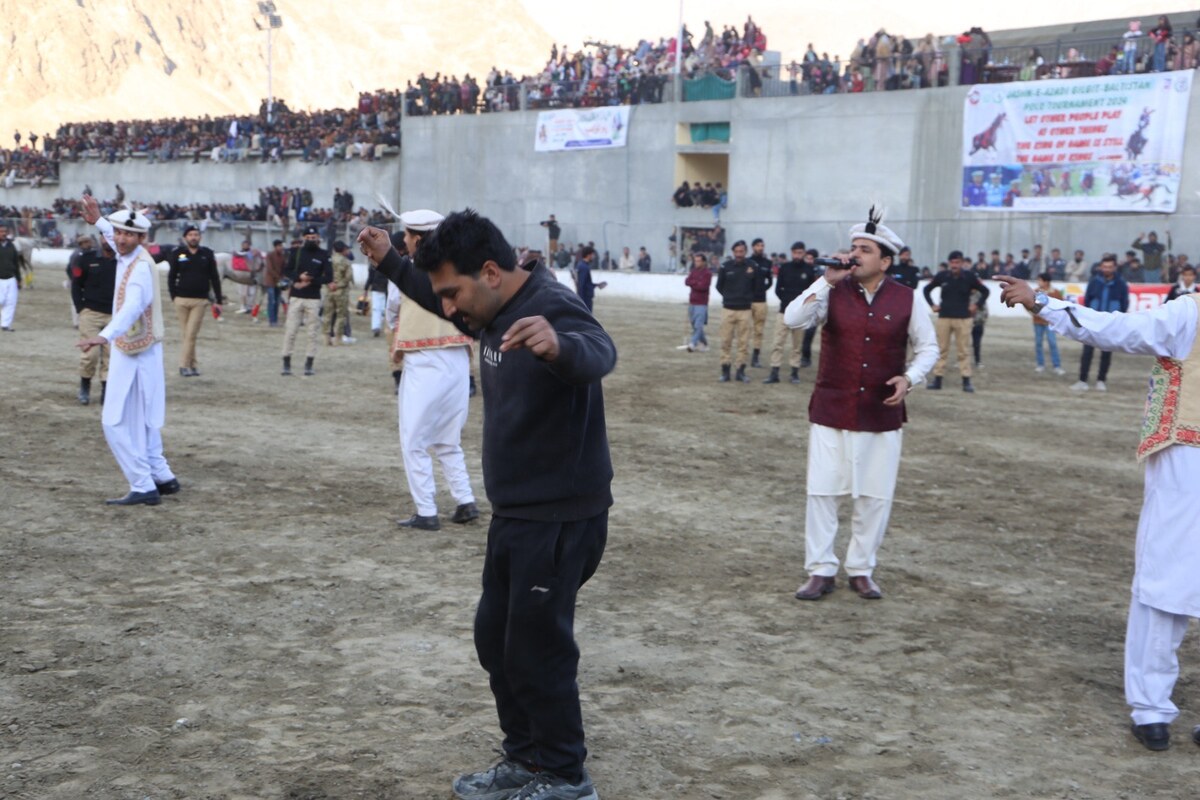
A Pakistani tribalmen perform traditional dance during a polo game in Skardu, in Pakistan's northeastern Gilgit-Baltistan region on November 21, 2024. (Photo courtesy: ISPR)
Faizullah Faraq, the spokesperson for the G-B government, said thousands had come to watch the matches and celebrate the Gilgit-Baltistan Independence Day.
“Polo is the national game of Gilgit-Baltistan. And thousands of people reached Gilgit’s playground to watch the polo matches daily,” he told Arab News on Thursday.
“Such kinds of activities unite the youth and they play their role to create harmony in the society. The promotion of polo is a need of time to maintain peace in society.”

Crowd watches the match during a polo game in Skardu, in Pakistan's northeastern Gilgit-Baltistan region on November 21, 2024. (Photo courtesy: ISPR)
Afrad Gul, the team captain of the winning Chilas team, appreciated locals who supported the tournament.
“I have been playing polo for the last 15 years, my son was also part of my team,” Gul said in a phone interview. “We have left no stone unturned to keep this regional game alive.”


