

Iraq to hold first nationwide census since 1987

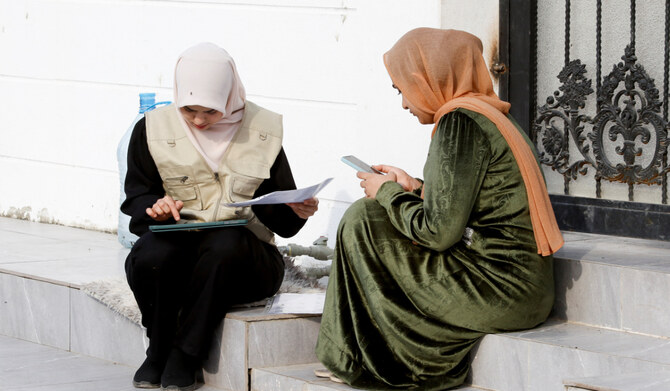
A team from the Iraq Planning Ministry carries out the national population census in Kirkuk, Iraq November 18, 2024. (REUTERS)
Short Url
Updated 19 November 2024
Follow

Iraq to hold first nationwide census since 1987

  • A census carried out in 1997 excluded the Iraqi Kurdistan region, which had been governed by Kurdish authorities since the 1991 Gulf War

BAGHDAD: Iraq will begin its first full national census in more than three decades on Wednesday, a pivotal moment as it looks to gather demographic data for future planning and development.
The census, the first full one since Saddam Hussein was President in 1987, aims to provide a comprehensive count of Iraq’s population, estimated to exceed 43 million people by the end of 2024, said Iraq’s planning ministry spokesperson Abdul Zahra Al-Hindawi.
Attempts at conducting a national census were delayed by years of conflict, instability and disagreement among political factions, but with the country now in a period of stability, authorities hope the process will be completed successfully.
A census carried out in 1997 excluded the Iraqi Kurdistan region, which had been governed by Kurdish authorities since the 1991 Gulf War.
It counted 19 million Iraqis and officials estimated there were another 3 million in the Kurdish north, according to official statistics.
The census was repeatedly postponed over worries it was being politicized. Ethnic groups in contested areas like the northern city of Kirkuk, home to Arabs, Kurds, Turkmen and a valuable part of Iraq’s oil fields, opposed it because it might reveal demographics that would undermine political ambitions.
“We have fears (of the census) not only in Kirkuk but all other disputed areas which are subjected to strong disagreements between various powers,” said Shwan Dawoodi, a Kurdish politician.
The data gathered will be used to guide decisions in areas such as infrastructure development, education, health care and social services, said Hindawi.
The census will feature only one question regarding religious affiliation — Muslim or Christian — and none about ethnic background or sectarian affiliation.
The Iraqi government has made extensive efforts to ensure the process, scheduled to take two days to complete, is as inclusive and accurate as possible, imposing a two-day curfew from midnight on Tuesday.
Preliminary results will be announced within 24 hours and final results released in two to three months.


Syrian refugee returns set to slow as donor support fades

Updated 5 sec ago
Follow

Syrian refugee returns set to slow as donor support fades

  • Some aid officials say Syria is one of the first crises to be hit by aid funding cuts because the end of the war means it no longer counts as an emergency, eligible for priority funding

GENEVA: More than 3 million Syrians have returned home since the collapse of Bashar Assad’s rule a year ago but a decline in global funding could deter others, the UN refugee agency said on Monday.
Some 1.2 million refugees in addition to 1.9 million internally displaced people have gone back home following the civil war that ended with Assad’s overthrow, but millions more are yet to return, according to UNHCR.
The agency said much more support was needed to ensure the trend continues.
“Syrians are ready to rebuild – the question is whether the world is ready to help them do it,” said UNHCR head Filippo Grandi. Over 5 million refugees remain outside Syria’s borders, mostly in neighboring countries like Jordan and Lebanon.

RISK OF REVERSALS
Grandi told donors in Geneva last week that there was a risk that those Syrians who are returning might even reverse their course and come back to host states.
“Returns continue in fairly large numbers but unless we step up broader efforts, the risk of (reversals) is very real,” he said.
Overall, Syria’s $3.19 billion humanitarian response is 29 percent funded this year, according to UN data, at a time when donors like the United States and others are making major cuts to foreign aid across the board.
The World Health Organization sees a gap emerging as aid money drops off before national systems can take over.
As of last month, only 58 percent of hospitals were fully functional and some are suffering power outages, affecting cold-chain storage for vaccines.
“Returnees are coming back to areas where medicines, staff and infrastructure are limited – adding pressure to already thin services,” Christina Bethke, Acting WHO Representative in Syria, told reporters.
The slow pace of removing unexploded ordnance is also a major obstacle to recovery, said the aid group Humanity & Inclusion, which reported over 1,500 deaths and injuries in the last year. Such efforts are just 13 percent funded, it said.
Some aid officials say Syria is one of the first crises to be hit by aid funding cuts because the end of the war means it no longer counts as an emergency, eligible for priority funding.
Others may have held back as they wait to see if authorities under President Ahmed Al-Sharaa make good on promises of reform and accountability, including for massacres of the Alawite minority in March, they say.