


RIYADH: Developed nations are facing growing pressure at COP29 to honor their climate finance commitments, as developing countries push for action to address the severe shortfalls in adaptation funding and the escalating environmental challenges they face.
The ongoing dispute centers around how much support developed nations will provide to poorer countries in their efforts to combat the impacts of climate change.
Representatives from vulnerable nations have emphasized the urgent need for concrete financial commitments, highlighting the widening gaps in adaptation funding.
Financing gaps undermine efforts
Kenya called for an end to the adaptation finance gap, urging increased financial flows to meet the continent’s needs. “Developing countries are not receiving the resources they need,” said Kenya’s representative. “Africa’s adaptation needs are the highest globally, estimated at $845 billion between 2020 and 2035, yet we receive less than a quarter of that annually.”
Bangladesh echoed these concerns, revealing a stark $5.5 billion annual shortfall in funding for resilience projects. “This gap must be filled through grant-based and external finance,” said Bangladesh’s representative.
Several developed nations have outlined their efforts to scale up adaptation financing. Germany highlighted that 30 percent of the EU’s current seven-year budget is allocated to climate-related initiatives, including $30 billion for nationally determined contributions and climate goals, and $12 billion for public climate adaptation finance.
France pledged €2 billion annually by 2025 for adaptation in developing countries, exceeding its previous commitments. Canada reported progress toward its goal of doubling adaptation finance by 2025, as per the Glasgow Climate Pact, but acknowledged the need for more expansive action. “Public finance alone won’t suffice,” said Canada’s representative. “We need coordinated global efforts, innovative instruments, and stronger policy signals to ramp up climate-resilient investments,” the representative continued.
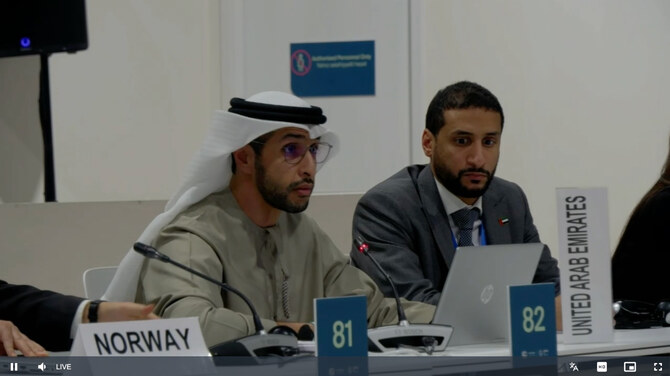
UAE calls for scaling up adaptation finance
“The outcome of the first global stocktake under the UAE consensus underscores a stark reality: we are not on track to meet the adaptation needs of developing countries,” said the UAE’s representative. “Climate change disproportionately affects vulnerable communities who have contributed the least to global emissions. Adaptation is not a choice, but a necessity,” he continued.
The UAE underscored the widening adaptation finance gap, which is estimated to reach hundreds of billions of dollars annually by 2030.
“A critical component of COP28 was the UAE framework for global climate resilience, establishing targets for adaptation planning and implementation,” the representative noted. The UAE consensus calls for all parties to have national adaptation plans in place by 2025, with tangible progress on implementation by 2030.
“We urge developed countries to significantly scale up adaptation finance beyond the doubling committed at COP26,” the UAE added.
“This scaling up is crucial to meet the urgent and growing needs of developing countries.”
Rejecting allegations of involvement in the Sudanese conflict, the UAE reaffirmed its commitment to humanitarian aid and efforts to support a legitimate, civilian-led government in Sudan.
“We reject these baseless claims and emphasize our continued support for de-escalation, ceasefires, and aiding Sudanese civilians,” said the representative.
Jordan called for “predictable and transparent commitments” and expedited disbursements, emphasizing the challenges faced by water-scarce nations grappling with severe droughts.
Sudan urged for technological transfer and funding to recover from devastating floods, which caused $48 million in damages this year. Palestine raised concerns about barriers to accessing climate funds, citing “non-technical issues” that prevent direct support despite eligibility.
Kazakhstan stressed the importance of concessional financing, saying, “We need mechanisms that are accessible and predictable to address vulnerabilities and ensure funds flow directly to communities.”
Developing countries call for urgent action
“Adaptation is not a choice but a necessity,” reiterated the UAE representative, highlighting the disproportionate burden borne by vulnerable nations.
Qatar called for creative solutions to close the adaptation finance gap, urging developed countries to double financial support and focus on the implementation phases to maximize impact.
China demanded that developed countries clarify timelines for doubling adaptation financing, stating, “They must deliver on their commitments and prioritize vulnerable nations.”
As COP29 unfolds, the debate over adaptation financing underscores the urgent need to bridge the gap between pledges and tangible action. The world’s most vulnerable communities are watching closely, demanding that words translate into real solutions.


